Choose a servo stabilizer for UPS when incoming utility or generator voltage drifts often enough to trigger UPS bypass transfers, input alarms, unnecessary battery cycling, or repeated stress on the UPS rectifier and charger.
Your decision should be based on measured input-voltage behavior, not on the assumption that every UPS automatically needs another device in front of it. This guide will help you decide when upstream voltage regulation makes sense, how servo compares with relay and static regulation, which specifications to verify, and what maintenance or procurement checks you should complete before buying.
When Does UPS Input Voltage Become a Real Problem for You?
You have a UPS input-voltage problem when the UPS is repeatedly reacting to upstream power instability instead of mainly protecting your downstream load. At that point, the question is not only “Is the UPS working?” but “Is the UPS being forced to absorb a voltage problem that should be corrected before it reaches the UPS?”
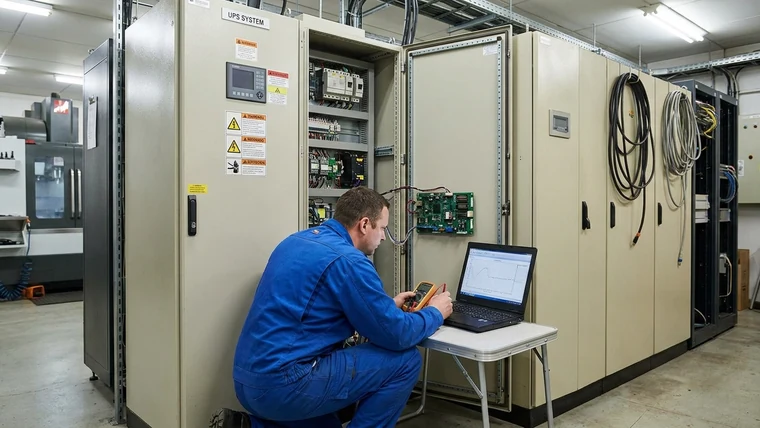
A UPS is designed to provide backup, ride-through, filtering, and load protection. A UPS input voltage stabilizer is designed to keep the incoming supply closer to a stable operating window so the UPS rectifier, charger, bypass logic, and batteries are not reacting to every sustained sag, overvoltage, brownout, or generator swing.
Common warning signs include:
- Repeated bypass transfers during voltage sag or overvoltage events
- Low-voltage or high-voltage alarms during peak production hours
- Generator voltage hunting as loads start and stop
- Battery discharge events even when utility power has not fully failed
- UPS input logs showing recurring dips, swells, or long periods near the edge of the input range
Voltage dips and short interruptions are recognized EMC immunity conditions for electrical and electronic equipment under IEC 61000-4-11 voltage dip and interruption immunity testing. For you, that means short disturbances are not theoretical; your real question is whether your UPS, load, and upstream supply are behaving acceptably under the events your site actually experiences.
Nominal voltage context also matters. IEC 60038 standard voltages are commonly used when discussing standard low-voltage systems and expected nominal supply conditions. In practical terms, if your measured supply spends too much time far from nominal voltage, your UPS may still “survive” the condition, but it may do so with more alarms, transfers, and service exposure than you want.
If your UPS protects CNC controls, telecom systems, medical devices, production computers, HVAC controls, routers, or process equipment, unstable input can become a business issue quickly. You may see nuisance trips, difficult-to-trace resets, shorter battery service intervals, more maintenance calls, or avoidable downtime risk.
When Is a Servo AVR the Right Solution Before Your UPS?
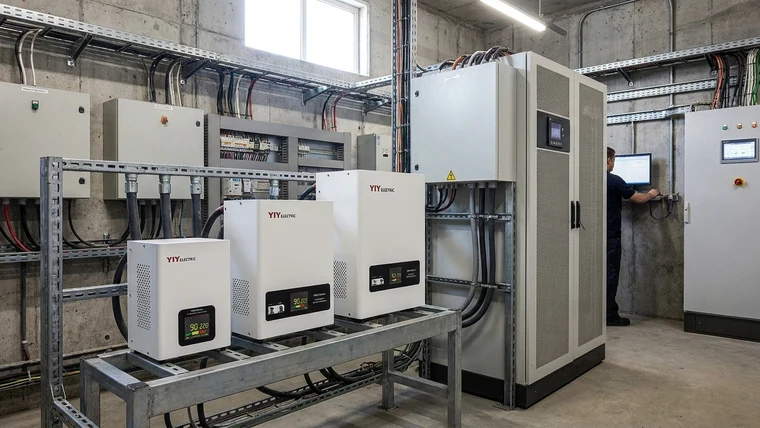
You should choose a servo AVR before your UPS when the main issue is sustained voltage drift and you need continuous correction with a practical balance of capacity, regulation accuracy, cost, and serviceability. A wide UPS input range means the UPS can tolerate variation; it does not mean your upstream voltage is healthy.
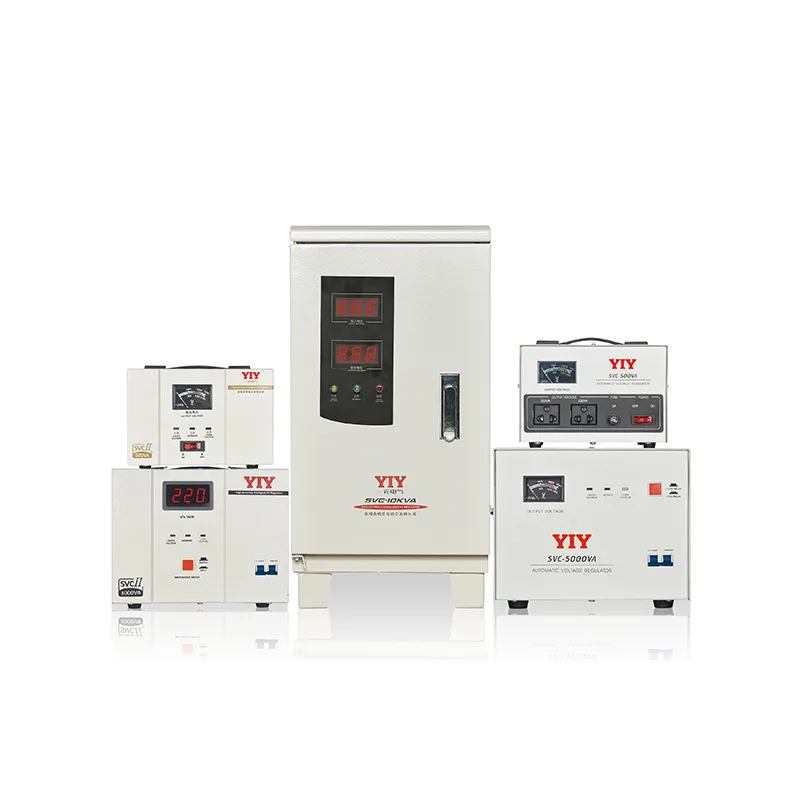
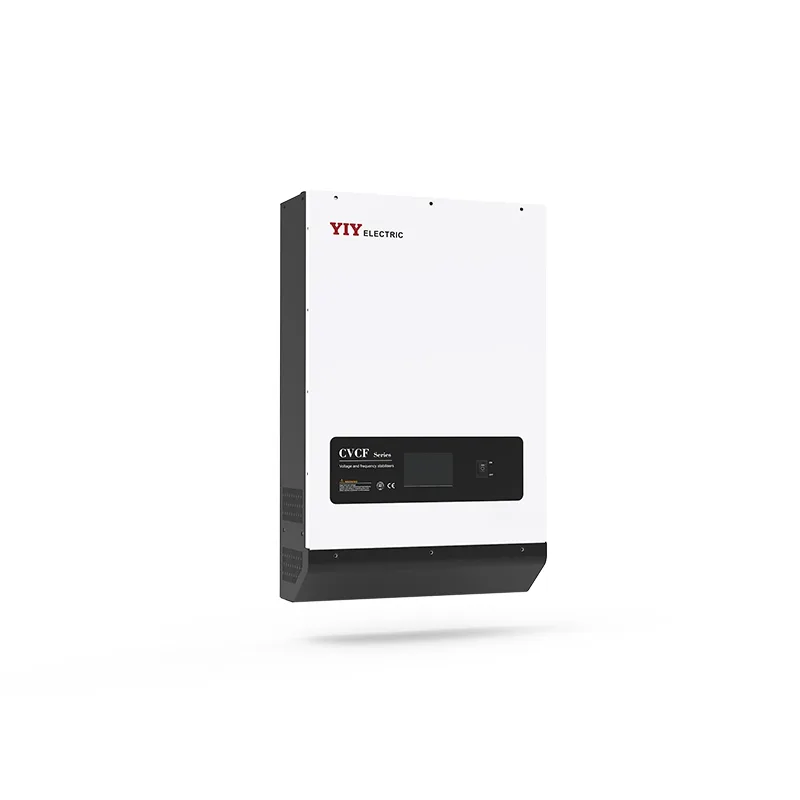
A servo stabilizer uses electromechanical correction to bring the output voltage closer to nominal before the UPS has to react. If you want to understand the servo topology and available product direction, YIY’s servo voltage stabilizer overview is the central starting point for this capacity and technology class.
This setup often fits you when several of these conditions are true:
- Your supply has sustained low voltage or high voltage, not only rare short dips.
- Your UPS logs show recurring alarms, bypass transfers, or battery cycling.
- Your generator-backed UPS input swings as load changes.
- Your site needs larger kVA capacity where relay regulation may be too basic.
- Your budget requires a practical industrial AVR rather than a higher-cost static system.
- Your maintenance team can schedule brush, servo motor, contactor, and ventilation checks.
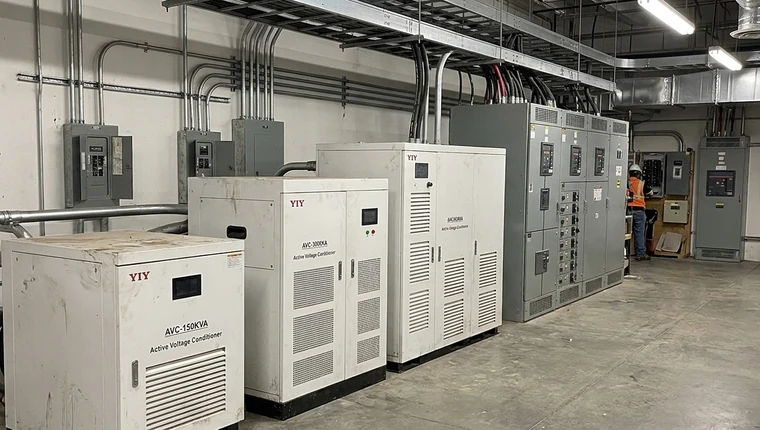
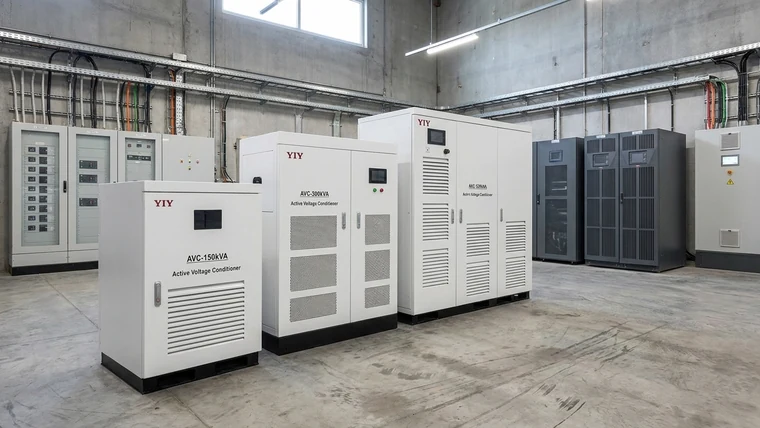
A three-phase servo stabilizer for UPS input is common in factories, telecom rooms, CNC lines, mixed industrial panels, and weak-grid environments where voltage drifts for minutes or hours. In these cases, the stabilizer reduces how often the UPS has to compensate for upstream voltage variation.
Servo is not the best answer for every problem. If your issue is sub-cycle disturbance, severe waveform distortion, high harmonic content, extremely fast dips, or a load with strict dynamic response requirements, you should compare static regulation, IGBT-based stabilization, line conditioning, or a different UPS architecture.
How Does a Servo Stabilizer Work with Your UPS?
You get upstream correction because the servo stabilizer senses voltage variation, moves a servo-driven carbon brush across an autotransformer or variac, adjusts the transformer ratio, and supplies corrected voltage to the UPS input. In practical terms, the stabilizer “tops up” low voltage or “pulls down” high voltage before the UPS rectifier and charger see the full disturbance.
The correction loop is simple:
- The controller samples input and output voltage.
- It compares the measured voltage with the target output value.
- The servo motor moves the brush across the winding.
- The autotransformer and buck-boost circuit adjust the output.
- The controller verifies whether the output has returned near the setpoint.
Because this correction is mechanical, it is continuous but not instantaneous. That distinction matters for you. A servo voltage stabilizer for UPS applications is usually selected for sustained drift, weak-grid fluctuation, and generator voltage movement—not as the only protection against fast spikes or waveform-quality problems.
Protection functions also matter. Look for overvoltage, undervoltage, overload, short-circuit, phase loss, phase sequence, surge, and over-temperature protection. If your UPS supports critical loads, you should also confirm manual or automatic bypass so maintenance can be performed without unnecessary interruption.
For dusty, humid, hot, or generator-backed environments, your specification should include enclosure expectations, filtered ventilation, derating, cabinet clearance, surge protection coordination, alarm visibility, and maintenance access. A stabilizer that works well in a clean electrical room may need different protection or ventilation planning in a generator yard, production floor, or high-temperature panel room.
Which Technology Fits Your UPS Input Problem Best?
You should choose servo for sustained voltage drift, relay for basic stepped correction in simpler applications, and static or IGBT regulation when fast dynamic response is the primary requirement. The right choice depends on your disturbance pattern, load sensitivity, budget, capacity, and maintenance expectations.
| Technology | Correction style | Response behavior | Where it fits you best | What you must maintain or verify |
|---|---|---|---|---|
| Servo AVR | Servo motor moves a carbon brush on an autotransformer or variac | Continuous, moderate speed | Industrial UPS input, weak grids, generator-backed UPS systems, larger kVA loads | Brush wear, servo motor, contactors, terminals, ventilation, dust control |
| Relay stabilizer | Relay switches transformer taps in steps | Fast switching, stepped output | Smaller or less sensitive loads, cost-sensitive applications, basic voltage correction | Relay contact wear, switching noise, output step size |
| Static/IGBT stabilizer | Electronic switching and digital control | Very fast correction | Highly sensitive loads, rapid voltage events, strict response-time requirements | Heat management, control electronics, specialist service capability |
For you, the comparison should start with site symptoms. If your generator voltage slowly rises and falls as production loads change, a servo AVR can be practical. If your UPS sees sharp dips, spikes, or very fast transients, static or IGBT regulation may be a better engineering fit.
Residential and smaller-load cases should be treated differently from industrial UPS applications. For example, a small home UPS or air-conditioner stabilizer decision may follow the logic in an automatic voltage stabilizer for home use guide, while your industrial UPS decision should focus more on three-phase input behavior, bypass strategy, logged voltage events, and service access.
What Should You Check Before Buying a UPS Input Stabilizer?
You should specify the stabilizer from measured voltage data, UPS input requirements, actual load demand, phase configuration, bypass needs, and site conditions—not from headline kVA alone. If you only match the UPS rating to a stabilizer label, you may miss peak current, overload behavior, derating, or maintenance constraints.
Start with these inputs:
- UPS kVA rating and input current
- Actual connected kW load
- Load power factor
- Peak demand and starting behavior
- Utility and generator voltage logs
- Single-phase or three-phase configuration
- Neutral, grounding, and panel conditions
- Bypass and maintenance requirements
- Ambient temperature, dust, humidity, and ventilation
The basic relationship is that kVA is apparent power, while kW is real power. For you, this means a stabilizer must support the voltage and current your UPS actually draws, not only the downstream equipment wattage. A system can look acceptable by kW but still run hot or trip if kVA, current, or overload behavior is underestimated.
Use this procurement screen before you request a final quotation:
| Check | Why it matters | If you skip it |
|---|---|---|
| Input voltage range | Your stabilizer must cover the worst measured sag or swell, not only nominal voltage. | The AVR may reach its correction limit and your UPS may still alarm or transfer. |
| Output accuracy | Tighter output regulation reduces voltage variation reaching the UPS input. | The UPS may keep operating but still experience nuisance alarms or added stress. |
| kVA and current margin | Your UPS input current, power factor, overload behavior, and future expansion affect sizing. | You risk overload trips, overheating, and shortened component life. |
| Single-phase vs three-phase | Phase count, phase balance, neutral design, and protection logic affect the correct model. | You may face installation delays, unsafe assumptions, or wrong equipment selection. |
| Bypass arrangement | Bypass lets you isolate or service the stabilizer while maintaining supply continuity. | Maintenance may require avoidable downtime. |
| Surge protection coordination | The stabilizer, UPS, SPD, and panel protection must work as a system. | Transient damage may occur even if voltage regulation is working. |
| Alarms and monitoring | Event logs, meters, dry contacts, and communication options help you diagnose voltage problems. | You lose evidence when troubleshooting UPS alarms or production interruptions. |
| Maintenance access | Servo systems need planned inspection of brushes, motor, contactors, terminals, and cooling paths. | Small service issues can become unplanned outages. |
For a broader specification workflow, use an industrial voltage stabilizer selection framework when you are comparing measured voltage data, load kVA/kW, phase configuration, bypass design, and installation environment.
If your UPS input is three-phase, also check phase balance, current sharing, neutral loading, phase-loss protection, phase-sequence protection, and panel layout. A three-phase system is not just “three single-phase stabilizers in one cabinet.” Your sizing and wiring review should consider the main line, upstream breaker, downstream UPS input, and available maintenance clearance; the 3 phase main line stabilizer sizing guide can support that part of your review.
Supplier verification should include more than product appearance. Ask for technical datasheets, wiring diagrams, protection descriptions, bypass options, test procedures, and quality-system evidence. If a supplier references certification such as ISO 9001:2015, verify the standard context through the official ISO 9001 quality management systems page and request the supplier’s actual certificate details, scope, and validity period.
How Should You Evaluate Maintenance and Reliability Risk?
You should choose a servo stabilizer only if planned maintenance fits your operating routine. Servo technology is serviceable and widely used, but it includes moving parts, so your procurement review should include inspection access, spare parts, service intervals, and bypass procedures.
For critical UPS loads, ask the supplier to confirm:
- Brush material and spare brush specification
- Recommended inspection interval
- Servo motor and limit-switch service checks
- Contactor and terminal tightening procedure
- Cooling fan or ventilation maintenance
- Dust and humidity control recommendations
- Alarm test procedure
- Manual or automatic bypass operation
- Shutdown and safe-isolation steps
This matters because a stabilizer in front of a UPS becomes part of your power path. If it is difficult to isolate, inspect, or bypass, a maintenance task can turn into a downtime planning problem.
Modern monitoring can reduce uncertainty. Digital meters, event history, dry contacts, RS485 or other communication options, and integration with BMS, SCADA, or maintenance workflows help you see whether the stabilizer is correcting voltage, approaching overload, overheating, or experiencing abnormal input conditions.
Frequently Asked Questions
Does a UPS Still Need an External AVR If It Has a Wide Input Range?
A UPS may still need an external AVR when the supply repeatedly operates near the edge of the UPS input window. A UPS that accepts a broad input band is only tolerating the problem; the supply itself may still be poor. Verify this by checking your UPS event log for bypass transfers, low/high input alarms, and battery discharge events during normal utility or generator operation.
Is Servo or Static Voltage Regulation Better for a Generator-Backed UPS?
Servo regulation is often suitable when your generator-backed UPS has sustained voltage drift as loads change, while static regulation is better when fast transient correction is the priority. Verify the choice by logging generator voltage under startup, step-load, and peak-load conditions, then compare the event pattern with the response behavior each topology can provide.
What Maintenance Should You Plan for a Servo Stabilizer Used with Critical Loads?
You should plan scheduled inspection of brushes, servo motor, contactors, terminals, cooling paths, protection alarms, and bypass operation. Before purchase, ask the supplier for the maintenance checklist, spare brush specification, recommended inspection interval, and bypass procedure so your maintenance team can service the unit without unnecessarily interrupting protected loads.
How Much kVA Margin Should You Allow When Matching a Stabilizer to a UPS?
Your stabilizer should be sized from UPS input demand, measured peak current, power factor, overload behavior, bypass current, and future expansion—not merely from the connected downstream load. As a concrete verification step, cross-check the UPS nameplate input current, your measured peak input current, and the one-line diagram before confirming the stabilizer rating.
What Documents Should You Request Before Approving a Purchase?
You should request the datasheet, input correction range, output accuracy, overload rating, wiring diagram, protection list, bypass design, installation clearance requirements, maintenance procedure, test report, and certificate copies where applicable. If the unit will feed critical UPS loads, also ask for a simple acceptance checklist covering voltage test, bypass test, alarm test, and thermal inspection after commissioning.
Final Thoughts: When Should You Move Forward?
You should move forward with a servo stabilizer when your UPS logs and site measurements show sustained voltage sag, overvoltage, or generator drift that an upstream electromechanical AVR can correct effectively. This capacity tier is strongest when continuous correction, larger kVA practicality, and serviceable industrial design matter more than ultra-fast transient response.
Before you request pricing, compare the topology, sizing basis, bypass arrangement, protection features, and maintenance plan. If you are already evaluating units in the 50 kVA class or similar industrial ratings, it is worth using a structured process to compare before buying a voltage stabilizer so capacity, correction range, and service expectations are reviewed together.
For a low-friction next step, ask YIY for a quick first-pass fit review to confirm whether servo, relay, or IGBT regulation is the best match for your UPS application and maintenance context. You can start with your UPS rating, supply type, basic symptoms, and site environment; detailed voltage logs and load data can follow after the initial review.