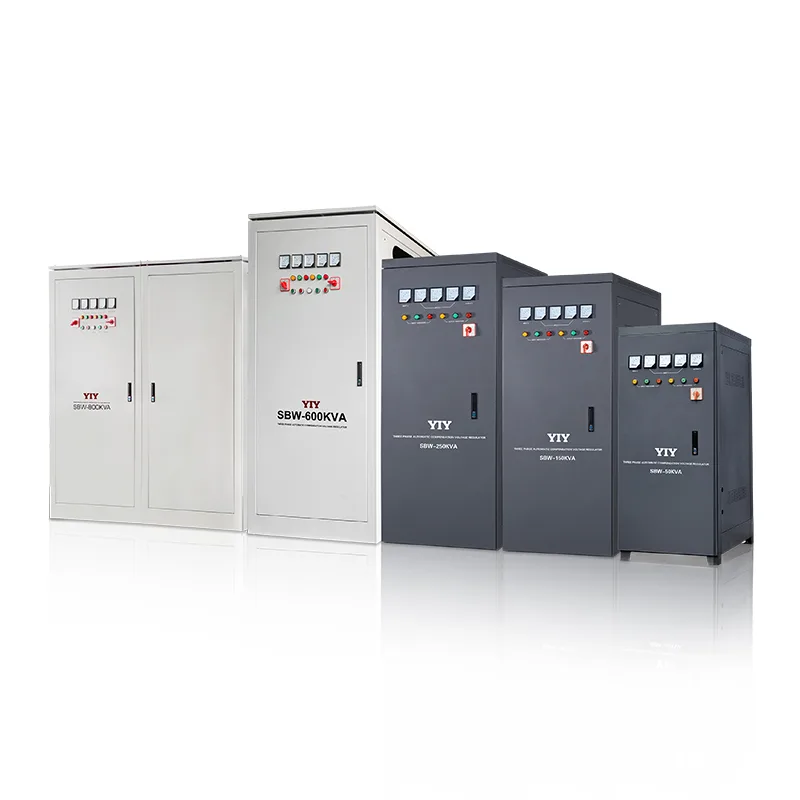
The right voltage stabilizer kVA is the rating that covers your real load kW, power factor, starting current, input-voltage window, phase behavior, and site derating, not simply the closest catalog size. YIY’s documented stabilizer range spans 0.5 kVA to 3000 kVA, while IEC 60038 standard voltages give you the nominal-voltage reference point for checking site compatibility.
If your load list includes motors, HVAC, CNC machines, UPS systems, medical equipment, or mixed three-phase panels, the wrong capacity can lead to nuisance trips, overheated components, unstable output, or overspending. This guide will help you decide how to calculate kVA, choose single-phase or three-phase configuration, compare servo and digital/IGBT options, verify standards evidence, and screen suppliers before you request a quote.
Who needs this sizing guide?
You need this guide if you are turning site load data into a stabilizer shortlist for a plant, panel project, EPC package, facility upgrade, or procurement file. Your job is to choose a capacity class, voltage range, phase configuration, and regulation technology that match the operating reality of your equipment.
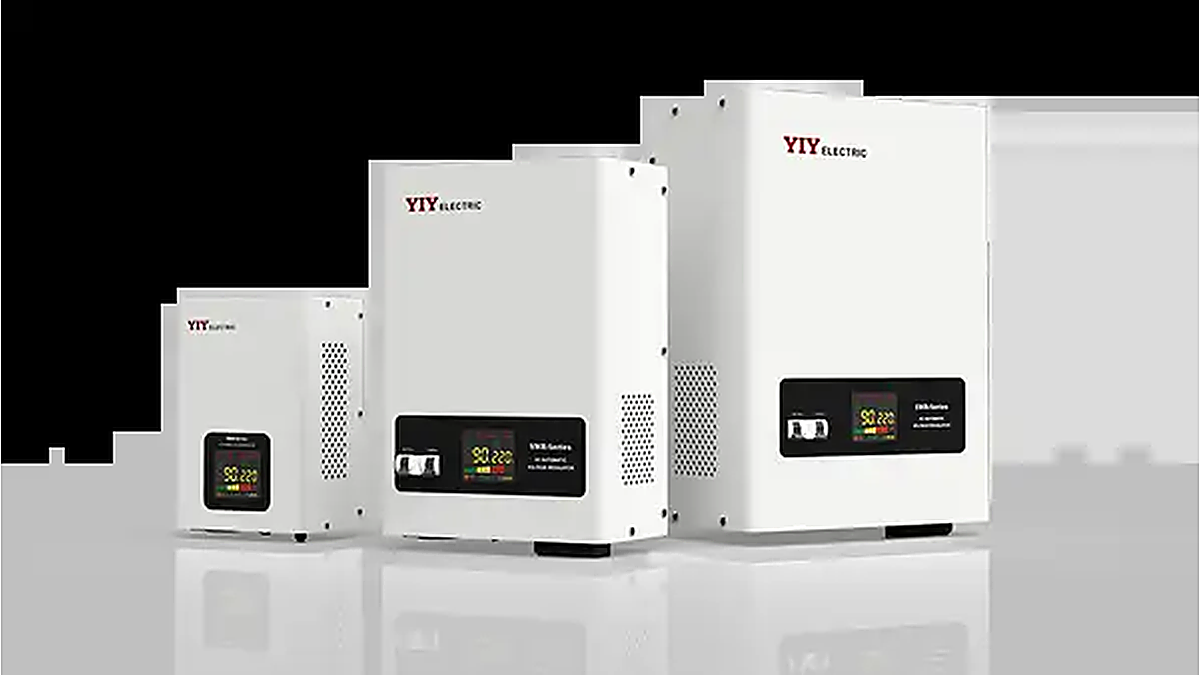
For your first decision, do not start with “5 kVA, 20 kVA, or 50 kVA” as a catalog question. Start with what the connected load does during normal operation, startup, voltage dips, and phase imbalance.
| Your role | Main decision | Risk if you skip it |
|---|---|---|
| Engineer or panel builder | Load kW, power factor, surge current, phase balance | Undersizing, overheating, nuisance trips |
| Facility or maintenance manager | Voltage fluctuation, dust, humidity, heat, ventilation | Repeat faults and poor uptime |
| Procurement or EPC buyer | Supplier scope, documentation, customization, service support | Low initial price with higher lifecycle risk |
For you, the practical specification should define input voltage, output voltage, frequency, phase, kVA rating, allowable overload, protection functions, enclosure needs, and monitoring requirements. IEC 60038 helps you confirm whether your site is based on 230/400 V, 240/415 V, or another regional convention before you approve the nameplate. In practical terms, this prevents a costly mismatch between the stabilizer and your actual grid standard.
Supplier capability also matters. YIY can support broader stabilizer selection across servo, relay, and digital/IGBT platforms, with OEM/ODM options for export buyers who need private-label, project-specific, or panel-integrated configurations. Some competing suppliers may have strong local project references, such as government, railway, or isolation-transformer work, but limited global support, no visible digital/IGBT platform, no stated OEM/ODM service, or smaller production scale.
How do you calculate voltage stabilizer kVA?
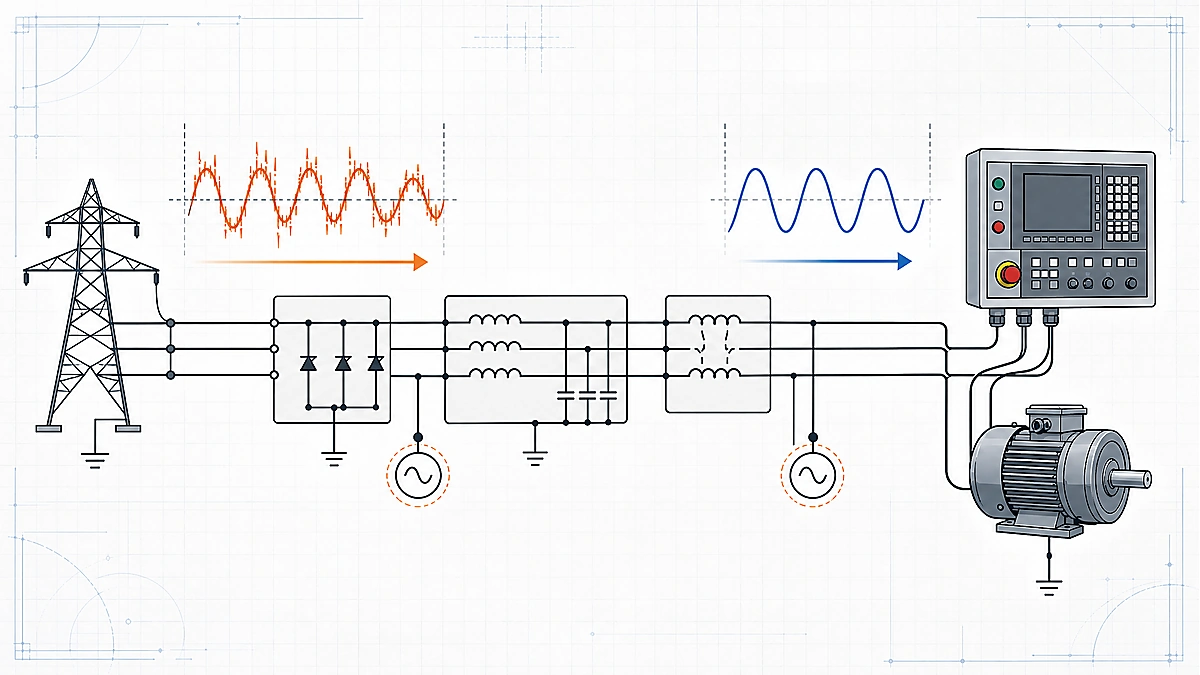
You calculate stabilizer size by converting your real running load into apparent power, then adding allowance for starting current, low input voltage, phase imbalance, environment, and future expansion. The base formula is:
kVA = kW ÷ power factor
If your connected load is 40 kW at 0.8 PF, your apparent load is 50 kVA before adding margin. For you, that means a 50 kVA unit is only the mathematical starting point, not automatically the final selection.
| Check | Why it matters | If you skip it |
|---|---|---|
| Real kW and measured current | Confirms actual demand instead of nameplate guesswork | You may undersize the unit |
| Power factor | Converts usable kW into apparent kVA | The stabilizer can overheat at “normal” load |
| Starting current | Motors, compressors, pumps, and HVAC can surge | Output voltage may sag during startup |
| Lowest input voltage | Stabilizers may derate when supply is weak | The unit may fail to hold output voltage |
| Phase current balance | Three-phase loads may not share current evenly | One phase can overload first |
| Load sensitivity | CNC, UPS, medical, and test equipment need tighter control | You may see nuisance alarms or process faults |
For a mixed industrial panel, add a practical safety margin after the base calculation. The exact margin depends on motor size, simultaneous starting, voltage fluctuation, ambient temperature, and supplier overload capability. Instead of applying one fixed percentage blindly, ask the supplier to validate your final rating against its overload curve and input-voltage derating data.
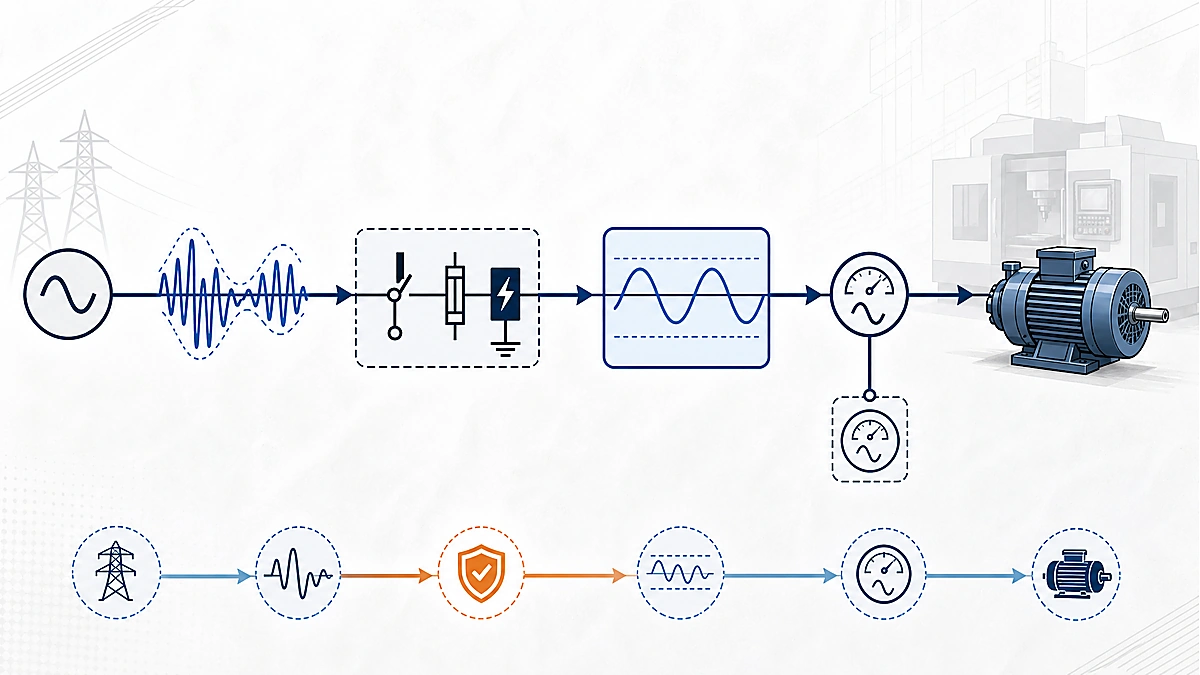
If your calculated load sits around the mid-capacity range, you can compare your assumptions with a dedicated 20kva voltage stabilizer technical guide. That helps you see how this capacity tier behaves when power factor, three-phase load behavior, and site voltage variation are considered together.
Which phase configuration fits your load?
You should choose single-phase or three-phase stabilizer configuration according to your supply system and load distribution, not according to capacity alone. A 5 kVA unit can be single-phase, while industrial panels from 10 kVA upward often require three-phase evaluation, but your wiring and phase behavior are the deciding factors.
Single-phase stabilizers are usually suitable for smaller equipment, office loads, residential devices, single-phase motors, and light commercial applications. Three-phase stabilizers fit main-line panels, production equipment, HVAC systems, CNC machinery, pumps, compressors, and distribution boards where the load is spread across three phases.
| Configuration | Better fit | What you should verify |
|---|---|---|
| Single-phase stabilizer | Small machines, office equipment, household or light commercial loads | Voltage range, current, plug or terminal type, neutral wiring |
| Three-phase stabilizer | Main-line panels, industrial loads, HVAC, CNC, pumps, compressors | Phase balance, neutral requirement, phase failure protection, load distribution |
| Three-phase independent regulation | Sites with uneven phase behavior | Whether each phase must correct separately |
| Three-phase balanced regulation | More stable balanced loads | Whether imbalance protection is enough |
For you, phase imbalance is not just a theoretical electrical issue. If one phase carries more current, the stabilizer can heat unevenly, protective devices may trip, and downstream motors may run poorly. For larger main-line projects, use a dedicated 3 phase main line stabilizer sizing process after your first kVA calculation so you can check current per phase, neutral wiring, and protection requirements before procurement.
Which stabilizer technology should you choose?
You should choose the technology that matches your accuracy requirement, budget, load sensitivity, and maintenance expectations. Servo voltage stabilizers remain a practical default for many industrial loads, relay stabilizers fit simpler cost-sensitive applications, and digital/IGBT units are better for sensitive loads that need faster control and stronger monitoring.
| Technology | Better fit | Trade-off to check |
|---|---|---|
| Servo voltage stabilizer | General industrial panels, machinery, HVAC, mixed loads | Moving parts require maintenance |
| Relay stabilizer | Light loads and cost-sensitive applications | Step correction may be less precise |
| Digital/IGBT stabilizer | CNC, UPS, medical, testing, automation loads | Higher technical complexity and cost |
| Stabilizer with isolation transformer | Sites needing extra electrical separation | Added size, weight, and cost |
For your application, servo stabilizers usually offer a balanced mix of capacity coverage, cost, and reliability. They are often selected for industrial panels because they can handle meaningful load sizes while maintaining controlled output voltage.
Digital/IGBT stabilizers use semiconductor switching and control logic for tighter regulation and faster response. If your load includes PLCs, CNC controls, UPS inputs, laboratory equipment, or medical devices, ask whether the unit provides alarm visibility, event records, communication options, and protection functions suitable for your process.
For broader decision logic across load type, regulation accuracy, environment, and business risk, compare your shortlist with an industrial voltage stabilizer selection framework. That keeps the discussion focused on fit instead of only capacity labels.
What standards and proof should you request?
You should use standards and documentation as a procurement filter before you accept a stabilizer quote. The minimum proof should confirm voltage compatibility, capacity assumptions, protection functions, test records, and manufacturing quality controls.
| Evidence type | Requirement or best practice? | What you should request |
|---|---|---|
| Nominal voltage alignment | Requirement | Input/output voltage, phase, frequency, wiring system |
| Capacity and overload data | Requirement | kVA rating, PF assumption, overload curve, derating notes |
| Protection functions | Requirement | Over-voltage, under-voltage, overload, short-circuit, phase failure |
| Disturbance immunity context | Project-dependent | Reference to IEC 61000-4-11 voltage dip and interruption testing where applicable |
| Quality management | Best-practice proof | Valid ISO 9001 quality management certification or equivalent audit evidence |
| Final inspection | Best-practice proof | Test report, nameplate photo, wiring diagram, packing record |
IEC 61000-4-11 addresses voltage dips, short interruptions, and voltage variation immunity testing for electrical and electronic equipment. For you, this matters when connected equipment can fault during unstable grid events, especially UPS inputs, PLCs, CNC controls, medical devices, and test systems.
ISO 9001 is not a stabilizer performance standard, but it helps prove that manufacturing, inspection, and corrective-action processes are controlled. In your procurement file, it should sit beside product-specific evidence such as test reports, wiring diagrams, overload data, and warranty terms.
How should you screen the supplier?
You should screen the supplier by checking whether they can prove fit for your load, not just quote a lower kVA price. The best supplier for your project is the one that can review your data, explain the sizing basis, document the build, and support installation conditions.
| Check | Why it matters | If you skip it |
|---|---|---|
| Load review before quote | Confirms kW, PF, surge, and phase behavior | You may buy the wrong rating |
| Input-voltage range options | Weak grids need wider correction range | Output may fail under low voltage |
| Technology range | Different loads need different regulation behavior | You may force one product type onto every application |
| Customization support | Export panels may need enclosure, wiring, branding, or documentation changes | Retrofit and approval delays increase |
| Factory and quality proof | Repeat orders need consistent production | Supplier risk becomes project risk |
| After-sales process | Industrial units need serviceability | Downtime lasts longer during faults |
YIY’s documented stabilizer scope spans 0.5 kVA to 3000 kVA, with servo, relay, and digital/IGBT platforms referenced in technical materials. Practically, that lets you evaluate small single-phase devices, 20 kVA to 50 kVA panel projects, and high-capacity three-phase installations without changing supplier category too early.
YIY also documents 16+ years in voltage stabilization, 30,000 square meters of factory scale, 1,000,000+ units annual capacity, exports to 130+ countries, and 120+ long-term partners. For you, these figures matter as supply-risk indicators when repeat orders, OEM/ODM consistency, documentation, and delivery schedules affect the project.
When your shortlist moves toward higher-capacity procurement, use a structured approach to compare before buying a voltage stabilizer. If supplier capability, customization, factory scope, and export support are part of your risk review, you can also benchmark potential vendors through an industrial voltage stabilizer manufacturers evaluation lens.
What should you prepare before requesting a sizing review?
You should prepare a short technical checklist before asking for a model recommendation. This gives the supplier enough information to recommend a capacity tier without guessing.
| Check | Why it matters | If you skip it |
|---|---|---|
| Load list | Shows kW, kVA, PF, and equipment type | The quote may be based on incomplete demand |
| Starting current | Identifies motors, pumps, compressors, HVAC, and UPS inrush | The unit may trip at startup |
| Voltage measurements | Shows lowest and highest real input voltage | The input range may be wrong |
| Phase details | Confirms single-phase, three-phase, neutral, and imbalance | Wiring or protection may be unsuitable |
| Environment | Captures heat, dust, humidity, corrosive air, outdoor exposure | Cooling or enclosure may fail in service |
| Monitoring needs | Defines display, alarms, event logs, communication | Maintenance teams may lack fault visibility |
| Expansion plan | Allows spare capacity for future loads | The system may be outgrown quickly |
Before implementation, share your load list, starting current, input-voltage window, phase system, installation temperature, dust and humidity conditions, ventilation space, enclosure/IP expectations, and any monitoring requirements. A short first-pass review is usually enough to identify whether your project belongs near a small single-phase class, a 20 kVA to 50 kVA industrial panel class, or a larger three-phase main-line class.
Frequently Asked Questions
How much power can a 5 kVA stabilizer handle?
A 5 kVA stabilizer can handle up to 5,000 VA of apparent power before derating or surge allowance. At 0.8 power factor, that equals about 4 kW of running load. For your verification, check the load nameplate, measured current, power factor, motor starting current, and lowest site input voltage before assuming a 5 kVA unit is enough.
How long does a 5 kVA stabilizer last?
A 5 kVA stabilizer can last several years when it is correctly sized, ventilated, protected from dust and humidity, and not overloaded. Your maintenance check should include temperature rise, fan condition, terminal tightness, alarm history, and carbon brush wear if it is a servo model.
Which company is best for servo stabilizers?
The best servo stabilizer company is the one that can prove fit for your load, voltage range, documentation needs, customization requirements, test records, warranty terms, and after-sales expectations. Before you approve a supplier, request the sizing basis, final inspection record, wiring diagram, nameplate details, and quality-system evidence.
What are the common problems with stabilizers?
Common stabilizer problems include overload trips, output fluctuation, overheating, relay or servo motor wear, loose terminals, phase imbalance, and failure to regulate at low input voltage. Your first verification action should be to measure input voltage, output voltage, current per phase, enclosure temperature, and alarm history before replacing the unit.
What is the lifespan of a servo stabilizer in industrial use?
A servo stabilizer’s lifespan in industrial use depends on load percentage, voltage fluctuation frequency, dust, heat, humidity, maintenance quality, and the condition of moving parts such as carbon brushes, motor, and variac. Your maintenance routine should record output stability, abnormal noise, brush wear, temperature, and overload events.
Final thoughts
The right voltage stabilizer kVA type is the one matched to your measured load demand, power factor, starting current, input-voltage range, phase behavior, and site conditions. Capacity selection is an uptime decision, not just a catalog comparison.
Start with a quick sizing review: load list, starting current, input-voltage window, phase system, and installation environment. YIY can use that first-pass information to suggest a suitable capacity tier and model direction before you invest time in a full engineering submittal.
About YIY
Zhejiang Yiyen Holding Group Co., Ltd. (YIY) is a professional voltage stabilizer manufacturer with 16+ years of experience. With a 30,000 square meter modern facility and annual production capacity of 1,000,000+ units, YIY products are exported to 130+ countries. YIY provides OEM/ODM customization services and ISO 9001:2015 certified manufacturing support for stable, reliable voltage protection solutions.
Contact Us
Email: yiyen at yiyen.com
Phone/WhatsApp: +86 13587452904
Website: https://www.yiyavr.com/