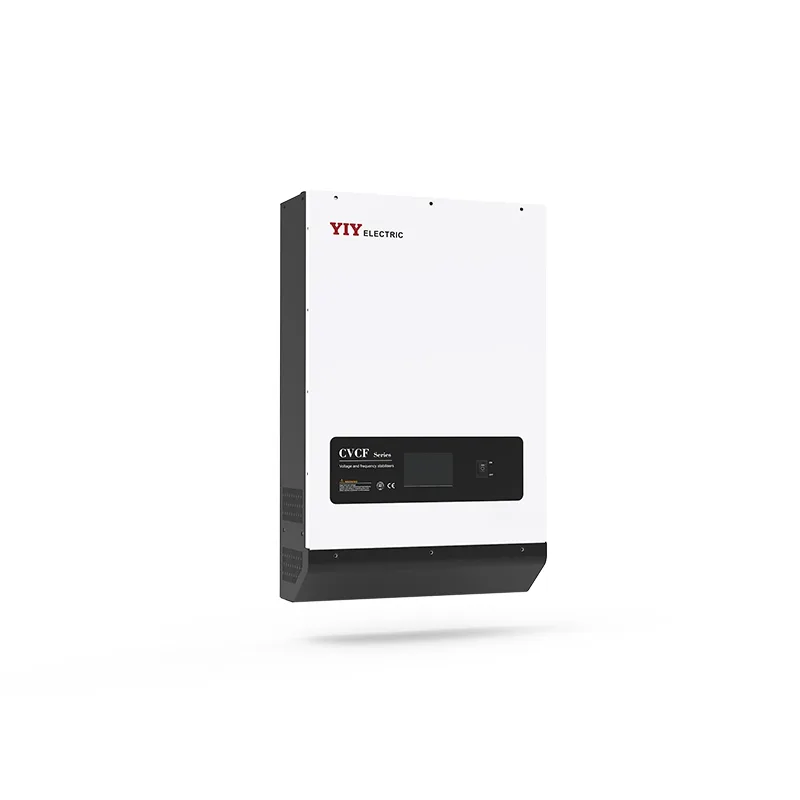
A 5-litre oxygen concentrator is a small load: one published 230 V model lists 312 W average and a 1.55 A rating. Size the stabilizer from nameplate VA plus starting headroom, keep its output inside the concentrator’s rated voltage window, and prefer continuous correction for 24/7 duty.
Procurement teams should then check four points: regulation under load shifts, safety certification, capacity planning with margin, and factory quality controls. This guide maps each checkpoint so you can request targeted quotes.
Procurement Priorities for Healthcare and Facility Buyers
Commercial sourcing for a voltage stabilizer for oxygen concentrator deployments demands alignment with technical specifications and clinical risk tolerance. Home healthcare networks, hospital procurement teams, and facility managers should prioritize indoor engineering precision over generic cost-saving metrics.
As noted by FEMP voltage quality standards, even minor grid fluctuations can compound over time and shorten compressor life. A stabilizer with continuous correction, such as a servo or IGBT design, corrects small voltage shifts before they reach the concentrator’s controller.
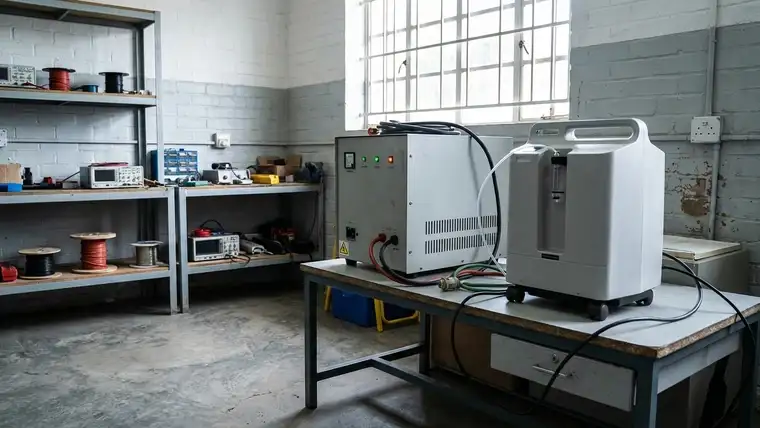
Precision Engineering vs. Outdoor-Focused Hardware
Many industrial suppliers, such as TSI Power, design stabilizers primarily for rugged outdoor or heavy industrial environments where extreme surge tolerance outweighs tight regulation needs. Clinical settings instead require indoor precision solutions utilizing servo-mechanisms or advanced digital control architectures. These systems continuously monitor input variance and adjust output without the stepping delays inherent in consumer-grade hardware.
Why Consumer and Generic Stabilizers Fall Short
High-volume retail stabilizers and unverified generic models often rely on basic relay-switching circuits that introduce abrupt voltage steps. These steps can disturb the pressure-swing adsorption cycle inside an oxygen concentrator and add wear to the compressor. Generic units may also lack harmonic filtering and fast thermal cutoffs.
Compliance Standards and Core Technology Benchmarks
Technical sourcing for a voltage stabilizer for oxygen concentrator deployments must anchor selections in documented electrical standards and measurable precision metrics rather than marketing claims. Understanding how voltage stabilizers work at the component level reveals why topology dictates clinical safety margins and long-term therapeutic reliability.
Verifying International Compliance
Global deployments require strict alignment with IEC frameworks. As defined by IEC 60038 voltage levels, hardware must adapt to regional grids without compromising therapeutic output. Meanwhile, IEC 61000 guarantees electromagnetic compatibility, preventing grid noise from interfering with sensitive concentrator microcontrollers. Procurement teams must verify that units safely absorb a ±10% input tolerance before triggering automatic cutoffs or alarms. This verified buffer shields medical compressors from severe sags and extends critical asset lifespan without manual operator intervention.
Technology Precision Metrics
Architecture selection dictates therapeutic safety margins and operational overhead. The following comparison highlights the core trade-offs between commercial relay models and clinical-grade digital control:
| Technology Type | Output Precision | Response Time | Clinical Suitability | Primary Risk for Medical Use |
|---|---|---|---|---|
| Relay Step-Up/Down | Stepped; coarser than servo | Fast steps | Low (Basic Home) | Abrupt voltage steps disrupt adsorption cycles |
| Servo Motor | Tight, continuous (YIY SVC/TWS: ±3%) | Seconds (motor-driven) | High (Standard Clinical) | Mechanical brush wear over long duty cycles |
| IGBT / Digital | Tight, electronic | Fastest (no moving parts) | Critical (ICU/Home Care) | Higher upfront cost; requires thermal management |
Regulatory Requirements vs. Best Practices
Separating mandatory compliance from manufacturer-added features prevents budget bloat. Hardware conforming to recognized safety and EMC standards meets the core regulatory obligations for patient-care equipment, while smart monitoring dashboards or telemetry modules are optional enhancements.
Prioritize verified certifications over interface upgrades, and request third-party test reports to validate vendor claims. Documented traceability turns supplier promises into defensible procurement decisions.
Load Calculations, Capacity Sizing, and Environmental Fit
Accurate capacity specification begins with the nameplate, not rough estimates. Sum the rated VA of every concentrator and clinical peripheral on the circuit (volts × amps from each label), then add headroom for compressor starts and future units before you request quotes. For larger arrays, reviewing 20kVA capacity planning keeps the scaling logic consistent.
What VA Does a 5 Litre Oxygen Concentrator Need?
Read the rating label. One published 5-litre compact concentrator spec lists, for the 220–230 V / 50 Hz version, a 1.55 A rating and 312 W average consumption (296 W at 2.5 L/min and below). Its 230 V / 60 Hz version lists 387 W average.
| Step | Worked example (230 V / 50 Hz unit above) |
|---|---|
| Nameplate VA = volts × amps | 230 V × 1.55 A ≈ 357 VA |
| Add other loads on the same outlet | Humidifier, monitor, or a second unit, each from its own label |
| Add starting headroom | Pick the next standard stabilizer rating above the total, with room for compressor starts |
| Check the voltage window | The same spec lists an operating range of 187–253 V; the stabilizer output must stay inside it |
Managing Inrush Current and Typical Power Loads
The air compressor dictates the true kVA requirement, and its starting behavior matters during procurement. Ask the concentrator maker for starting current data and compare it with the stabilizer’s overload rating so the compressor can cycle without voltage droop.
Indoor Environment Constraints and Thermal Management
Clinical installations require hardware optimized for controlled indoor parameters, not heavy-duty outdoor enclosures. Stabilizers mounted in confined equipment closets suffer rapid thermal degradation under continuous clinical duty, forcing internal components to operate past safe temperature thresholds. Procurement teams should prioritize ambient derating specifications and verify convection cooling pathways before finalizing rack placements to preserve winding insulation integrity.
Shortlisting Vendors and Finalizing Procurement Specs
Core Manufacturing and Engineering Credentials
Evaluate suppliers against audited production metrics rather than standardized marketing collateral. ISO 9001:2015 certification establishes the non-negotiable baseline for documented quality management, guaranteeing consistent copper winding tolerances and component assembly rigor. Applying a complete selection framework ensures cross-validation of factory throughput data and dedicated after-sales engineering support, eliminating clinical downtime during critical grid failures.
Precision Indoor Architectures for Medical Demand
Some industrial brands prioritize rugged outdoor enclosures over the tight regulation that medical electronics need. YIY’s servo lines, such as SVC and TWS, hold output within ±3% as listed on their product pages, with continuous correction instead of the stepped switching of relay designs.
Consultative Next Steps for Finalizing the RFQ
Transform your preliminary evaluation into a binding procurement strategy by submitting exact operational parameters to engineering teams. Share verified grid input ranges, peak load baselines, and ambient temperature limits so technical staff can execute accurate thermal derating models and request customized wiring schematics. Cross-validate third-party type test reports against formal warranty terms to filter out under-specified hardware and lock in a defensible equipment shortlist.
Frequently Asked Questions
What Should Buyers Evaluate Before Choosing a Voltage Stabilizer for Oxygen Concentrators?
Prioritize output regulation, thermal derating data, and international compliance. Choose indoor-rated units with continuous correction, and reject generic relay models that lack IEC certification or harmonic filtering.
How Do I Calculate the Required kVA Capacity for My Concentrator Setup?
Read volts × amps from each concentrator label, add every peripheral on the same circuit, and choose the next standard rating above the total with headroom for compressor starts.
Is a Servo Stabilizer Better Than a Relay Stabilizer for Continuous Medical Equipment?
Yes. Servo stabilizers utilize a continuously adjusting autotransformer rather than stepped relays, delivering smoother voltage transitions that protect sensitive concentrator compressors. Relay models introduce micro-voltage steps during switching, which can disrupt airflow control mechanisms and accelerate mechanical wear over 24/7 clinical operation cycles.
Final Thoughts
Selecting the right voltage stabilizer for oxygen concentrator deployments hinges on four measurable criteria: strict IEC compliance, continuous servo or digital precision over discrete relay stepping, nameplate-based capacity with headroom for compressor starts, and audited indoor manufacturing standards. Generic industrial or retail hardware cannot absorb rapid grid fluctuations without silently degrading delicate pressure-swing cycles and accelerating compressor failure. The procurement logic is simple: shortlist servo voltage stabilizers on verified precision, not baseline hardware cost.