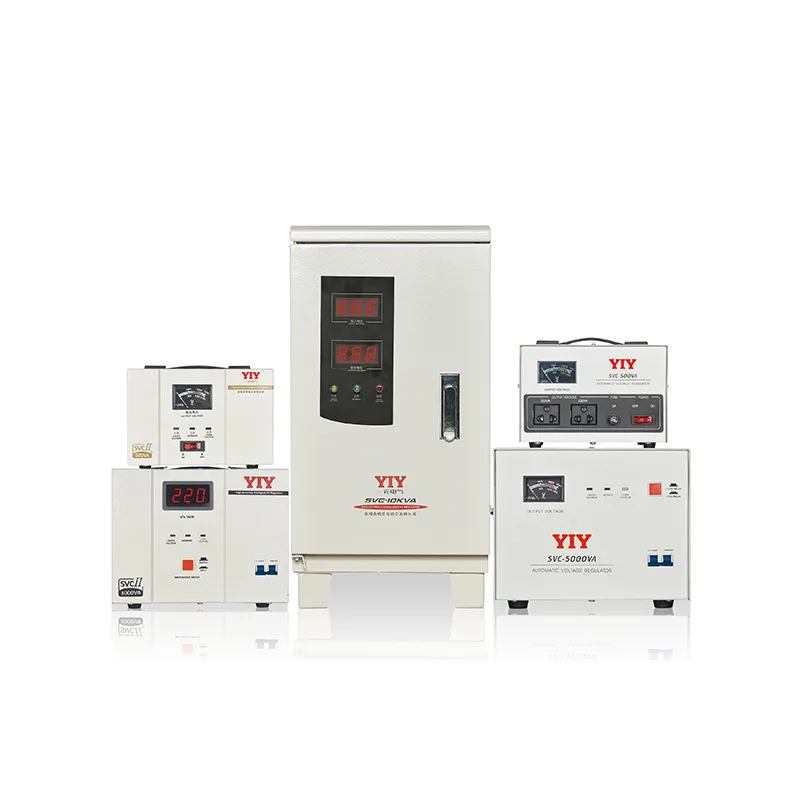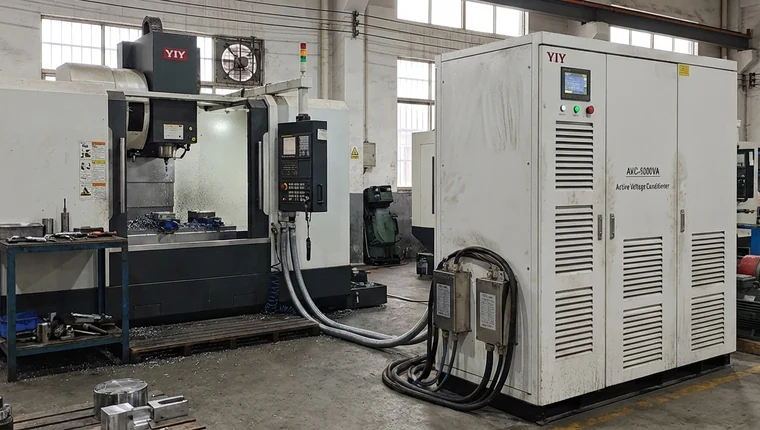
A 5000-watt heavy duty voltage regulator/stabilizer is an electrical device that automatically maintains constant output voltage despite input fluctuations — protecting heavy-load equipment like CNC machines, refrigeration units, and industrial motors from the voltage sags, surges, and brownouts common in unstable utility grids. At 5kW, this capacity sits at the threshold where technology choice, sizing method, and compliance requirements start to matter as much as the unit itself.
This article walks industrial engineers, facility managers, and procurement teams through the core decision: which stabilizer technology fits a 5kW heavy-duty load, how to size it correctly, and what certifications to verify before committing to a model.
What a 5000-Watt Heavy Duty Voltage Regulator/Stabilizer Actually Does
A 5000-watt heavy duty voltage regulator/stabilizer is an automatic voltage regulation device that continuously monitors incoming supply and adjusts output to maintain a stable voltage level — regardless of what the grid throws at it. Sags, surges, brownouts, and slow drift are all corrected in real time before they reach connected equipment.
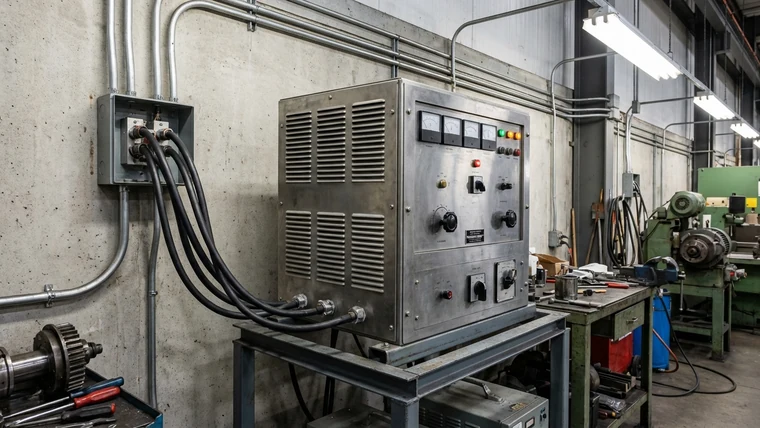
The core mechanism varies by technology, but the job is the same: sense deviation from the nominal output voltage, then compensate. IEC 60038 defines standard voltage levels (e.g., 220V/380V ±10%) and sets the tolerance baseline that compliant stabilizers must hold. A properly rated unit keeps output within spec even when input swings well outside that window.
Why 5kW Is a Meaningful Threshold
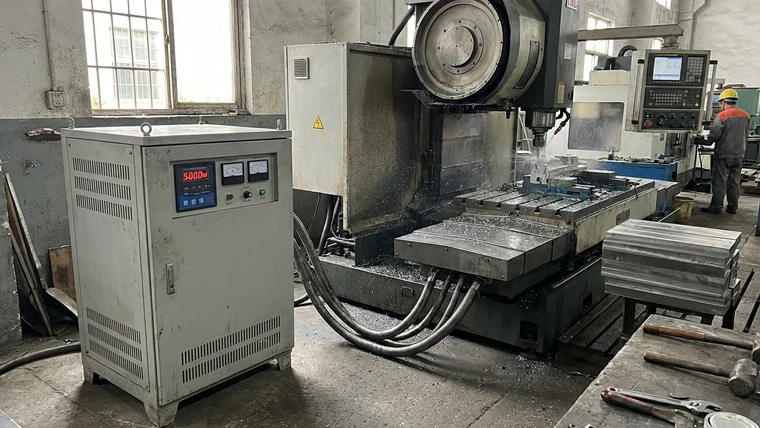
At 5,000 watts (5kVA), you’re in the range of equipment that draws sustained heavy current — CNC machines, commercial refrigeration compressors, industrial motors, and multi-unit workshop setups. These loads are sensitive to voltage deviation and expensive to repair or replace. A stabilizer at this capacity isn’t a precaution; it’s a protection layer that directly affects uptime and equipment lifespan.
Servo vs. IGBT: The Spec Baseline
Two technologies dominate at this capacity, and their specs define the decision:
Servo stabilizers use a motor-driven variac (autotransformer) with MCU monitoring. Output precision: ±0.5–3%. Correction response: ≤1–2 seconds. This is the standard choice for industrial heavy-duty applications — reliable, cost-effective, and proven across wide input ranges.
IGBT-based stabilizers (such as the CVCF series) use solid-state switching for near-instantaneous correction. Output precision: ±0.5%. Response time: 10ms. THD below 3%, power factor above 0.99, and input range of 35–70Hz to stable 50/60Hz output. This is the spec tier for mission-critical loads where even a 1-second correction lag is unacceptable.
Relay-type units correct faster than servo but hold only ±5–8% precision — adequate for residential appliances, not for industrial equipment at 5kW.
Who Needs One and What Decision They’re Actually Making
The typical buyer is an industrial engineer, facility manager, or procurement team member responsible for protecting equipment that draws sustained heavy current — roughly 5,000 watts or 5kVA. The job-to-be-done isn’t just “buy a stabilizer”; it’s choosing the right stabilizer technology for the load type and sizing it correctly for the grid conditions on site.
Typical Applications at 5kW
At this capacity, you’re protecting equipment where voltage deviation directly affects uptime and lifespan. CNC machines require stable voltage to maintain precision and avoid servo-motor drift. Commercial refrigeration compressors cycle under load and are sensitive to brownouts that can trip thermal protection or damage the compressor. Industrial HVAC units, especially variable-frequency drive systems, need clean voltage to avoid nuisance faults. Medical equipment — diagnostic machines, imaging systems, lab instruments — often specifies ±5% voltage tolerance, and a stabilizer is the only practical way to guarantee that in unstable grids.
Grid Instability Scenarios That Trigger the Need
Two scenarios drive the decision. First, developing-market utility grids where voltage sags below 180V or surges above 250V are routine, especially during peak demand or weather events. Second, shared industrial power feeds where multiple heavy loads on the same transformer cause voltage drop when large motors or welders start. In both cases, the grid is the problem, and the stabilizer is the only layer of protection between the grid and the equipment.
The Three Technology Choices Buyers Face: Servo vs Relay vs IGBT
At 5kW, you have three options, and the choice matters. Servo stabilizers deliver ±0.5–3% precision with 1–2 second correction — the standard for industrial heavy-duty applications where cost, reliability, and precision need to balance. Relay-type units correct faster but hold only ±5–8% precision, adequate for residential appliances but not for industrial equipment at this capacity. IGBT-based stabilizers (like the CVCF series) offer ±0.5% precision at 10ms response time — the spec tier for mission-critical loads where even a 1-second lag is unacceptable. The decision comes down to how much voltage deviation the equipment can tolerate and how fast correction needs to happen.
Servo, Relay, or IGBT: Which Technology Fits a 5kW Heavy-Duty Load
Technology choice at 5kW isn’t a minor spec detail — it determines whether your equipment survives a brownout or trips offline at the worst possible moment. Three technologies are available, and each maps to a different use case.
Servo: The Industrial Default
Servo stabilizers use a motor-driven variac (autotransformer) with MCU-based real-time monitoring. Output precision: ±0.5–3%. Correction response: ≤1–2 seconds. This is the right choice for most industrial 5kW applications — CNC machines, compressors, HVAC systems — where you need a proven balance of precision, reliability, and cost. The 1–2 second response window is acceptable for equipment that can tolerate brief correction lag without tripping or losing calibration.
IGBT (CVCF Series): Mission-Critical Precision
When a 1-second lag is unacceptable, IGBT-based stabilizers are the only viable option. The CVCF 5kVA single-phase unit delivers ±0.5% output voltage, 10ms correction time, THD below 3%, and power factor above 0.99. It also accepts 35–70Hz input and stabilizes to a clean 50/60Hz output — critical for medical diagnostic equipment, precision lab instruments, and sensitive manufacturing systems where even momentary deviation causes measurement error or process failure.
The spec gap between servo and IGBT is significant: 10ms vs. 1–2 seconds is a 100× difference in response speed. For mission-critical loads, that gap is the entire argument.
Relay: Residential and Light Commercial Only
Relay-type units switch electromagnetic taps for fast response but hold only ±5–8% output precision. That’s adequate for household appliances and light commercial loads, but not for industrial equipment at 5kW where tighter voltage tolerance directly affects motor performance and equipment lifespan. Relay units cost less and switch faster than servo, but the precision ceiling rules them out for heavy-duty industrial use.
The Competitor Gap: Servomax Lacks IGBT
This distinction matters when evaluating suppliers. Servomax — a commonly referenced India-based competitor — offers servo stabilizers and transformers, but does not carry IGBT or digital stabilizer technology. For buyers with mission-critical 5kW loads requiring 10ms correction and sub-1% precision, Servomax simply cannot fulfill the spec. That’s not a minor product gap; it’s a technology category that doesn’t exist in their lineup.
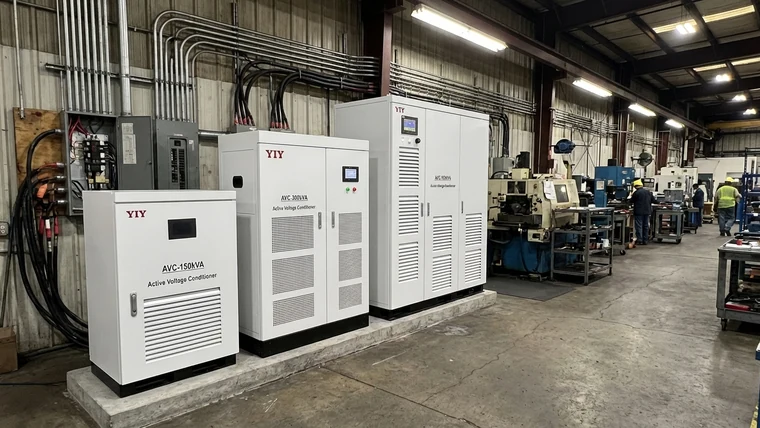
| Technology | Output Precision | Response Time | Best Fit |
|---|---|---|---|
| Servo | ±0.5–3% | ≤1–2s | Industrial heavy-duty |
| IGBT (CVCF) | ±0.5% | 10ms | Mission-critical |
| Relay | ±5–8% | Fastest | Residential/light commercial |
How to Size a 5000-Watt Stabilizer Correctly
Sizing a stabilizer isn’t about matching nameplate capacity — it’s about calculating total connected load and adding margin for inrush current, future expansion, and sustained peak demand. Get this wrong and you either trip the unit under normal operation or pay for capacity you’ll never use.
The Sizing Formula
Start with total connected load in watts or VA, then multiply by a safety margin of 1.2 to 1.3. This accounts for motor starting current (typically 3–6× running current), simultaneous operation of multiple loads, and voltage correction overhead. The formula is simple: Total Load (W or VA) × 1.2–1.3 = Required Stabilizer Capacity.
For resistive loads like heaters, watts and VA are equivalent. For inductive loads — motors, compressors, transformers — use VA and account for power factor. If equipment dataplates list only watts, assume 0.8 power factor and divide by 0.8 to get VA.
Worked Example
A facility runs a 3.5kW CNC machine and 1kW auxiliary equipment (cooling, lighting, control panel). Total load: 4.5kW. Apply 1.25 safety margin: 4.5kW × 1.25 = 5.625kVA. Round up to the next standard size: choose a 6kVA stabilizer. If the CNC has a large servo motor with high inrush, use 1.3 margin instead: 4.5kW × 1.3 = 5.85kVA, still landing at 6kVA.
Additional Factors Beyond Load Calculation
Input voltage range matters. IEC 60038 defines ±10% tolerance (e.g., 198–242V for 220V nominal), but many grids swing wider. Verify the stabilizer’s correction range covers your site’s actual sag/surge window — servo units typically handle ±15–20%, IGBT models can go wider.
Phase configuration: Single-phase for 5kW is standard, but if you’re protecting three-phase equipment, you need a three-phase stabilizer sized per phase, not total capacity.
Environment: Ambient temperature above 40°C or altitude above 1000m derate capacity by 2–5% per specification. Check the datasheet and adjust your margin accordingly.
Standards, Certifications, and What to Verify Before Buying
Compliance isn’t a checkbox — it’s the difference between a stabilizer that meets grid reality and one that fails under real-world voltage swings. At 5kW, you’re protecting equipment that costs more to replace than the stabilizer itself, so the standards a unit meets directly affect whether it can hold spec when the grid doesn’t.
IEC 60038: The Baseline Compliance Requirement
IEC 60038 defines standard voltage levels and tolerance windows — for example, 220V nominal with ±10% input tolerance (198–242V). A compliant stabilizer must maintain stable output even when input swings outside that window. This is the baseline: if a unit doesn’t reference IEC 60038 compliance, it’s not designed to handle the voltage deviation that industrial grids routinely throw at heavy loads.
ISO 9001:2015 and CE Certification: Quality Management and EU Market Access
ISO 9001:2015 certifies that the manufacturer has a documented quality management system covering design, manufacturing, and service. CE certification is mandatory for EU market access and signals that the product meets European safety and performance directives. These aren’t optional for industrial procurement — they’re the minimum proof that the supplier can deliver consistent quality and that the product is legally compliant for deployment in regulated markets.
IEC 61000 EMC Standards: Relevant for Sensitive Industrial Equipment
IEC 61000 covers electromagnetic compatibility (EMC) — the ability of the stabilizer to operate without emitting interference that disrupts nearby equipment or being disrupted by external EMI. This matters in environments with sensitive instrumentation, medical equipment, or precision manufacturing systems where even minor electrical noise can cause measurement error or process failure. Not every application requires EMC compliance, but if your facility has equipment sensitive to electrical interference, verify that the stabilizer meets IEC 61000 before committing.
YIY’s Certification Stack as a Trust Signal
YIY holds ISO 9001:2015, ISO 14001 (environmental management), and CE certification across its stabilizer range. The product line spans 500VA to 3000KVA, covering the 5kW capacity with servo, relay, and IGBT options. OEM and ODM customization are available for buyers with non-standard voltage, enclosure, or integration requirements. This certification stack isn’t marketing — it’s documented proof that the manufacturing process, environmental controls, and product compliance are audited and verified by third parties.
Why YIY’s Multi-Technology Range Covers the 5kW Decision
At 5kW, the stabilizer decision isn’t just about capacity — it’s about which technology fits the load and whether the manufacturer can deliver it with the right specs, certifications, and support. YIY’s product range spans 500VA to 3000KVA and covers all three technologies: servo, relay, and IGBT. That means a buyer evaluating a 5kW load can source the right technology from a single manufacturer rather than splitting procurement across multiple suppliers or settling for a technology that doesn’t quite fit.
Single-Source for Servo, Relay, or IGBT at 5kW
If the application requires servo precision for industrial CNC or compressor loads, YIY offers it. If the budget or application calls for relay-type correction, that’s available too. If the load is mission-critical and requires IGBT-based stabilization with 10ms response and sub-1% precision — like the CVCF 5kVA single-phase unit — YIY carries that as well. This isn’t a minor convenience; it’s a procurement advantage. One manufacturer, one quality standard, one point of contact for technical support and warranty.
Global Deployment and Verified Compliance
YIY has deployed stabilizers to 130+ countries over 16+ years, with ISO 9001:2015 and CE certification across the product line. For buyers sourcing equipment that must meet international standards or operate in regulated markets, this certification stack is non-negotiable. It’s not just about the product meeting spec — it’s about documented proof that the manufacturing process, quality controls, and environmental management are audited and verified by third parties.
OEM/ODM Customization for Site-Specific Requirements
Standard catalog units work for most applications, but some sites have non-standard input voltage ranges, enclosure requirements, or environmental conditions that demand customization. YIY offers OEM and ODM services: custom input ranges, modified enclosures, and voltage specs tailored to specific site conditions. For a 5kW buyer facing a grid that swings wider than ±20% or an installation environment with unusual temperature or altitude constraints, this capability is the difference between a unit that works and one that doesn’t.
The Competitor Gap: Servomax and India-Domestic Limitations
Servomax — a commonly referenced India-based competitor — offers servo stabilizers and transformers, but does not carry IGBT or digital stabilizer technology. For buyers with mission-critical 5kW loads requiring 10ms correction, Servomax cannot fulfill the spec. Their geographic focus is India-domestic, and their OEM/ODM scale is not documented at the level YIY operates. That’s not a product gap — it’s a technology category and a market reach gap that directly affects whether a buyer can source the right solution.
Frequently Asked Questions
When is a 5000-watt heavy duty voltage regulator/stabilizer necessary?
A 5000-watt heavy duty voltage regulator/stabilizer becomes necessary when you’re running sustained heavy loads — CNC machines, commercial refrigeration compressors, industrial HVAC, or medical diagnostic equipment — on an unstable utility grid. Two scenarios drive the decision: developing-market grids where voltage routinely sags below 180V or surges above 250V, and shared industrial power feeds where multiple heavy loads on the same transformer cause voltage drop during motor starts. If your equipment costs more to repair or replace than the stabilizer itself, protection isn’t optional.
How should a 5000-watt heavy duty voltage regulator/stabilizer be sized or specified?
Start with total connected load in watts or VA, then apply a 1.2–1.3 safety margin to account for motor inrush current (typically 3–6× running current) and simultaneous operation. For example: a 3.5kW CNC machine plus 1kW auxiliary equipment equals 4.5kW total — multiply by 1.25 and you land at 5.625kVA, so choose a 6kVA unit. Also verify the stabilizer’s input correction range covers your site’s actual voltage swing, not just the IEC 60038 ±10% standard window.
What should buyers evaluate before choosing a 5000-watt heavy duty voltage regulator/stabilizer?
Three factors determine the right model. First, technology fit: servo (±0.5–3% precision, 1–2s response) for most industrial loads; IGBT (±0.5%, 10ms) for mission-critical equipment that can’t tolerate correction lag. Second, certifications: IEC 60038 compliance, ISO 9001:2015, and CE are the minimum for industrial procurement. Third, supplier capability: verify the manufacturer covers all three technologies and offers OEM/ODM options — suppliers limited to servo only cannot fulfill IGBT specs when the application demands it.
Final Thoughts
Choosing the right 5000-watt heavy duty voltage regulator/stabilizer comes down to three variables: load type, grid conditions, and how much correction lag your equipment can tolerate. Servo handles most industrial applications at the right cost-to-precision ratio; IGBT is the only viable path when milliseconds matter. Size to your actual connected load plus a 1.2–1.3 margin, verify IEC 60038 compliance and ISO 9001 certification, and confirm the supplier can deliver the technology your spec actually requires — not just the technology they happen to carry.
If you’re ready to move forward, share your load profile, site voltage conditions, and target output requirements with the YIY engineering team. We’ll recommend the right model — servo, relay, or IGBT — based on what your application actually needs.
About YIY
Zhejiang Yiyen Holding Group Co., Ltd. (YIY) is a professional voltage stabilizer manufacturer with 16+ years of experience. With a 30,000sqm modern facility and an annual production capacity of 1,000,000+ units, our products are exported to 130+ countries. We provide OEM/ODM customization services and are ISO 9001:2015 certified, committed to delivering stable and reliable voltage protection solutions to global customers.
Contact Us
Email: yiyen at yiyen.com
Phone/WhatsApp: +86 13587452904
Website: https://www.yiyavr.com/
If you found this article helpful, contact us for a sizing review or customized solution.
Related reading: Servo Voltage Stabilizer 5 KVA: How to Choose One.
For a full buying checklist before selecting a 5000-watt AVR, see the automatic voltage regulator 5000 watts buying guide.