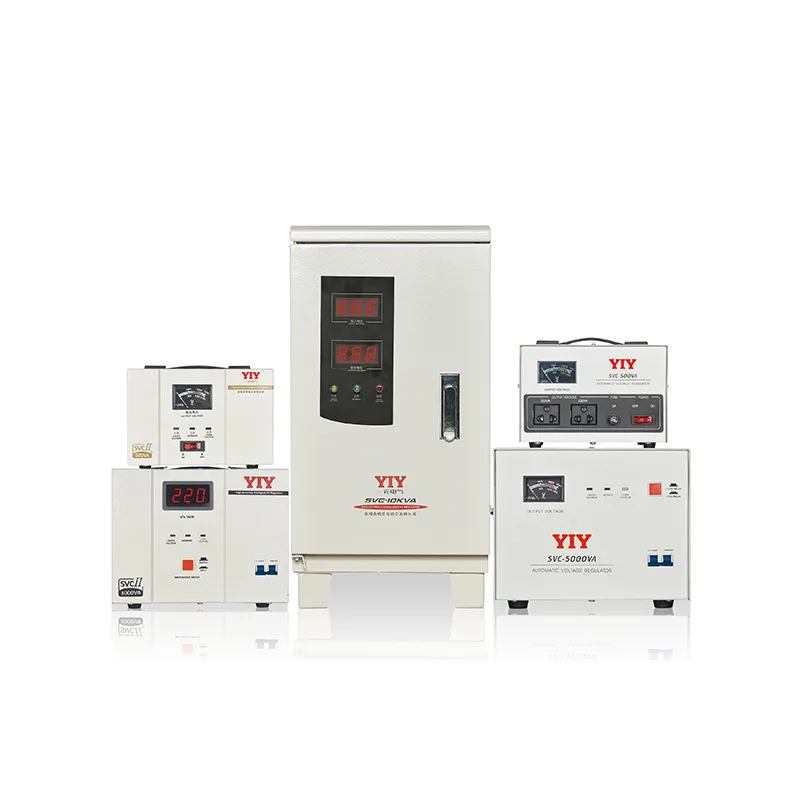
Buyers searching for an automatic voltage regulator 5000 watts quickly discover the market is split: consumer-grade units built for household appliances sit alongside industrial-grade options engineered for CNC machines, generators, and facility loads. The specs look similar on paper — same wattage, similar input ranges — but the technology, compliance documentation, and supplier reliability behind them are not.
This article is a decision tool, not a product review. It walks through the comparison criteria that matter before you request a quote: how to size correctly, which stabilizer technology fits your application, and what compliance signals separate a serious industrial supplier from a consumer brand.
What a 5000 Watt Automatic Voltage Regulator Actually Does — and When You Need One
An automatic voltage regulator 5000 watts is a power conditioning device that continuously monitors incoming grid voltage and adjusts its output to maintain a stable, preset level — typically 110V or 220V — regardless of what the supply line is doing. At the 5kVA scale, it sits at the threshold between consumer protection and light industrial use.
The Grid Instability Problem
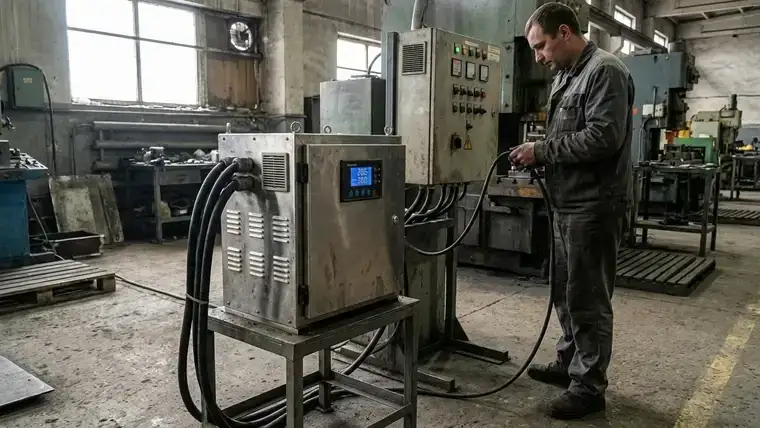
Utility grids rarely deliver textbook-clean power. Three failure modes cause the most equipment damage:
- Voltage sags — brief dips below nominal, often caused by motor startups or grid load spikes
- Surges — transient overvoltages from switching events or lightning
- Brownouts — sustained undervoltage conditions that force motors and compressors to draw excess current
Each of these degrades insulation, shortens motor life, corrupts sensitive electronics, and — in industrial settings — causes unplanned downtime. IEC 60038 defines nominal supply voltages and permits a ±10% tolerance band; anything outside that range puts connected equipment at risk.
Why 5kVA Is a Common Threshold
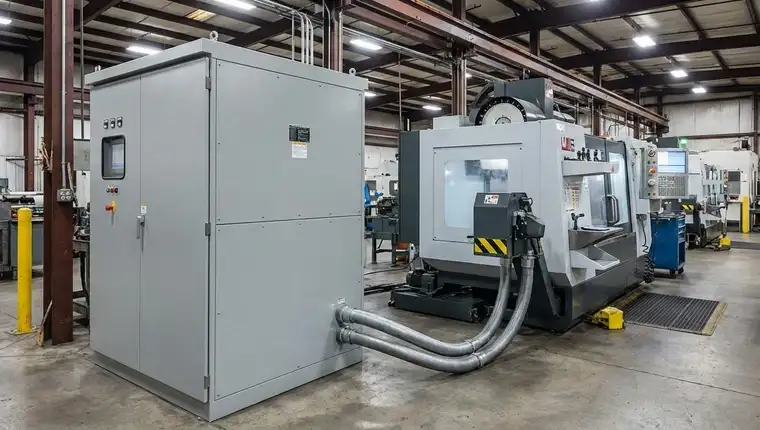
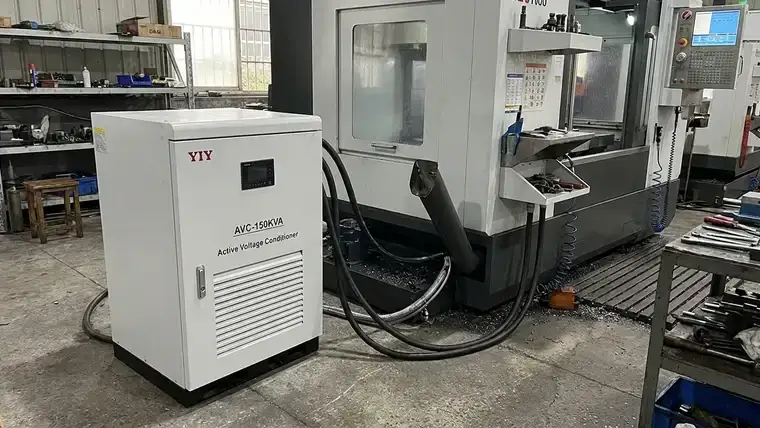
A 5000W AVR covers mid-sized loads that exceed what a household UPS handles but don’t yet require three-phase infrastructure. Typical protected loads include CNC machines running single-phase spindles, lighting banks in commercial facilities, refrigeration compressors, and imported appliances operating on foreign voltage standards. The standard sizing rule applies: total connected load × 1.2–1.3 safety margin. A 4kW aggregate load maps cleanly to a 5kVA unit.
Step-Up/Down Capability
Many 5000W stabilizers combine voltage regulation with transformer-based step-up/down conversion — accepting inputs from 75V to 260V and delivering either 110V or 220V output. This makes them practical for importers running North American equipment on 220V grids, or vice versa, without a separate isolation transformer.
Who Is Actually Buying This — and What Decision They’re Trying to Make
The search for an automatic voltage regulator 5000 watts comes from three distinct buyer types, each with a different job to finish before they can place an order.
Facility Managers
Industrial facility managers are protecting specific equipment — CNC machines, lighting banks, refrigeration compressors — from a grid that doesn’t behave. Their decision isn’t “do I need an AVR?” It’s “which technology fits my load profile, and can this supplier document compliance?” They need to size correctly, choose between servo, relay, or IGBT topology, and confirm the unit meets IEC 60038’s ±10% input tolerance requirement for their region.
Importers and Distributors
Importers running North American equipment on 220V grids — or vice versa — need step-up/down capability built into the same unit. Their job-to-be-done is sourcing a reliable unit with documented specs, not just a wattage label. They’re comparing input range, output precision, and whether the supplier can provide consistent OEM supply across repeat orders.
Procurement Teams
Procurement teams are building a shortlist. They’re comparing suppliers on lead time, certifications, and minimum order flexibility — not just price. For them, ISO 9001:2015 certification and export track record matter as much as the spec sheet.
Consumer Units vs. Industrial-Grade Options
This is where the market splits. Consumer-facing brands like Akari and Nippon sell relay-based 5000W units designed for household appliances — fast switching, lower cost, ±5–8% output precision. They work for their intended use case. But industrial buyers protecting CNC spindles or sensitive manufacturing equipment need servo or IGBT technology: tighter output tolerance, continuous motor-driven correction, and engineering support when something goes wrong.
TSI Power vs. YIY
TSI Power occupies a specific niche — outdoor enclosures and telecom infrastructure. If your application is a cell tower or outdoor cabinet, that focus is relevant. For indoor industrial loads across the 0.5–3000KVA range, YIY’s broader product line — relay, servo, and IGBT series — covers more application types with documented compliance for global markets.
The right comparison starts with knowing which of these three buyer profiles you’re in.
How to Size a 5kVA AVR Correctly Before You Request a Quote
Sizing is where most procurement mistakes happen. Buyers match wattage labels to load totals and skip the margin — then wonder why the unit trips under normal operating conditions. The formula is straightforward: total connected load × 1.2 to 1.3 = minimum AVR capacity.
A 4kW aggregate load (motors, lighting, compressors combined) maps directly to a 5kVA unit. That 20–30% buffer absorbs inrush current spikes — motor startups can draw 3–6× rated current for 50–200ms — and leaves headroom for load growth without forcing an immediate upgrade.
Step 1: Calculate Your Total Load
List every connected device with its rated wattage or VA. Sum them. Apply the margin:
- 3.8kW load × 1.3 = 4.94kVA → choose 5kVA
- 4.2kW load × 1.3 = 5.46kVA → step up to 6–7kVA
Don’t round down. If your calculation lands above 5kVA, the 5000W unit is undersized for your application.
Step 2: Confirm Your Input Voltage Range
IEC 60038 defines nominal supply voltages and permits a ±10% tolerance band — meaning a 220V nominal grid can legally deliver anywhere from 198V to 242V. Your AVR must handle the full swing without switching to alarm mode or dropping output regulation.
Most industrial-grade 5kVA units accept inputs from 140V to 260V (single-phase) or wider. Verify the spec sheet explicitly states the input range, not just the nominal voltage. A unit rated “220V input” with no tolerance disclosure is a red flag.
Step 3: Single-Phase vs. Three-Phase
A 5kVA single-phase AVR covers one leg of your supply. If your facility runs three-phase equipment — CNC machines, large motors, HVAC compressors — you need either three single-phase units balanced across phases or a dedicated three-phase stabilizer. Mismatching phase configuration to load type causes unbalanced protection and can void equipment warranties.
Step 4: Environment Factors
| Factor | What to Specify |
|---|---|
| Temperature | Derate capacity above 40°C; confirm operating range |
| Humidity | Industrial units typically rated to 90% RH non-condensing |
| Installation | Indoor wall-mount vs. floor-standing; IP rating for dusty environments |
| Altitude | Above 1000m requires derating — confirm with supplier |
Get these four inputs locked before you send an RFQ. A supplier who can’t respond to all four with documented specs is not ready to quote your application.
Relay, Servo, or IGBT: Which Technology Fits a 5000W Application?
The technology inside your AVR determines output precision, response behavior, and long-term reliability — not just the wattage label. At the 5kVA scale, three topologies dominate the market, and each maps to a different risk profile.
Technology Comparison at a Glance
| Technology | Output Precision | Response | Cost | Best For |
|---|---|---|---|---|
| Relay | ±5–8% | Fastest (step switching) | Lowest | Non-critical loads |
| Servo | ±1–3% | Continuous motor correction | Mid-range | Most industrial 5000W use cases |
| IGBT | ±1% or better | Near-instantaneous | Highest | Sensitive/critical equipment |
Relay: Fast, Affordable, Good Enough for Non-Critical Loads
Relay-based stabilizers use electromagnetic relays to switch between transformer taps in discrete steps. Response is fast — typically under half a cycle — but correction is stepped, not continuous. Output precision lands at ±5–8%, which is acceptable for lighting banks, household appliances, and general commercial loads. Consumer-facing brands like Akari and Nippon sell relay-based 5000W units precisely because this tradeoff works for their target use case. It does not work for equipment with tight voltage tolerance requirements.
Servo: The Right Default for Industrial 5000W Applications
Servo stabilizers use a motor-driven variac to continuously adjust output voltage — no steps, no switching artifacts. Output precision reaches ±1–3%, and the correction is smooth rather than abrupt. For most industrial 5000W applications — CNC machines running single-phase spindles, compressors, manufacturing equipment — servo is the recommended technology. It delivers the precision/reliability/cost balance that relay can’t match without the cost premium of IGBT. If you’re protecting a CNC machine and haven’t specified servo, reconsider. See When To Choose Servo Voltage Stabilizer 5 KvaWhen to Choose Servo Voltage Stabilizer 5 KVA for a deeper breakdown.
IGBT: Reserve It for Sensitive and Critical Equipment
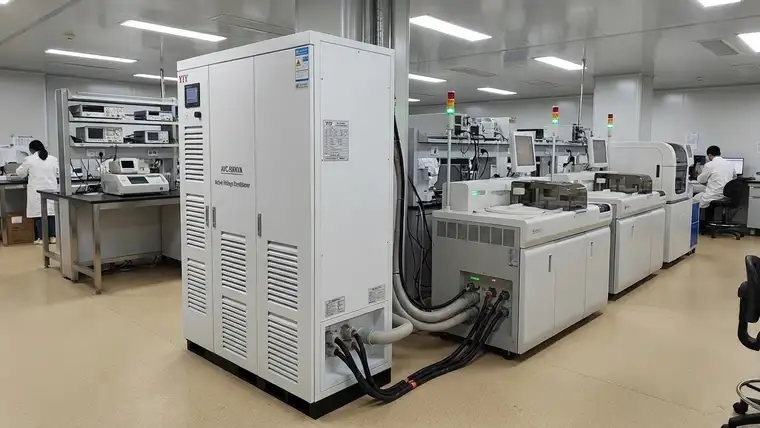
IGBT-based stabilizers use solid-state switching with no moving parts, delivering output precision at ±1% or tighter with near-instantaneous response. The tradeoff is cost — IGBT units run significantly higher than servo equivalents at the same capacity. The application fit is narrow but clear: medical instruments, laboratory equipment, precision measurement systems, and any load where even brief voltage deviation causes data corruption or calibration drift. For a standard industrial 5000W load, IGBT is over-specified. For a lab instrument or diagnostic device, it’s the correct choice.
Application Matching Summary
- CNC machines, single-phase spindles → Servo
- Lighting, commercial appliances, general facility loads → Relay
- Medical devices, lab instruments, precision electronics → IGBT
For a full side-by-side breakdown of all three technologies, see Stabilizer Voltage Regulator ComparisonUnderstanding Servo vs. IGBT Technology in Modern Voltage Stabilizers.
Compliance and Quality Signals That Separate Industrial Suppliers from Consumer Brands
Not every 5000W AVR on the market is built to the same standard — and the documentation gap between consumer and industrial suppliers is where procurement risk hides. Before shortlisting a supplier, verify three distinct layers: mandatory input standards, market access certifications, and quality management evidence.
IEC 60038: The Baseline Input Tolerance Requirement
IEC 60038 defines nominal supply voltages and sets a ±10% tolerance band as the acceptable operating range for connected equipment. For an AVR, this means the unit must regulate output correctly across the full swing of that band — and trigger an automatic alarm when input falls outside it. This isn’t optional for industrial applications: a unit that silently degrades output rather than alarming outside tolerance is a liability, not protection. Consumer-market units frequently omit explicit IEC 60038 compliance from their documentation. That omission matters.
CE Certification: Required for EU Market Entry
CE marking is a mandatory conformity requirement for electrical equipment sold in the European Union. It signals that the product meets EU safety, health, and environmental protection directives. For importers sourcing into European markets, a supplier without CE certification is not a viable option — full stop. Many consumer-grade 5000W units sold through Amazon or eBay carry no CE documentation or carry it without a verifiable declaration of conformity.
ISO 9001:2015: Quality Management, Not Just a Badge
ISO 9001:2015 governs the quality management system behind design and manufacturing — not just the finished product. It means the supplier has documented processes, traceability, and audit history across production. Not all voltage stabilizer suppliers hold this certification, and among those who claim it, scope matters: confirm whether the certification explicitly covers stabilizer design and manufacturing, not just a parent entity.
What to Ask Before Shortlisting
When evaluating any supplier, request:
– Third-party test reports (not just internal QC data)
– Certification scope documentation (what products and processes are covered)
– Production audit history or factory inspection records
YIY’s Compliance Position
YIY holds ISO 9001:2015 certification scoped to stabilizer design and manufacturing, CE certification for EU market access, and full IEC 60038 compliance across its product range. With 16+ years of manufacturing experience and products exported to 130+ countries, the compliance documentation exists and is verifiable — not a checkbox on a product listing.
What to Send YIY to Get a Shortlist and Quote Faster
Most quote delays happen before the supplier even opens the inquiry. The engineering team needs five inputs to narrow the model shortlist and price accurately — without them, any quote is a placeholder.
The Five Inputs That Unlock a Useful Quote
1. Total connected load with safety margin already applied
List every device you’re protecting, sum the wattage or VA, and multiply by 1.2–1.3. Send the final number, not the raw load total. A 3.8kW aggregate load becomes a 4.94–4.94kVA requirement — that’s the figure YIY needs to confirm whether a 5kVA unit fits or whether you should step up.
2. Input voltage range at the installation site
Don’t just send the nominal voltage. Measure or document the actual swing — how low does it drop during peak load, how high does it spike? IEC 60038 permits ±10% from nominal, but many grids exceed that. The wider your real input range, the more this affects model selection.
3. Single-phase or three-phase
A 5kVA single-phase unit protects one leg. If your facility runs three-phase CNC machines or HVAC compressors, you need a different configuration entirely. Mismatching phase setup to load type is one of the most common RFQ errors.
4. Application type
CNC spindles, lighting banks, refrigeration compressors, and imported appliances each have different tolerance requirements. CNC machines need servo-grade ±1–3% output precision. Lighting and general commercial loads can work with relay-based ±5–8%. Knowing the application determines the technology — and the price tier.
5. Environment: indoor/outdoor, temperature, and installation format
Operating temperature above 40°C requires derating. Dusty or humid environments affect enclosure rating. Floor-standing vs. wall-mount affects lead time. These aren’t optional details — they change the spec.
Send these five inputs to yiyen@yiyen.com or reach the engineering team directly at +86 13587452904. YIY’s product range covers relay, servo, and IGBT configurations from 0.5 to 3000KVA — the right model for your load exists; the shortlist just needs your numbers to take shape.
Frequently Asked Questions
What should buyers evaluate before choosing an automatic voltage regulator 5000 watts?
Four inputs determine whether a 5kVA unit fits your application: total connected load (with 20–30% safety margin applied), actual input voltage range at the installation site, single-phase vs. three-phase configuration, and application type. A 4kW aggregate load maps cleanly to a 5kVA unit — but only if your calculation already includes the margin. Skipping that step is the most common sizing mistake. Beyond the numbers, verify that the supplier can document IEC 60038 compliance and provide third-party test reports, not just a spec sheet.
When is an automatic voltage regulator 5000 watts necessary?
When your grid delivers voltage outside the ±10% tolerance band defined by IEC 60038 — or when connected equipment is sensitive enough that even in-band fluctuations cause damage. The 5kVA threshold covers mid-sized loads: single-phase CNC spindles, commercial lighting banks, refrigeration compressors, and imported appliances running on foreign voltage standards. If your load aggregate exceeds 4kW after applying the safety margin, or if you’re running precision equipment with tight voltage tolerance requirements, a 5000W AVR is the right starting point.
What is the difference between a relay and servo stabilizer at 5kVA?
Relay stabilizers switch between transformer taps in discrete steps — fast response, ±5–8% output precision, lowest cost. Servo stabilizers use a motor-driven variac for continuous correction — smoother output, ±1–3% precision, better fit for industrial loads. For CNC machines or manufacturing equipment, servo is the right default. For lighting banks and general commercial loads, relay is sufficient. IGBT is a third option — tighter than servo at ±1% or better — but the cost premium is only justified for medical instruments or precision lab equipment.
Final Thoughts
Three decisions determine whether a 5kVA AVR purchase goes right or wrong: sizing with the correct margin applied, matching technology type to the actual load, and verifying that the supplier’s compliance documentation is real and scoped to stabilizer manufacturing — not just a badge on a listing.
Consumer-grade units are not a substitute for industrial applications. A relay-based 5000W unit built for household appliances will not protect a CNC spindle the way a servo-grade unit will. The wattage label is the same; the engineering behind it is not.
If you have your load specs, input voltage range, and application type ready, send them to yiyen@yiyen.com — YIY’s engineering team will narrow the shortlist and quote the right model faster than a generic RFQ process will.
About YIY
Zhejiang Yiyen Holding Group Co., Ltd. (YIY) is a professional voltage stabilizer manufacturer with 16+ years of experience. With a 30,000sqm modern facility and an annual production capacity of 1,000,000+ units, our products are exported to 130+ countries. We provide OEM/ODM customization services and are ISO 9001:2015 certified, committed to delivering stable and reliable voltage protection solutions to global customers.
Contact Us
Email: yiyen@yiyen.com
Phone/WhatsApp: +86 13587452904
Website: https://www.yiyavr.com/
If you found this article helpful, contact us for a sizing review or customized solution.
Related reading: Voltage Stabilizer 5kVA: What to Compare Before Buying.