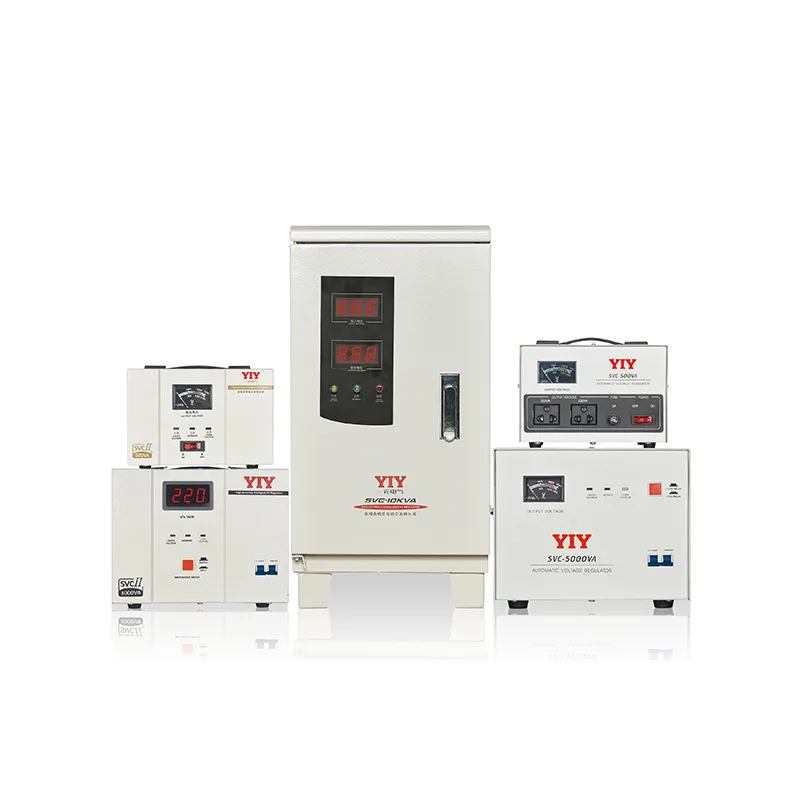
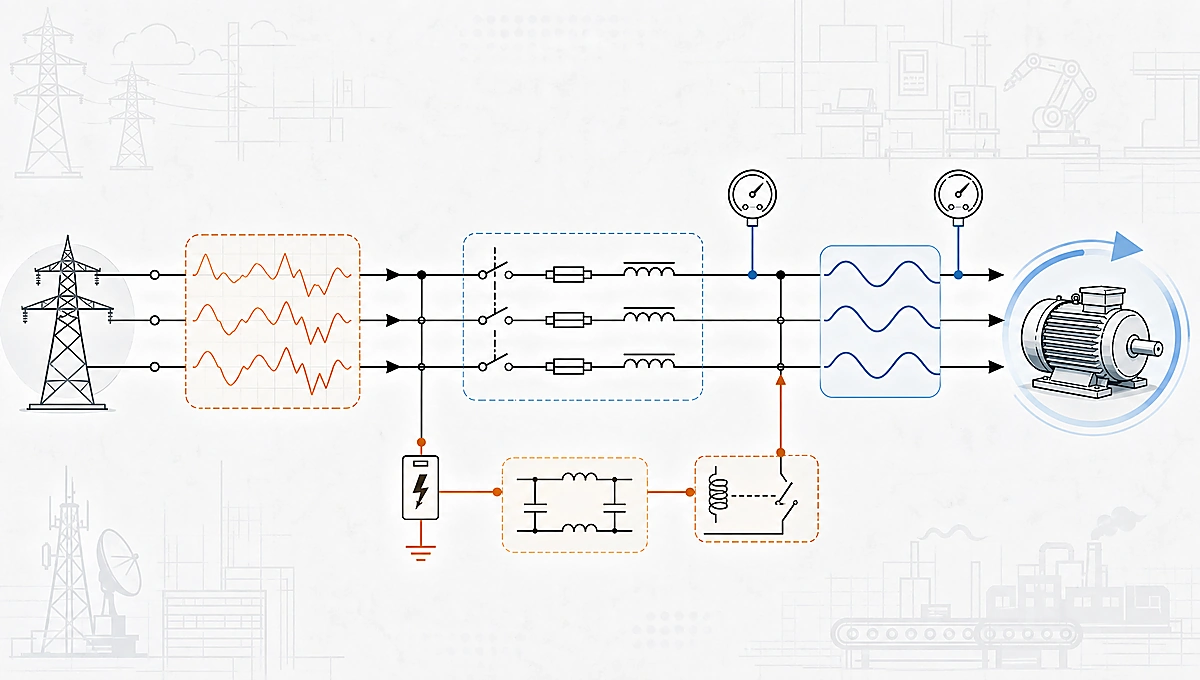
Before choosing an automatic voltage stabilizer 5 kva, you should compare real load demand, starting current, input-voltage range, phase configuration, stabilizer topology, protection functions, site environment, standards evidence, supplier support, and total sourcing risk. A 5 kVA rating means 5,000 VA, not automatically 5,000 watts, so the right unit is the one proven against your load behavior and voltage conditions.
For a breakdown of the specification choices that shape a quotation, see what affects a 5 kVA voltage stabilizer price.
You will use this guide to answer five practical questions: when this capacity tier matters, how much power it can really handle, whether relay, servo, or static AVR technology fits your load, what supplier proof to request, and which final checks reduce RFQ mistakes.
When does a 5 kVA automatic stabilizer actually matter?
You should consider this capacity tier when voltage fluctuation is large enough to interrupt your equipment, shorten component life, or create avoidable service calls. A 5 kVA automatic stabilizer is usually evaluated for small commercial panels, OEM equipment, POS systems, workshop loads, light industrial machines, refrigeration, pumps, and mixed electronic loads where unstable voltage creates operational risk.
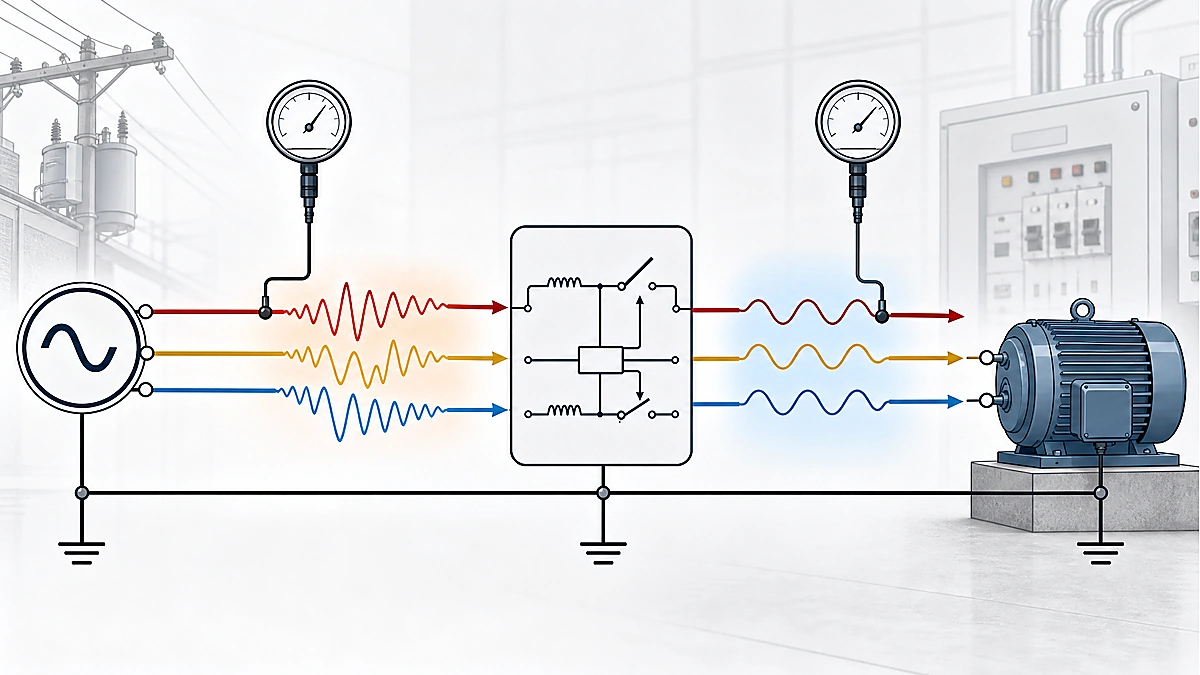
An automatic voltage stabilizer, automatic voltage regulator, AVR, and AC voltage stabilizer all describe equipment that senses input-voltage variation and adjusts output voltage toward a usable range. For you, the practical result is steadier voltage at the connected load, which can reduce nuisance trips, overheated components, failed control boards, and repeat site complaints.
Nominal voltage alone is not enough. IEC 60038 standard voltages define standard system-voltage references, but your selection should still begin with measured minimum voltage, maximum voltage, dip behavior, and generator response at the installation site.
That means you should evaluate a 5 kVA AVR when you see symptoms such as low voltage during peak demand, high voltage during light-load hours, frequent dips that reset controls, motor-start sag from pumps or compressors, or unstable generator supply during load changes.
The capacity number also needs translation. Watts = VA x power factor, so a 5,000 VA stabilizer feeding a 0.8 PF load supports about 4,000 W of real power before you apply practical sizing margin. In plain terms, your stabilizer can be overloaded even when the catalog rating looks close to your equipment wattage.
How should you size an automatic voltage stabilizer 5 KVA?
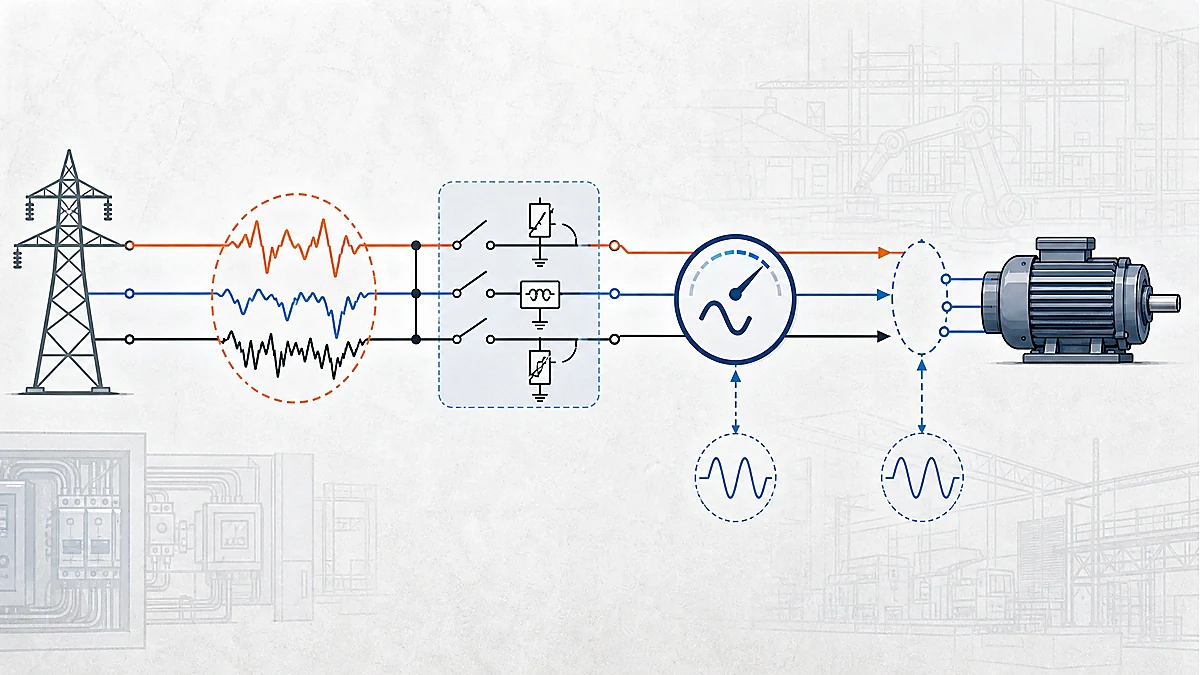
You should size this unit from measured load and site data, not from the nameplate voltage alone. Your shortlist should start with six facts: connected load list, starting current, input-voltage window, output-voltage target, phase configuration, and installation environment.
Start by separating your load types. Resistive heaters, inductive loads, compressors, motors, transformer-fed panels, electronics, refrigeration, HVAC, and mixed loads stress an AVR differently. A single-phase 5 kVA stabilizer may be enough for a modest panel with stable running current, but motor starting current or future expansion can quickly push you toward a larger capacity.
| Check | Why it matters | If you skip it |
|---|---|---|
| Load list by device type | Motors, compressors, electronics, and resistive loads behave differently | The unit may fit watts on paper but fail in operation |
| Starting current | Motors and transformers can draw several times running current at startup | You may see voltage sag, trips, relay chatter, or overheating |
| Input-voltage range | The AVR must correct your real low and high voltage, not only nominal 220 V / 230 V / 240 V | Regulation may fail during the worst grid hours |
| Output accuracy | Sensitive controls need steadier output than simple loads | Faults and service claims can continue after installation |
| Phase configuration | Single-phase and three-phase systems need different sizing logic | You may under-protect part of the panel or buy the wrong design |
| Site environment | Heat, dust, humidity, ventilation, and enclosure choice affect reliability | Lifecycle problems may exceed the initial price difference |
If your site is still changing, compare this power class against a broader industrial voltage stabilizer selection workflow before freezing the RFQ. That helps you decide whether a 5 kVA single-phase model is enough or whether your load belongs in a larger single-phase or three-phase path.
For three-phase distribution, you should not simply multiply a small single-phase assumption. Phase balance, neutral behavior, motor starting, protection logic, and bypass requirements all matter. If your load is moving from a small panel into three-phase main distribution, use 3 phase main line stabilizer sizing before you approve the specification.
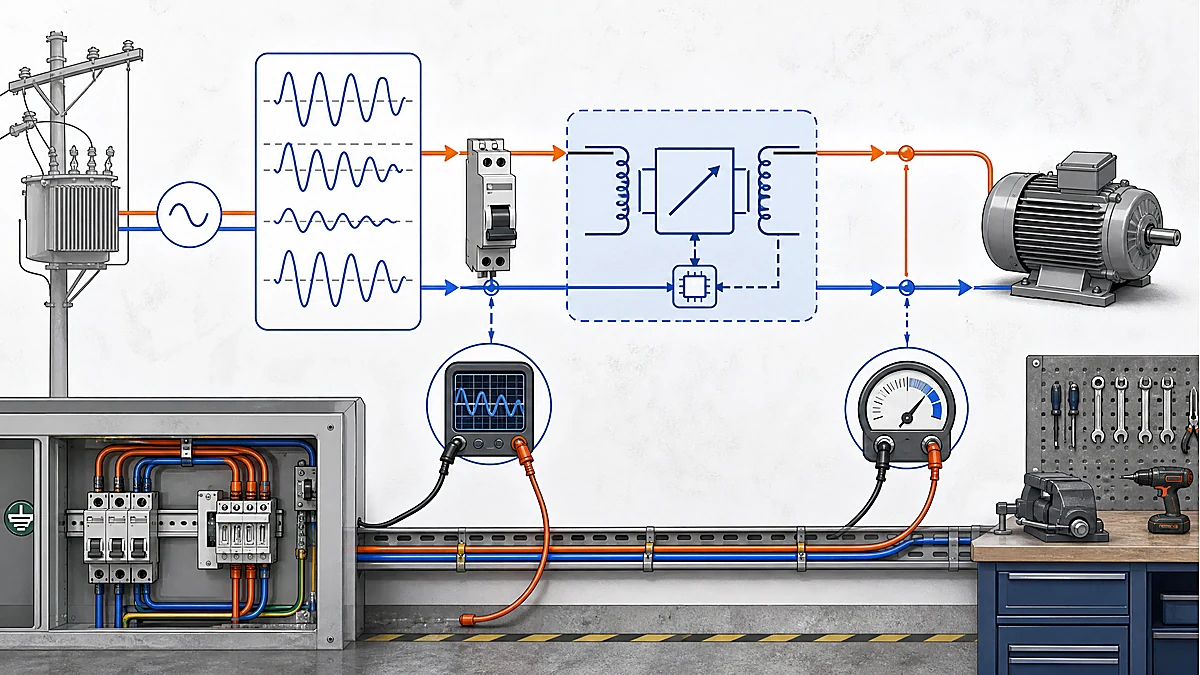
When the calculated load is close to the limit, add margin rather than forcing the AVR to run near full capacity. If motor starting current, transformer inrush, or future expansion makes the 5 kVA unit marginal, compare your requirement with a 20kva voltage stabilizer selection path instead of relying on a small stabilizer to absorb every condition.
Which technology fits your precision and budget requirements?
You should choose relay, servo, or static AVR technology by correction behavior, response speed, accuracy, service profile, and total operating risk. In simple terms, relay stabilizers fit less sensitive loads, servo stabilizers fit many commercial and light industrial applications, and static or IGBT designs fit faster, more precision-critical equipment.
| AVR design | Correction method | Response expectation | Best-fit load | Main tradeoff |
|---|---|---|---|---|
| Relay stabilizer | Transformer taps switched by relays | Moderate, with step changes | Basic appliances, lighting, less sensitive loads | Lower cost, but wider regulation and relay wear |
| Servo stabilizer | Motor-driven variac or buck-boost correction | Smooth correction, slower than static | POS systems, pumps, workshops, mixed commercial panels | Good balance, but moving parts need maintenance |
| Static / IGBT stabilizer | Electronic switching and power-control circuitry | Fastest correction | CNC controls, sensitive electronics, unstable grids | Higher cost and stronger heat/service requirements |
A relay stabilizer can be attractive when your connected equipment tolerates stepped voltage correction and wider output variation. For sensitive control boards, testing equipment, medical-adjacent devices, or sites with frequent dips, you should be cautious about choosing relay control only because the initial price is lower.
A servo voltage stabilizer 5 kva is often the middle-ground option because it balances price, output quality, serviceability, and capacity. For your procurement file, ask about motor design, carbon brush life if applicable, cooling, response time, spare parts, and maintenance access. That makes the decision more practical than comparing only the 5 kva voltage stabilizer price.
Static or IGBT stabilizers make sense when response speed and tighter output control matter more than low purchase cost. If your equipment trips during short dips or your process depends on stable voltage for electronic controls, this topology may justify the higher investment. You should still verify enclosure design, board protection, heat management, surge protection, and local service capability.
Protection functions deserve a line-by-line comparison. Ask for high-low voltage cut-off, overload protection, delay restart, manual or automatic bypass, alarm display, surge protection options, and event visibility. IEC 61000-4-11 voltage dip and interruption immunity testing covers voltage dips, short interruptions, and voltage variations; practically, it reminds you to ask how the stabilizer and connected equipment behave during real grid disturbances.
What supplier proof should you request before RFQ approval?
You should approve a supplier only after the datasheet, quality evidence, inspection process, warranty terms, and after-sales support match your application risk. A low quote is not enough if the unit cannot be built, tested, customized, shipped, installed, and supported consistently.
Ask for a complete specification sheet covering rated capacity, input range, output accuracy, phase type, frequency, response time, cooling method, duty cycle, enclosure, wiring diagram, protection functions, and operating temperature. For a 5 kVA stabilizer, the key issue is not just whether the label says 5 kVA; it is whether the stabilizer can handle your load profile, voltage window, and site environment without nuisance failures.
| Proof point | What to request | Why it matters |
|---|---|---|
| Electrical rating | Capacity, voltage, phase, frequency, input range, output accuracy | Confirms the AVR matches your grid and load |
| Site adaptation | Cooling, ventilation, dust/humidity protection, enclosure/IP details | Reduces heat and contamination risk |
| Application fit | Generator compatibility, starting-current behavior, overload protection | Helps prevent nuisance trips and repeat service calls |
| Quality system | Inspection records, test reports, traceability, certification evidence | Shows repeatable production control |
| After-sales process | Warranty, spare parts, fault handling, documentation | Lowers downtime risk after installation |
For quality evidence, ISO 9001:2015 quality management systems define requirements for a quality management system. For you, ISO 9001 is not a performance guarantee for one stabilizer model; it is a way to check whether the supplier has repeatable controls for design, production, inspection, and corrective action.
If procurement risk matters, compare industrial voltage stabilizer manufacturers by application support, factory evidence, OEM/ODM capability, inspection records, spare-parts policy, and after-sales workflow. Your goal is to choose a supplier that can support repeat orders and regional customization, not just ship one sample.
YIY brand materials state 30,000 square meters of facility space, 1,000,000+ units of annual capacity, exports to 130+ countries, 120+ long-term partners, ISO 9001:2015, and a 99.5%+ factory pass rate. Last verified: 2026-05-29.
What final checks should you complete before you decide?
You should complete a final acceptance screen that connects the quote back to your real load, site voltage data, protection needs, and supplier evidence. This is where you catch the common mistakes: undersizing, ignoring starting current, choosing the wrong topology, missing site-environment risks, or accepting vague warranty terms.
| Check | Why it matters | If you skip it |
|---|---|---|
| Confirm VA vs watts | 5 kVA is 5,000 VA, and usable watts depend on power factor | You may overload the stabilizer |
| Verify starting current | Motors, compressors, and transformers can exceed running current many times over | The AVR may trip or sag during startup |
| Match input range | The stabilizer must regulate during your actual low/high voltage periods | The unit may stop helping when you need it most |
| Compare topology | Relay, servo, and static designs solve different problems | You may overpay or under-protect sensitive loads |
| Check protection list | Cut-off, delay, overload, bypass, alarms, and surge options affect reliability | Small omissions can become service problems |
| Review supplier proof | Datasheets, tests, quality system, warranty, and spare parts reduce sourcing risk | Procurement may approve a weak unit |
| Plan future capacity | Expansion can make a 5 kVA unit obsolete quickly | You may replace the stabilizer sooner than expected |
If your project could later expand into multi-panel or higher-capacity distribution, compare before buying a voltage stabilizer at the larger capacity tier rather than overspecifying or overloading a small unit. This keeps your present purchase aligned with your future electrical layout.
Frequently Asked Questions
How long does a 5 kVA stabilizer last?
A 5 kVA stabilizer can last several years when it is correctly sized, ventilated, and maintained. Service life depends on load percentage, ambient heat, dust, humidity, voltage fluctuation severity, topology, and maintenance quality. Before purchase, verify the operating temperature range, duty cycle, cooling method, warranty term, and spare-parts availability.
How much power can a 5 kVA stabilizer handle?
A 5 kVA stabilizer handles 5,000 VA, not automatically 5,000 watts. Use watts = VA x power factor. At 0.8 PF, usable real power is about 4,000 W before practical sizing margin. Check every equipment nameplate, add motor or compressor starting current, and avoid running the stabilizer continuously at its limit.
Which company is best for servo stabilizers?
The best servo stabilizer company is the one that proves application fit, quality control, customization ability, and after-sales support for your market. Verify this by requesting a datasheet, wiring diagram, factory test process, ISO 9001 evidence, warranty terms, spare-parts policy, and examples of similar voltage ranges or load types.
What are the common problems with stabilizers?
Common stabilizer problems include undersizing, overheating, relay chatter, slow correction, loose terminals, worn carbon brushes, unstable output, nuisance trips, and board damage from surge or humidity. Before approval, ask the supplier to verify overload cut-off, high-low voltage protection, surge protection, alarm display, ventilation clearance, and maintenance instructions.
Is a 5 kVA stabilizer enough for motor loads?
A 5 kVA stabilizer may be enough for a small motor load only when running current, starting current, input-voltage range, and safety margin all fit the datasheet. Do not size the unit from horsepower or watts alone. Ask for starting-current allowance and confirm whether the supplier recommends relay, servo, or static correction for your motor type.
Final Thoughts
You should choose the stabilizer that matches your measured voltage behavior, load profile, starting current, topology requirement, environment, and supplier proof. The 5 kVA label is only the beginning; your real decision is whether the unit can regulate your voltage safely under the worst conditions your site actually sees.
A quick first-pass review is usually enough to catch the biggest risks. Share your load list, starting current, input-voltage window, phase requirement, and installation conditions with YIY for a sizing review before you lock the RFQ.
About YIY
Zhejiang Yiyen Holding Group Co., Ltd. (YIY) is a professional voltage stabilizer manufacturer with 16+ years of experience. With a 30,000sqm modern facility and an annual production capacity of 1,000,000+ units, our products are exported to 130+ countries. YIY provides OEM/ODM customization services and ISO 9001:2015 certified manufacturing support for stable voltage protection solutions.
Contact Us
Email: yiyen at yiyen.com
Phone/WhatsApp: +86 13587452904
Website: https://www.yiyavr.com/