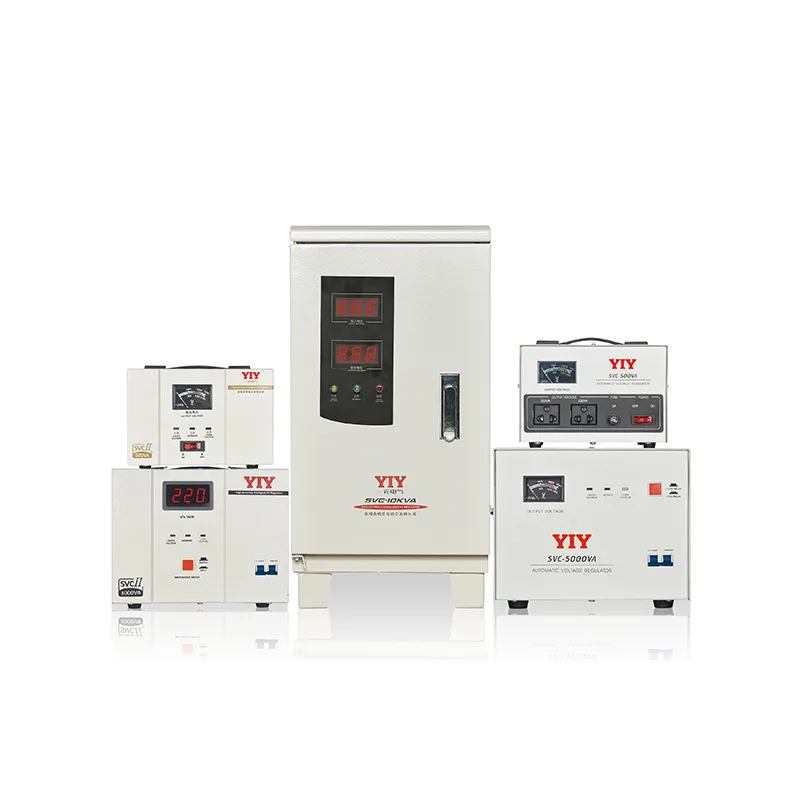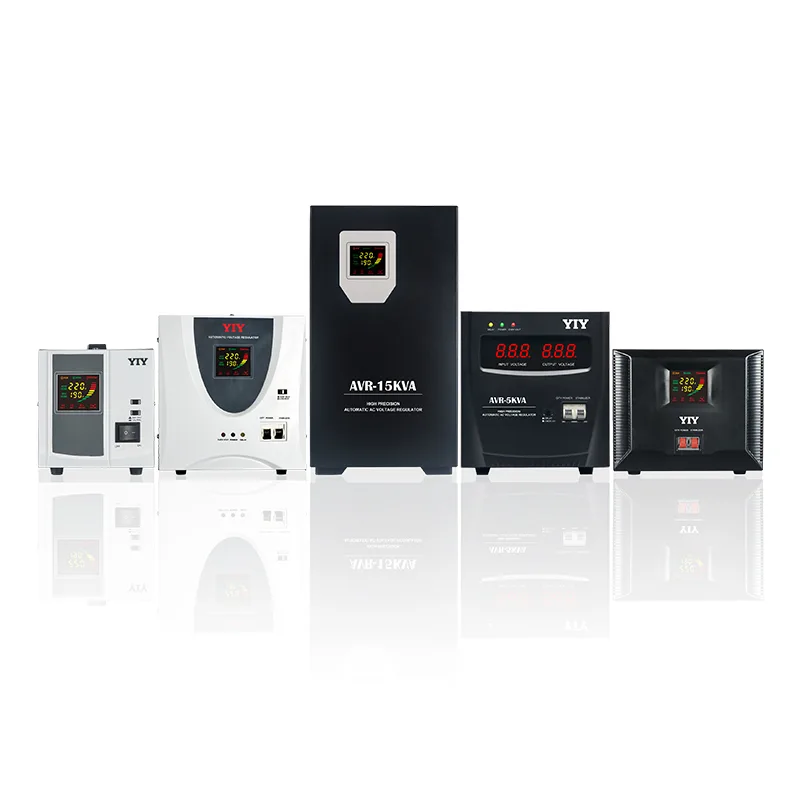
For most sensitive industrial loads, servo stabilizer vs relay stabilizer decisions usually favor servo because it regulates voltage continuously with tighter output accuracy; relay stabilizers fit lower-risk, cost-sensitive loads where stepped correction is acceptable.
In this guide, you’ll compare operating principles, precision, response behavior, mainline and CVT alternatives, sizing data, maintenance risks, and RFQ checks before you choose a stabilizer topology.
What Does the Stabilizer Choice Mean for Your Uptime?
You are not only choosing a voltage stabilizer; you are choosing how much voltage variation your equipment will see before production, controls, or service continuity are affected.
A servo voltage stabilizer corrects voltage continuously by moving a carbon brush across an autotransformer under control logic. A relay unit switches between fixed transformer taps. That basic design difference explains why servo models are commonly used for industrial loads that need smoother correction, while relay models are often used for simpler loads that can tolerate wider voltage bands.
Common low-voltage systems include 230/400 V references under IEC 60038 standard voltage definitions. For you, that means a nominal site voltage is only the starting point. You should compare stabilizer specifications against measured voltage sag, swell, phase imbalance, and the actual tolerance of your load.
In practical terms, servo stabilizers commonly target ±0.5% to ±3% output precision, while relay stabilizers are typically around ±5% to ±8%. A tighter percentage means your equipment receives voltage closer to the set output during grid movement. A wider percentage may still work for non-critical loads, but it can be risky for CNC machines, PLC panels, drives, sensors, or production equipment that trips when supply voltage changes abruptly.
How Do Servo and Relay Stabilizers Regulate Voltage Differently?
You get smoother regulation from servo technology and simpler stepped correction from relay technology.
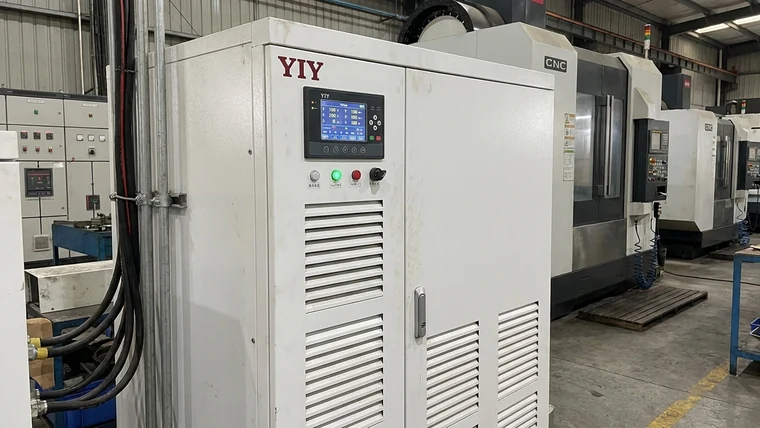
In a servo design, the control circuit monitors input and output voltage, then commands a servo motor to adjust a carbon brush on an autotransformer or variac. This changes the transformer turns ratio continuously. For your load, the correction curve is smoother because the AVR is trimming voltage rather than jumping between preset taps.
A relay stabilizer works by sensing voltage deviation and switching electromagnetic relays between transformer taps. Each tap has a fixed correction value, so the output changes in steps. A relay voltage stabilizer can be economical and fast for simple applications, but the stepped output can be unsuitable where your controls require tighter voltage stability.
| Factor | Servo stabilizer | Relay stabilizer | What it means for you |
|---|---|---|---|
| Correction method | Continuous autotransformer adjustment | Fixed tap switching | Servo gives smoother output; relay gives stepped correction. |
| Typical output precision | ±0.5% to ±3% | ±5% to ±8% | Servo keeps voltage closer to setpoint for sensitive equipment. |
| Response behavior | Smooth correction, often within about 1–2 seconds in industrial designs | Fast relay switching | Relay may react quickly, but your load may see tap-change jumps. |
| Main wearing parts | Carbon brush, contact path, motor mechanism | Relay contacts | Both need maintenance planning, but wear modes differ. |
| Common fit | CNC, PLC panels, medical systems, telecom, compressors, production lines | Homes, small offices, lighting, basic appliances, non-critical loads | Your application sensitivity should drive the choice. |
The numbers matter because output tolerance is not an abstract specification. If a machine manual allows a narrow voltage range, a relay unit’s wider band may still leave your equipment exposed. If your load is tolerant, the extra precision of a servo unit may not be necessary.
When Should You Choose Servo over Relay?
You should choose servo when your load is sensitive, expensive to stop, three-phase, inductive, or exposed to frequent voltage swings.
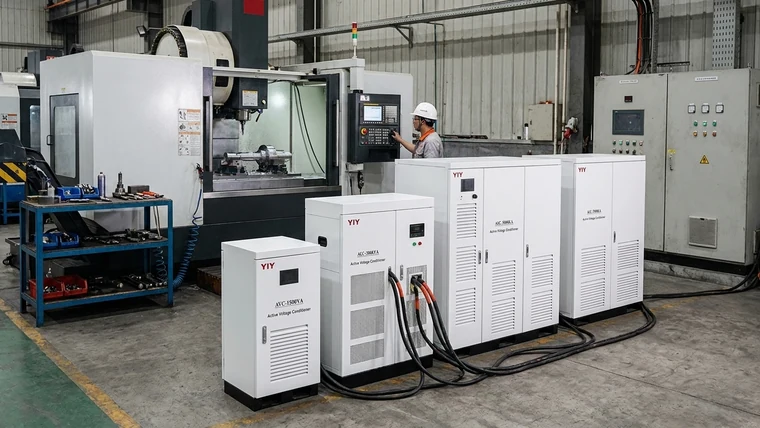
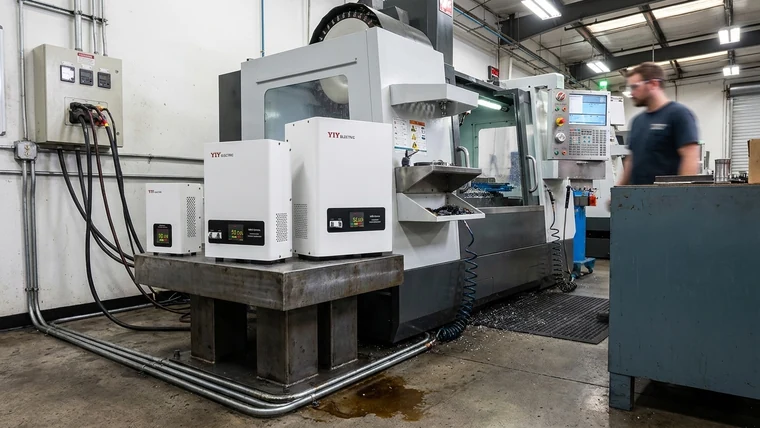
A servo stabilizer is usually the better fit when your equipment depends on stable control voltage and repeatable process behavior. CNC machinery, PLC-controlled production lines, compressor systems, elevators, medical equipment, telecom power rooms, and mixed industrial panels often justify the higher upfront cost because the risk of nuisance trips or unstable operation is more serious than the price difference.
Relay stabilizers can still be the right choice when your load is simple and the consequences of voltage variation are low. For example, lighting circuits, basic office equipment, selected residential appliances, and non-critical commercial loads may not require the precision of servo regulation.
| Your application condition | Better starting choice | Why |
|---|---|---|
| CNC machines, PLCs, HMIs, drives, sensors | Servo | Your equipment may react poorly to voltage steps or wider tolerance. |
| Basic appliances or lighting | Relay | Your load may tolerate wider output variation. |
| Motors, compressors, pumps, elevators | Servo, sized carefully | Your starting current and voltage dip behavior matter more than nameplate kW alone. |
| Mission-critical medical, lab, or high-speed automation | Static/IGBT or high-spec servo | Your process may need faster correction, event logging, or no moving brush mechanism. |
| Whole workshop or building feed | Mainline servo or three-phase stabilizer | Your stabilizer must support simultaneous load, inrush, imbalance, and bypass needs. |
This is why the lowest quote is not always the lowest-risk option. If your site loses production time every time voltage dips, smoother correction and better sizing can become operational safeguards rather than premium features.
How Do Static/IGBT, Mainline, and CVT Options Compare?
You should treat relay, servo, static/IGBT, mainline, and CVT options as different risk tools rather than interchangeable stabilizers.
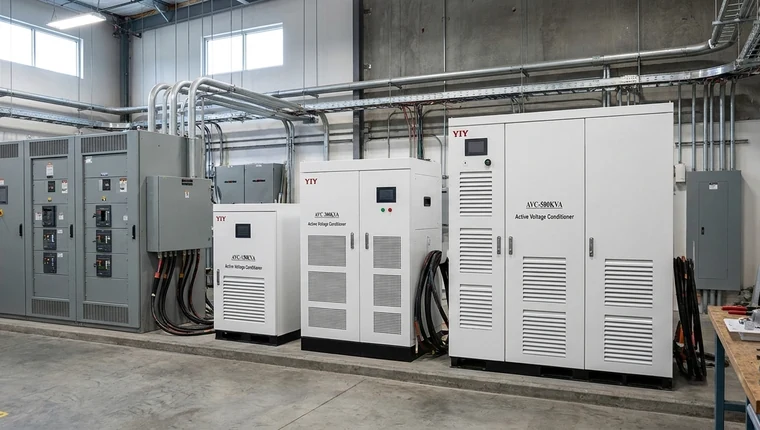
Servo is often the balanced industrial choice because it combines useful precision, broad capacity options, and practical cost. Static or IGBT stabilizers are a stronger fit when your load needs very fast electronic correction, no moving brush path, and higher integration with alarms or monitoring. Mainline stabilizers protect a wider distribution feed. CVT options can be useful in selected constant-voltage transformer applications, but you should verify compatibility with dynamic or high-inrush loads before assuming they can replace a servo AVR.
For a 240V panel quotation, the industrial 240V conditioner buying checks help your procurement team compare the recorded disturbance, starting current, and bypass requirements alongside the relay-versus-servo choice.
| Topology | Best-fit use | Strength | Watch-out |
|---|---|---|---|
| Relay AVR | Non-critical residential or light commercial loads | Low upfront cost and simple switching | Wider tolerance and stepped correction |
| Servo AVR | General industrial loads, CNC, PLC panels, motors, compressors | Balanced precision and cost for many industrial sites | Brush, contact path, ventilation, and service access need planning |
| Static/IGBT AVR | Medical systems, labs, critical automation, fast process loads | Very fast electronic correction and no brush mechanism | Higher cost may be excessive for standard loads |
| Mainline servo stabilizer | Whole-panel or distribution-feed correction | One stabilizer can protect multiple downstream circuits | Must be sized for simultaneous demand, inrush, and phase imbalance |
| CVT | Selected conditioning or isolation cases | Can support specific constant-voltage use cases | In cvt vs servo stabilizer comparisons, dynamic load response must be verified carefully |
The IEC 61000 electromagnetic compatibility standards provide a useful reference family for power-quality concepts such as dips, fluctuations, harmonics, and immunity. For you, this means that stabilizer selection should start with logged site behavior, not assumptions about grid quality.
If your site has frequent dips, switching events, generator transfer, heavy motor starts, or phase imbalance, collect voltage logs before final selection. Without those logs, you may buy a stabilizer that performs well in a catalog but poorly during the exact events your site experiences.
What Should You Verify Before Sizing a Mainline or Industrial Stabilizer?
You should size the stabilizer from measured site data, load behavior, phase configuration, and startup demand—not from nominal kVA alone.
A mainline servo stabilizer can be effective when you want to correct a complete distribution feed, but it also raises the sizing risk. Your unit must support downstream loads that may start at different times, run together, or create phase imbalance. For a three-phase distribution project, use a structured 3 phase main line stabilizer sizing process before you issue an RFQ.
| Check | Why it matters | If you skip it |
|---|---|---|
| Measured input voltage range | Confirms whether the stabilizer’s operating window covers real sags and swells | The unit may fail to regulate during your worst grid events |
| Required output tolerance | Determines whether relay tolerance is enough or servo accuracy is required | Sensitive loads may still trip after installation |
| Total kVA/kW and power factor | kVA demand rises when power factor is low | Nameplate kW may understate current demand |
| Motor starting current | Pumps, compressors, elevators, and motors can draw high inrush current | The stabilizer may work at steady load but fail at startup |
| Single-phase or three-phase system | Phase count, neutral, imbalance, and wiring affect model choice | You may receive the wrong electrical configuration |
| Bypass requirement | Maintenance bypass supports service without full shutdown | Service work may interrupt protected equipment |
| Environment | Dust, heat, humidity, and ventilation affect brushes, relays, insulation, and cooling | A technically suitable model may fail early in your electrical room |
| Monitoring and alarms | Event logs help you diagnose voltage problems and maintenance needs | Troubleshooting depends on guesswork |
| Compliance documents | Quality documents, wiring diagrams, and test reports support receiving inspection | Procurement may approve a unit that is hard to verify |
When you see technical specifications such as ±0.5% to ±3%, ±5% to ±8%, or 1–2 second correction, translate them into equipment risk. A tighter tolerance helps sensitive controls stay inside their acceptable supply range. A wider tolerance may be fine for basic loads. A correction time that looks acceptable on paper should still be checked against your machine’s trip behavior and process sensitivity.
For quality-system verification, you can request supplier documents aligned with ISO 9001:2015 quality management requirements. In practical procurement terms, ask for the certificate scope, test report, wiring diagram, model datasheet, nameplate photo, and inspection checklist before shipment.
What Should Your RFQ Include Before You Compare Quotes?
You should send a complete RFQ package that lets the supplier validate topology, capacity, protection, enclosure, bypass, and maintenance access in one review.
A weak RFQ usually asks only for price and kVA. A stronger RFQ explains your load, measured voltage range, operating environment, and uptime risk. That helps you compare servo, relay, static/IGBT, CVT, or mainline proposals on technical fit instead of headline price.
| RFQ item | What to provide | Why it matters |
|---|---|---|
| Load list | Equipment name, rated kW/kVA, running current, starting sequence | Shows real demand instead of a single estimated total |
| Voltage logs | Minimum, maximum, and typical input voltage by phase | Confirms required input range |
| Load sensitivity | CNC, PLC, medical, compressor, HVAC, lighting, mixed load | Guides servo vs relay vs static selection |
| Output requirement | Required voltage and acceptable tolerance | Prevents buying a unit that is too loose for your equipment |
| Installation details | Indoor/outdoor, ambient temperature, dust, humidity, ventilation | Supports enclosure and cooling decisions |
| Protection needs | Over-voltage, under-voltage, overload, short-circuit, delay, surge coordination | Reduces mismatch between electrical risk and protection design |
| Bypass and maintenance | Manual/automatic bypass, clearance, access side, spare parts | Keeps service practical after installation |
| Documentation | Certificates, test reports, wiring drawings, manual, packing details | Makes receiving inspection easier |
YIY supports voltage stabilizer projects across 0.5KVA to 3000KVA, with servo, relay, and IGBT technology options for residential, commercial, and heavy industrial applications. For you, the advantage is not simply a broad catalog; it is the ability to match topology to your actual load profile instead of forcing every project into one stabilizer type.
What Final Checks Should You Complete Before Purchase?
You should complete a practical acceptance review before you approve the order, especially when the stabilizer protects production, controls, or a main distribution feed.
Use this final screen to catch specification gaps before they become installation problems:
| Check | Why it matters | If you skip it |
|---|---|---|
| Topology confirmed | Confirms whether servo, relay, static/IGBT, CVT, or mainline design matches your load | You may buy the right kVA with the wrong correction behavior |
| Capacity confirmed | Verifies load, power factor, inrush, and safety margin | Undersizing can cause overheating, alarms, or trips |
| Phase and wiring confirmed | Checks single-phase/three-phase, neutral, grounding, and connection style | Installation may be delayed or unsafe |
| Bypass confirmed | Ensures maintenance and emergency operation are practical | Service may require full shutdown |
| Environment confirmed | Checks enclosure, ventilation, filters, and ambient temperature | Dust, heat, or humidity may shorten service life |
| Documentation confirmed | Verifies certificates, drawings, manuals, and test records | Receiving inspection becomes difficult |
| Service plan confirmed | Defines brush inspection, relay contact checks, spare parts, and access | Maintenance becomes reactive instead of planned |
If you are evaluating a specific capacity tier, it can help to compare before buying a voltage stabilizer so your purchasing decision accounts for topology, kVA, startup current, environment, bypass, monitoring, and compliance documents together.
Frequently Asked Questions
You can use these answers to verify the common decision points before you request a quotation.
What Is Servo Stabilizer vs Normal Stabilizer?
A servo stabilizer uses a servo motor, carbon brush, and autotransformer to correct voltage continuously. A “normal stabilizer” often refers to a relay-type AVR that switches transformer taps in steps. For your equipment, the practical difference is smoother regulation and tighter tolerance from servo technology versus lower-cost stepped correction from relay technology.
Can a Relay AVR Protect CNC Machines or PLC-Controlled Panels Reliably?
A relay AVR is usually not the preferred choice for CNC machines, PLC-controlled panels, servo drives, HMIs, and sensitive sensors because relay correction happens in steps. Before you buy, check the machine manual’s input-voltage tolerance and compare it with the stabilizer’s stated output accuracy. If the relay output band is wider than the machine tolerance, choose a servo or static/IGBT option instead.
How Much Extra Capacity Should You Allow for Motors with High Starting Current?
Motor loads should be sized from running current, power factor, and startup current rather than nameplate kW alone. For pumps, compressors, elevators, and other inductive loads, ask the supplier to verify inrush or locked-rotor current and confirm the AVR’s short-time overload capability. For deeper load matching, use an industrial voltage stabilizer selection checklist and provide voltage logs, a load list, phase details, and startup sequence.
When Should You Choose a Static or IGBT Voltage Stabilizer Instead of a Servo Unit?
Move to static or IGBT when the process cannot wait for a brush to travel, when you want no moving correction parts at all, or when the load is mission-critical. This can apply to medical systems, test labs, high-speed automation, or processes where even a short disturbance can cause rejection, alarms, or shutdown. Verify correction speed, bypass design, alarm outputs, event logging, and PLC/BMS/SCADA integration before upgrading.
What Site Data Should You Send Before Asking a Supplier to Size an Industrial Stabilizer?
Send measured input voltage range, required output voltage and tolerance, total kVA/kW, power factor, load type, startup current, phase configuration, ambient conditions, bypass requirement, electrical-room photos, and nameplate photos. A concrete verification action is to log voltage across typical production shifts and during heavy motor starts, then send the minimum and maximum readings with your RFQ.
Final Thoughts
You should choose servo for most sensitive industrial loads because continuous regulation and tighter output accuracy reduce the risk of voltage-related trips, unstable controls, and process interruptions. Relay stabilizers remain useful when your load is non-critical, your budget is tight, and stepped correction is acceptable.
For your next step, start with a low-friction fit review: list your load type, voltage range, phase configuration, tolerance requirement, and startup behavior. Then request a quote or talk with the engineering team to validate your site measurements and confirm the best topology for your load profile.
About YIY
Zhejiang Yiyen Holding Group Co., Ltd. (YIY) is a professional voltage stabilizer manufacturer with 16+ years of experience. With a 30,000sqm modern facility and an annual production capacity of 1,000,000+ units, YIY products are exported to 130+ countries. YIY provides OEM/ODM customization services and ISO 9001:2015 certified manufacturing support for reliable voltage protection solutions.
Contact Us
Email: yiyen@yiyen.com
Phone/WhatsApp: +86 13587452904
Website: https://www.yiyavr.com/