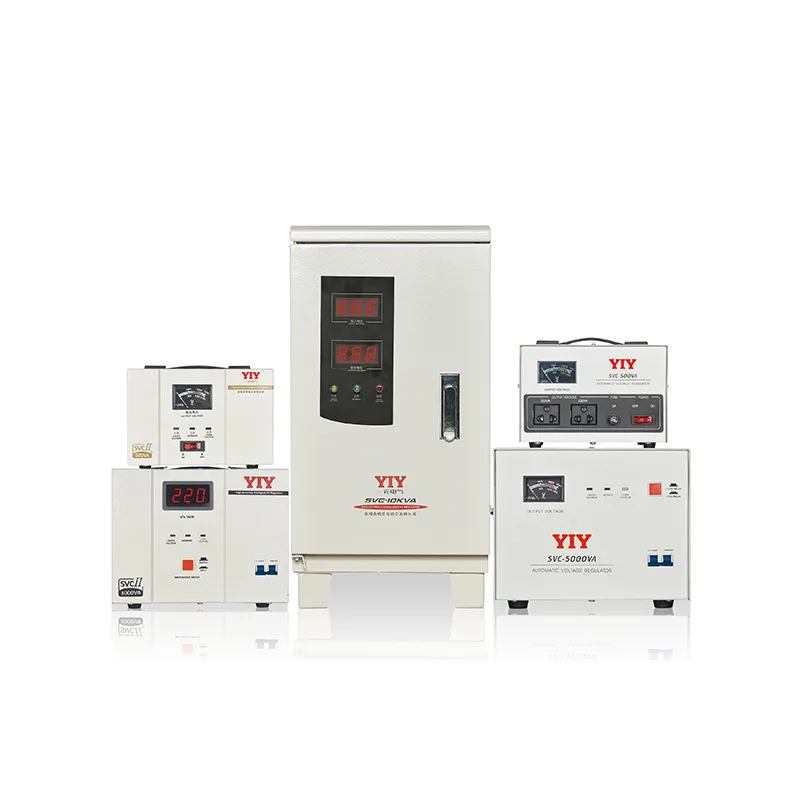
Voltage fluctuations don’t just trip breakers; they degrade sensitive control boards, ruin precision tooling, and trigger unplanned downtime that drains operational budgets. Selecting the wrong protection hardware is a costly gamble. For facility managers and procurement engineers, matching a servo voltage stabilizer to your specific load profile means balancing voltage accuracy, response speed, and long-term maintenance costs. This guide cuts through generic product sheets to help you evaluate the exact trade-offs before capital allocation.
If 5kVA fits your load, the small-capacity voltage stabilizers page compares servo, relay and IGBT models up to 10kVA by input range and output tolerance.
We will break down the control logic behind these units, compare mechanical servo designs against relay and static alternatives, and outline the critical specification checkpoints required for reliable deployment. You will also learn how to calculate exact sizing with safety margins and identify certified suppliers that support global compliance. By mapping these engineering realities to your site conditions, you can secure uptime without over-engineering your power protection budget.
How a 5kva servo stabilizer works
A servo stabilizer operates as a closed-loop feedback system that continuously corrects grid variations without interrupting downstream power flow. An electronic sensing circuit constantly monitors the incoming line voltage, triggering a synchronous motor when deviations exceed the internal tolerance threshold. This motor physically repositions a carbon brush across an autotransformer, smoothly adding or subtracting a proportional buck-boost voltage to neutralize sags and surges based on established electromechanical power regulation principles.
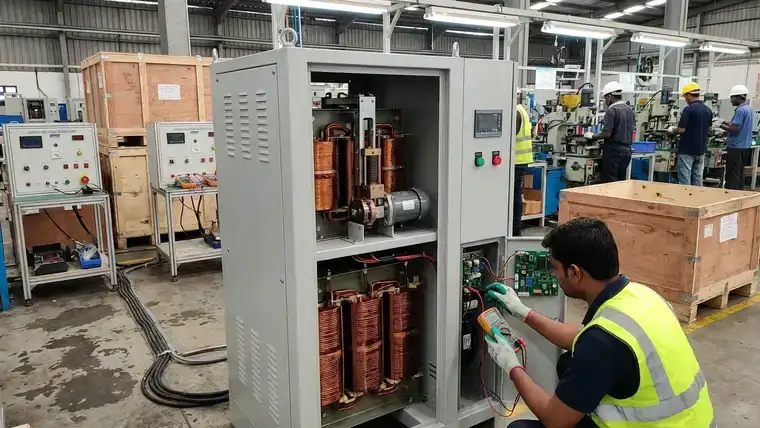
Because the correction is continuously variable rather than stepped, modern servo units maintain an output accuracy of ±0.5% to ±3%. The typical response time stays safely within one to two seconds, ensuring smooth regulation for sensitive electronics. Reviewing the core voltage stabilizer working principle clarifies why this approach protects delicate PLCs and automated assembly lines without introducing high-frequency switching noise or harmonic distortion that plagues cheaper alternatives.
Optimal load profiles and deployment environments
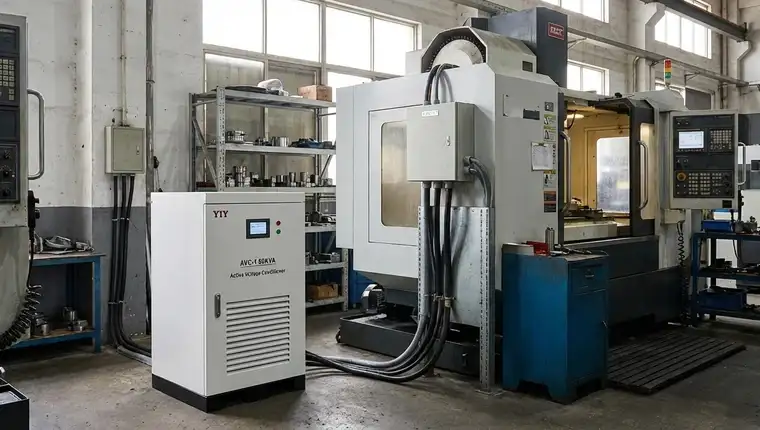
Servo architectures are strongly preferred when protecting equipment that cannot tolerate even minor voltage steps. This makes them the standard choice for CNC machining centers, precision measurement instruments, and critical medical imaging systems. Unlike relay regulators that create sudden electrical jumps, servo stabilization provides a seamless power curve that extends component lifespan.
These units also thrive in facilities experiencing chronic, wide-range grid instability. Heavy manufacturing plants, textile workshops, and remote testing labs consistently rely on servo topology to balance fluctuating mains supply alongside sensitive microprocessor controllers. By combining raw electrical accuracy with rugged construction, servo stabilizers secure continuous uptime where static inverters overheat and basic relay logic simply fails.
When to choose a 5kva servo stabilizer over relay or static designs
Selecting stabilization topology requires matching control logic to load sensitivity and maintenance reality. Facility managers must weigh these architectural differences against actual downtime costs rather than upfront procurement price. The right architecture balances voltage precision, response behavior, and long-term operational overhead without over-engineering.
For quick reference, the table below outlines how the three dominant topologies stack up across critical industrial parameters:
| Feature | Servo Stabilizer | Relay Stabilizer | Static / IGBT Stabilizer |
|---|---|---|---|
| Output Precision | ±0.5% – ±3% | ±5% – ±10% | ±0.5% – ±2% |
| Response Time | 1–2 seconds | 20–50 ms (stepped switching) | <10 ms |
| Maintenance Cycle | Carbon brush inspection every 6–12 months | Contactor replacement every 1–3 years | Zero moving parts; periodic cooling & PCB checks |
| Ideal Use Case | Mixed industrial loads, CNC, medical imaging | HVAC, lighting, resistive heating, non-critical equipment | Hypersensitive microprocessors, clean rooms, semiconductor fabs |
Response behavior and precision trade-offs
Relay models correct voltage through discrete steps, creating momentary electrical drops that harm delicate control boards. Static solid-state designs switch at millisecond speeds, delivering excellent regulation but occasionally injecting high-frequency noise into sensitive circuits. For teams navigating these trade-offs, a detailed relay vs servo vs IGBT comparison helps align topology with real-world budget constraints. The 5kva servo stabilizer bridges this gap by using a carbon brush motor to adjust the autotransformer winding ratio continuously. This mechanical method holds output accuracy within ±0.5% to ±3% while maintaining a smooth, uninterrupted power curve that prevents equipment rebooting.
Load suitability and maintenance requirements
Servo topologies excel with mixed industrial loads that demand stable RMS values without harmonic distortion. CNC machining centers, automated assembly lines, and facilities requiring dedicated CNC machine voltage protection consistently prefer this architecture over relay step-voltage or static switching methods. Unlike relay contacts that degrade from constant arcing or IGBT modules that require complex heat dissipation, servo motors rely on simple electromechanical correction. While the carbon brush requires periodic inspection and cleaning during scheduled shutdowns, total lifecycle cost remains highly predictable.
Solid-state static stabilizers remain superior for hypersensitive microprocessor clusters where sub-millisecond reaction is mandatory. A standard relay voltage stabilizer still suits non-critical lighting, HVAC compressors, and resistive heating loads where stepped regulation causes zero operational impact. For most industrial deployments in controlled factory environments or precision manufacturing floors, the continuous adjustment cycle reliably protects equipment lifespan while keeping preventive maintenance overhead highly manageable.
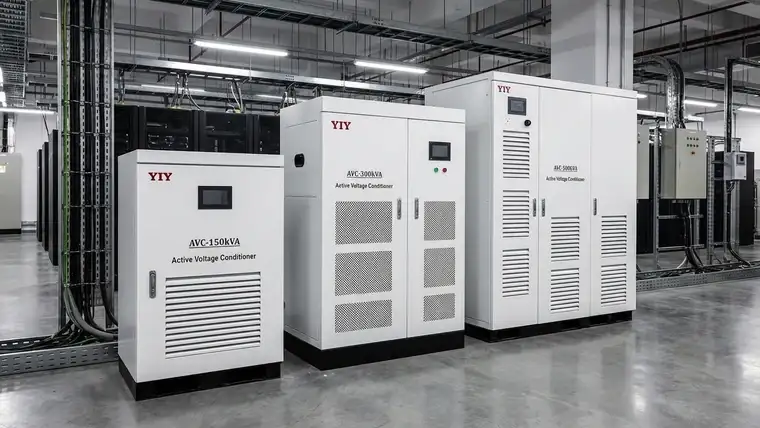
Specification and maintenance checkpoints for a 5kva servo stabilizer
Headline kVA ratings rarely capture the full procurement reality for modern industrial facilities. Before requesting formal vendor quotes, electrical engineers and procurement managers must validate how each candidate aligns with actual grid operating constraints and long-term maintenance workflows.
Voltage envelope and load profiling
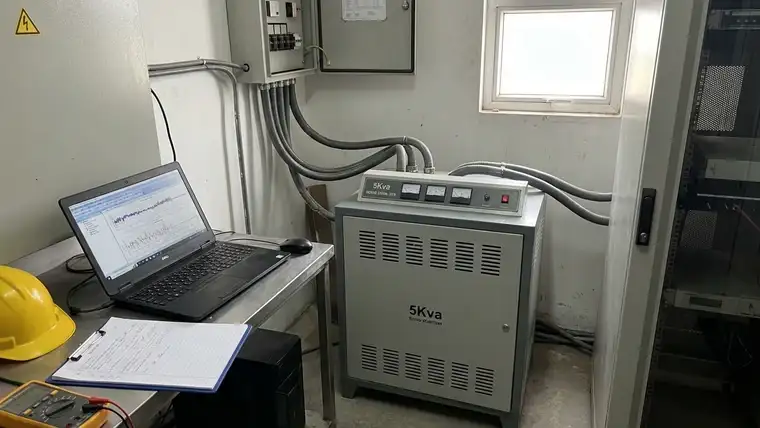
Verify the guaranteed input operating range against twelve months of logged grid telemetry rather than theoretical manufacturer minimums. Equally critical is mapping the true power factor and locked-rotor characteristics of all downstream production machinery. Heavy inductive motors draw instantaneous startup currents that easily exceed steady-state consumption, making alignment with NEMA motor starting standards essential when calculating a mandatory capacity safety margin to prevent autotransformer saturation.
Environmental hardening and bypass architecture
Servo drive assemblies require unobstructed airflow and rigorously controlled ambient temperatures to prevent rapid carbon brush degradation and winding insulation failure. Specify IP54 rated enclosures with active cooling filters when deploying stabilization units near conductive dust or corrosive chemical processing zones. Procurement specifications must also mandate an integrated automatic bypass switch to guarantee zero production interruption during scheduled control board diagnostics or firmware updates. Always verify hardware compliance against recognized IEC electrical standards for voltage tolerance to future-proof your facility against tightening regulatory audits.
Service intervals and quotation verification
Industrial electromechanical systems demand strictly scheduled inspections rather than unpredictable reactive field repairs that drain operational budgets. Standardize commercial supply contracts to include explicit brush wear thresholds, routine contactor dielectric testing protocols, and guaranteed OEM spare parts availability. Before approving the final purchase order, request comprehensive third-party factory load test certificates and detailed warranty exclusion documentation to eliminate procurement ambiguity and secure measurable facility uptime.
YIY application fit and consultation path
Selecting the right capacity requires more than matching a nameplate rating to your panel schedule, especially when preventing costly undersizing that accelerates carbon brush degradation. YIY engineering teams integrate directly into your site assessment process to validate topology selection against real-world grid telemetry and machine inrush profiles. Rather than relying on generic product catalogs, we map every deployment against localized voltage fluctuation data and harmonic distortion baselines across our verified network of 130+ country deployments.
Engineering-led sizing and topology validation
Our application review starts with a detailed load audit that accounts for continuous duty cycles, locked-rotor currents, and mandatory capacity safety margins. If your machinery operates on highly erratic mains supply, we configure OEM-tuned control boards and evaluate ambient temperature variations to guarantee optimal heat dissipation while running rigorous factory load tests that verify continuous RMS stability. Unlike regional suppliers restricted to single-technology portfolios, our global engineering division evaluates whether a dedicated servo topology or a hybrid IGBT architecture delivers your required precision without forcing unnecessary capital expenditure on over-engineered static inverters that introduce disruptive switching noise.
Technical consultation handoff
Our technical desk eliminates generic lead capture funnels to prioritize validated engineering data before initiating design proposals. Submit your twelve-month grid logs, downstream power factor data, and specific enclosure environmental ratings to trigger a formal engineering review that returns a tailored sizing matrix compliant with international safety frameworks. Provide your measured load profile and bypass architecture requirements, and our certified engineers will confirm whether your operational reality justifies a dedicated servo solution or demands a customized multi-phase regulation strategy tailored to your long-term maintenance windows.
What the 5KVA rating means and when it matters
A 5KVA configuration represents a critical midpoint in industrial voltage regulation, effectively bridging light commercial equipment and heavy manufacturing lines. The nameplate rating indicates a continuous safe load of 5,000 volt-amperes, delivering ±1% output accuracy across a fluctuating grid without immediate copper winding saturation. This configuration relies on electromechanical correction loops that physically adjust autotransformer tap ratios, delivering smoother regulation than stepped relay topologies while keeping upstream infrastructure stress highly manageable under erratic mains conditions.
Capacity scaling and market pricing context
Buyers evaluate stabilization requirements across a predictable continuum spanning 1 KVA, 2 KVA, 3 KVA, 5 KVA, and 10 KVA models. Smaller configurations typically isolate single CNC workstations or medical imaging devices, whereas larger architectures comfortably absorb mixed inductive loads with severe startup surges. Real-world procurement data confirms a transparent pricing band ranging from $150 for basic enclosures to $1,200 for fully ISO-certified industrial hardware, allowing technical buyers to align hardware costs directly with regional tariff structures and mandatory safety margins. Buyers specifically researching the 3 phase 5kva servo voltage stabilizer price will find that phase configuration and custom enclosure ratings significantly influence final procurement costs compared to single-phase equivalents.
Protecting high-value machinery from chronic voltage sags directly eliminates expensive operational downtime. Accurate capacity intelligence filters unqualified traffic, supports transactional search intent, and drives qualified leads by aligning verified pricing with genuine engineering requirements. By standardizing on global providers like YIY that offer broad OEM/ODM capabilities and multi-technology portfolios, facility managers secure continuous voltage regulation backed by rigorous certification workflows and scalable compliance frameworks that adapt seamlessly to multinational deployment requirements.
Who needs this and what they need to decide
This buying decision primarily impacts facility managers, plant engineers, and procurement officers actively evaluating voltage regulation hardware against documented load profiles. These professionals are hunting for a unit that aligns precisely with startup surges while revealing total ownership costs upfront. The buying job balances capital expenditure against reliable uptime, eliminating guesswork before issuing purchase orders.
The practical decision centers on whether your facility’s operational reality justifies a dedicated servo topology or demands a customized strategy. Rather than settling for a single-technology vendor locked into a narrow regional market, you need an engineering partner capable of adapting hardware specifications to strict multinational compliance standards. This requires verifying your supplier possesses the technical breadth to handle varying grid conditions across diverse installation sites.
Evaluating supplier breadth and global compliance
YIY distinguishes itself by offering a complete portfolio covering servo, relay, and IGBT stabilizers alongside comprehensive OEM/ODM services, whereas competitors restrict their engineering focus to a single architecture. This flexibility ensures you are never forced to deploy over-engineered hardware when a simpler topology perfectly matches your electrical baseline. Teams gain precise technical roadmaps instead of navigating fragmented catalogs that complicate maintenance scheduling.
Furthermore, YIY’s established global footprint spans 130+ countries, directly contrasting with regional players that maintain strictly localized operational focuses. This international network allows YIY to support multinational expansion projects with unified quality frameworks and consistent service levels. Your vendor selection must guarantee cross-border regulatory compliance and long-term spare parts availability without geographic bottlenecks.
Frequently Asked Questions
What should buyers evaluate before choosing 5kva servo stabilizer?
Before purchasing, technical teams must validate the guaranteed input voltage range against actual twelve-month grid telemetry rather than theoretical manufacturer minimums. Equally critical is mapping the true power factor and inrush currents of downstream machinery to prevent autotransformer saturation. Buyers should also specify IP54-rated enclosures with active cooling for conductive dust zones and mandate an integrated automatic bypass switch to guarantee zero production interruption during scheduled control board diagnostics.
When is 5kva servo stabilizer necessary?
This architecture becomes essential when protecting sensitive mixed loads, such as CNC machining centers, automated PLC arrays, or medical imaging equipment that cannot tolerate stepped voltage corrections. Unlike basic relay models that cause sudden electrical transients, continuous servo correction maintains ±0.5% to ±3% output accuracy within one to two seconds. It remains the optimal topology for facilities facing chronic, wide-range grid instability where seamless power curves prevent costly equipment reboots.
How should 5kva servo stabilizer be sized or specified?
Proper sizing requires calculating total steady-state consumption in volt-amperes and applying a strict twenty-five percent capacity safety margin to absorb heavy inductive motor startups and locked-rotor surges. Those learning how to size 5kva servo stabilizer for cnc equipment should prioritize real-time load monitoring over theoretical nameplate values. Procurement contracts must explicitly request third-party factory load test certificates, predefined carbon brush wear thresholds, and verified compliance documentation. Using a standardized servo voltage stabilizer maintenance checklist during site audits ensures long-term reliability and prevents unexpected downtime.
Final Thoughts
Selecting a 5kva servo stabilizer requires aligning topology with actual load behavior rather than chasing headline kVA ratings. For precision equipment on unstable mains, the continuous correction of servo architecture outperforms stepped relay or static designs, provided you apply a 25% safety margin to your calculated VA load. Prioritize verified input ranges, adequate environmental sealing, and integrated bypass switches to prevent production halts during scheduled maintenance.
Once you map your true power factor, inrush currents, and ambient conditions, stop comparing generic spec sheets. Forward your logged grid telemetry and downstream equipment profiles to the YIY engineering desk. Request a formal topology validation to confirm whether servo, relay, or IGBT hardware delivers the most cost-effective uptime for your specific operational context.
About YIY
Zhejiang Yiyen Holding Group Co., Ltd. (YIY) is a professional voltage stabilizer manufacturer with 16+ years of experience. With a 30,000sqm modern facility and an annual production capacity of 1,000,000+ units, our products are exported to 130+ countries. We provide OEM/ODM customization services and are ISO 9001:2015 certified, committed to delivering stable and reliable voltage protection solutions to global customers.
Contact Us
Email: yiyen@yiyen.com
Phone/WhatsApp: +86 13587452904
Website: https://www.yiyavr.com/
If you found this article helpful, contact us for a sizing review or customized solution.
Related reading: Stabilizer Voltage Regulator: Relay vs Servo vs IGBT Guide.