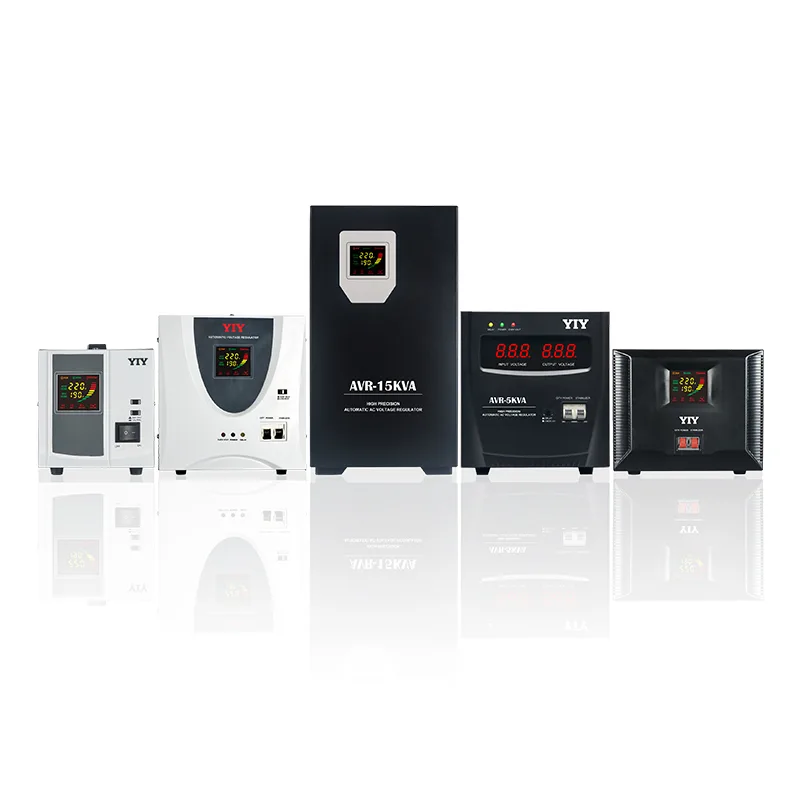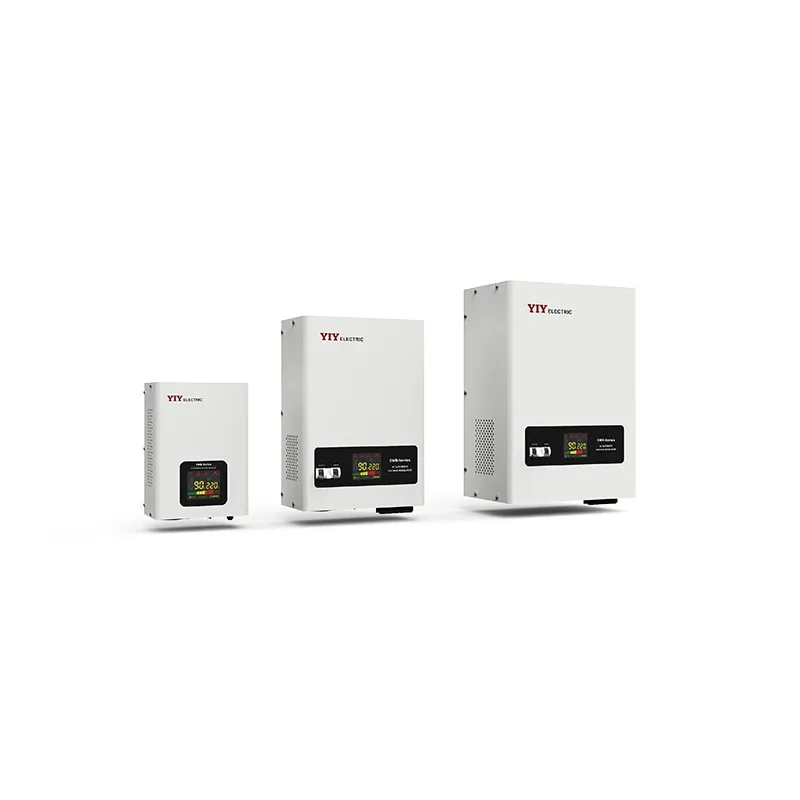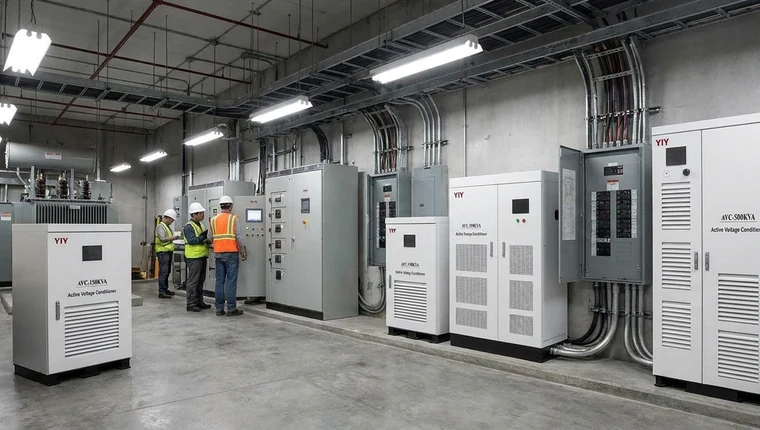
If you are asking is stabilizer required for Mi LED TV 43 inch, the practical answer is: not always. Your Mi 43-inch LED TV usually needs a stabilizer only when your incoming voltage is unstable, frequently too low, too high, or affected by generator changeovers, flicker, spikes, or repeated brownouts.
As a reference point, IEC 60038 standard voltages defines standard low-voltage systems around nominal values; in practical buying terms, your decision should be based on measured voltage behavior, not screen size alone.
You will get the clearest answer by comparing your TV’s rated input range, your real wall-socket voltage, the stabilizer’s input range, the protection functions, the kVA/VA capacity, the AVR technology, and the supplier evidence behind the product.
When Does Your Mi 43-Inch LED TV Actually Need a Stabilizer?
You should use a stabilizer for your Mi 43-inch LED TV when your supply voltage is repeatedly unstable or outside the TV’s rated input range. If your mains supply is generally stable and your TV manual shows a wide input tolerance, the TV’s built-in power supply may be enough.
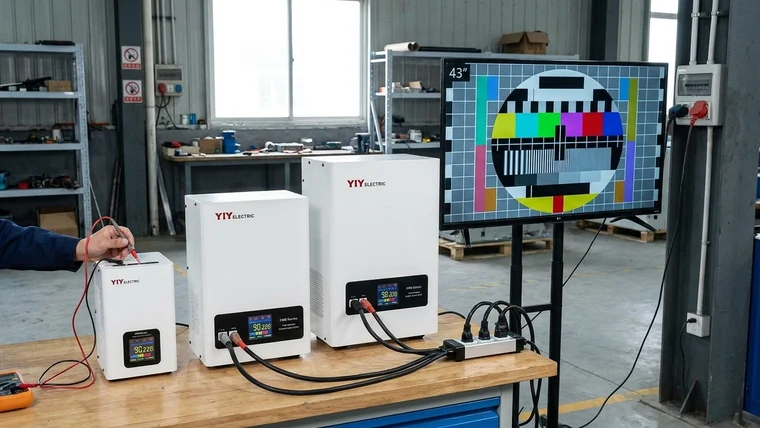
A stabilizer becomes more useful when you notice dimming lights, evening voltage drops, TV restarts, hot adapters, failed set-top boxes, or visible flicker. These symptoms suggest that your TV is not just seeing normal day-to-day variation; it may be exposed to low voltage, high voltage, or sudden changes that can stress the power board and connected devices.
For most single-TV home cases, a relay voltage stabilizer is the sensible first shortlist because it offers practical voltage correction and protective cutoff functions without turning a small TV load into an oversized procurement project.
| Site condition | What you may notice | What it means for your decision |
|---|---|---|
| Stable mains supply | No flicker, no restarts, normal appliance behavior | A stabilizer may not be necessary if the TV input range is suitable |
| Frequent low voltage | Dim lights, slow fan speed, TV restart during evenings | A stabilizer is advisable |
| High voltage or spikes | Bulbs fail early, adapters run hot, electronics fail unexpectedly | Prioritize high-voltage cutoff and surge protection |
| Generator changeover | TV reboots or HDMI devices disconnect | Choose an AVR with delay start and cutoff protection |
| Commercial display use | Downtime affects customers, reception, signage, or staff communication | Consider better monitoring, headroom, and supplier support |
The key technical point is simple: a 43-inch screen does not automatically require a stabilizer. Your voltage quality does. For you, this means the correct buying question is not only “is stabilizer required for 43 inch LED TV?” but “does my power supply create enough risk to justify external voltage regulation?”
Which Stabilizer Type Fits Your Mi TV Use Case Best?
For a single Mi 43-inch LED TV, relay AVR is often enough; servo or IGBT/static AVR makes more sense when your voltage swings are wider, your connected load is larger, or your uptime requirement is higher. You should choose the technology based on your site risk instead of assuming the most precise unit is always the best value.
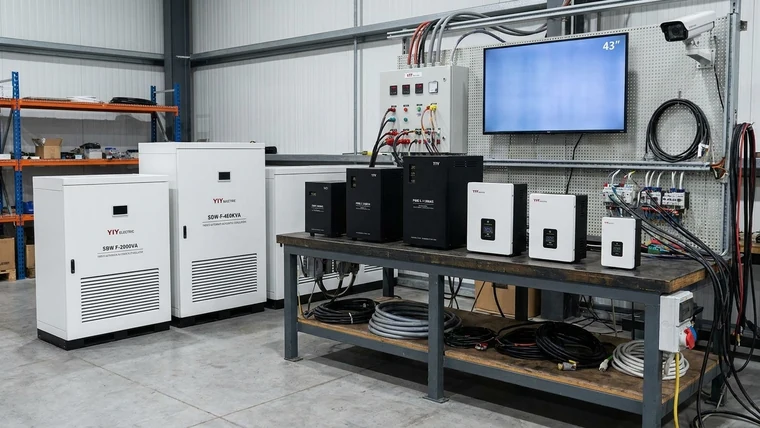
Relay stabilizers switch transformer taps in steps. They are common for home TVs, small office displays, and moderate voltage fluctuation. Servo stabilizers use motor-driven continuous adjustment and offer tighter regulation for wider voltage swings or shared electronics. IGBT/static stabilizers use power electronics for faster, more precise correction, but they are usually better justified for sensitive equipment clusters or commercial sites where downtime is expensive.
| AVR type | Typical output accuracy | How it corrects voltage | Best fit for you | Practical meaning |
|---|---|---|---|---|
| Relay AVR | About ±5–8% | Step correction through relay tap switching | Single TV, set-top box, small home setup | Good practical protection at lower cost |
| Servo AVR | About ±0.5–3% | Motor-driven continuous correction | TV plus router, soundbar, CCTV monitor, signage player, or unstable mains | Tighter correction for deeper or more frequent fluctuation |
| IGBT/static AVR | About ±0.5% | Electronic high-speed regulation | Sensitive AV equipment, generator-backed systems, critical display points | Highest precision, usually not required for one basic TV |
Those accuracy numbers tell you how tightly the stabilizer holds output voltage. In practical terms, ±5–8% is often adequate for a TV load, while ±0.5–3% or ±0.5% becomes more valuable when your supply is poor, your electronics are more sensitive, or you cannot tolerate nuisance restarts.
If you are comparing brands and want a broader TV-specific checklist, use this stabilizer for TV selection guide as a deeper companion to your Mi-specific decision. It helps you compare capacity, cutoff, wiring, input range, and buyer proof across different TV applications.
How Much Voltage Stabilizer Is Required for an LED TV?
You should size the stabilizer from the TV wattage plus connected devices, then add practical headroom. Do not choose capacity from screen inches alone, because a 43-inch TV, set-top box, router, soundbar, and signage player can create a different load than the TV nameplate by itself.
For a single Mi 43-inch LED TV, the electrical load is usually small compared with industrial equipment. Many consumer TV stabilizers are rated in VA rather than kVA. However, in commercial procurement, small sensitive loads may be grouped into higher standard capacity tiers, especially when one stabilizer protects multiple devices in a reception area, shopfront, office AV point, or waiting-room display.
Use this simple sizing logic:
Estimated VA = total connected watts ÷ power factor
If you do not have the exact power factor, ask the supplier to size conservatively from the connected load list. For your practical decision, this formula means you should add every device powered through the stabilizer, not only the TV.
| Connected load to include | Why it matters | If you ignore it |
|---|---|---|
| Mi 43-inch LED TV | Main load on the stabilizer | Capacity may look smaller than the real usage |
| Set-top box or streaming device | Often powered with the TV | It may restart during dips even if the TV survives |
| Wi-Fi router | Common in smart TV installations | Streaming interruptions may be blamed on the TV |
| Soundbar or speaker system | Adds wattage and transient demand | Undersizing may cause trips or heating |
| Signage player / CCTV monitor | Common in commercial displays | One stabilizer may be protecting more than one business-critical device |
A 3kVA stabilizer can be more than a single home TV requires, but it may be relevant when you are protecting a multi-device display corner, clinic waiting area, shop electronics cluster, or office AV point. Data/spec snapshot last verified: 2026-04-30. For larger shared installations or multiple displays tied to a facility supply, review 3 phase main line stabilizer sizing before you treat the job like a single-TV purchase.
What 7 Checks Should You Complete Before Buying?
You should complete these seven checks before you compare price or brand. They help you avoid both overbuying an industrial-grade unit for a stable home supply and underbuying a cheap stabilizer for a genuinely unstable site.
| Check | Why it matters | If you skip it |
|---|---|---|
| 1. Verify the TV input range | Your Mi TV manual or rear nameplate tells you what voltage range the TV is designed to accept | You may buy protection you do not need, or miss a real mismatch |
| 2. Measure wall-socket voltage | Your actual low/high readings show whether the problem is real | You rely on guesswork instead of evidence |
| 3. Add all connected devices | Your set-top box, router, soundbar, and signage player increase the protected load | The stabilizer may trip, heat, or run near its limit |
| 4. Match input voltage range | The stabilizer must regulate across your local voltage dips and peaks | A narrow-range unit may fail exactly when you need it |
| 5. Check cutoff and delay functions | High/low cutoff, surge protection, thermal protection, overload protection, and delay start protect the full setup | A low-cost unit may regulate but still fail to protect during abnormal events |
| 6. Compare AVR technology | Relay, servo, and IGBT designs differ in accuracy, speed, noise, and cost | You may overpay for precision or underprotect a poor-grid site |
| 7. Ask for supplier proof | Datasheets, test evidence, warranty terms, and quality documents reduce procurement risk | You buy from claims instead of verifiable product evidence |
For technical procurement, apply the same discipline used in industrial voltage stabilizer selection: define the load, input range, protection requirements, environment, installation method, and service expectations before requesting a quote.
Which Standards and Supplier Proof Should You Ask for?
You should ask for standards and quality evidence that proves the supplier controls design, production, and testing, but you should not treat a certificate as automatic proof that the model fits your TV. A quality system supports manufacturing discipline; your actual model still needs the right input range, capacity, protection functions, and installation suitability.
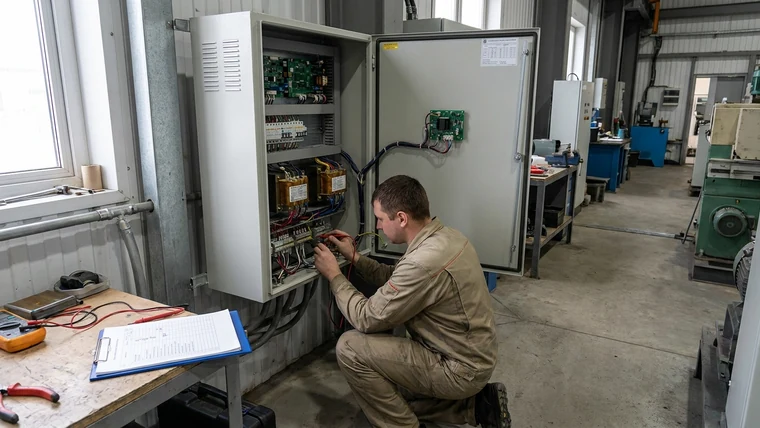
If a supplier claims voltage dip immunity or test compliance, ask for the exact test reference and report scope. For example, IEC 61000-4-11 voltage dip testing is the relevant IEC reference for voltage dips, short interruptions, and voltage variation immunity discussions.
For manufacturing process evidence, ISO 9001:2015 quality management systems can support confidence in process control, documentation, and corrective-action discipline. It does not, by itself, prove that a specific stabilizer is correctly sized for your Mi TV.
| Proof item | What you should verify | Practical meaning for you |
|---|---|---|
| Model datasheet | Input range, output accuracy, VA/kVA rating, protection functions | Confirms whether the unit matches your voltage and load |
| Test report or standard reference | Exact standard, test condition, model scope | Helps separate real evidence from generic brochure claims |
| ISO 9001:2015 evidence | Valid certificate scope and manufacturer name | Supports quality process control, not automatic product fit |
| Warranty terms | Coverage, exclusions, local service process | Reduces repair and downtime uncertainty |
| Installation guidance | Ventilation, mounting, ambient temperature, wiring | Prevents overheating and nuisance trips |
If your TV is installed in a dusty shop, humid coastal room, hot cabinet, or poorly ventilated media wall, your shortlist should include enclosure suitability, thermal cutoff, airflow clearance, and fault indicators. For you, this means a technically correct rating can still fail in practice if the installation environment is ignored.
Is the Best Stabilizer for a 43-Inch LED TV in India Always a TV-Only Consumer Model?
The best stabilizer for a 43-inch LED TV in India is not always the cheapest TV-only unit; it is the unit that matches your local voltage range, connected load, protection needs, and service expectations. You can choose a simple consumer stabilizer for stable home use, but a shop, office, clinic, reception display, or generator-backed site may justify a more robust AVR.
Many buyers in India search for a stabilizer because local voltage conditions can vary by neighborhood, season, time of day, transformer loading, and backup power arrangement. Your own readings matter more than general advice. Measure voltage during peak evening hours and at lower-load times, then compare those readings with the stabilizer’s operating input range.
| Buying situation | Sensible shortlist | What you should prioritize |
|---|---|---|
| Stable apartment supply | No stabilizer or simple relay TV stabilizer | TV input range, surge protection, compact size |
| Frequent evening dips | Relay or servo AVR | Wide input range, low-voltage correction, delay start |
| Shopfront display | Relay or servo AVR with clearer indication | Cutoff functions, ventilation, fault visibility |
| TV plus AV/network devices | Servo or higher-headroom relay unit | Load headroom, stable output, service support |
| Generator-backed display | Servo or IGBT/static AVR depending on severity | Fast correction, delay start, abnormal-voltage protection |
A consumer-only brand may be enough when your use case is simple. However, if you are standardizing protection across multiple devices, comparing relay, servo, and IGBT options can help you avoid being locked into one technology regardless of the actual power problem.
What Should You Do Before Requesting a Quote?
You should gather a few simple inputs before you ask for a quote, because those inputs let a supplier narrow the model quickly and avoid oversizing. Your first-pass review does not need complex logs; start with the TV nameplate, connected devices, voltage readings, and installation environment.
Use this short procurement screen:
| Input to share | Why it matters | If you skip it |
|---|---|---|
| TV model and rated input voltage | Confirms whether the TV already accepts a wide voltage range | The supplier has to guess the real tolerance |
| TV wattage and accessories | Sets the actual protected load | The unit may be undersized or oversized |
| Lowest and highest measured voltage | Defines the required stabilizer input range | The AVR may not regulate during real dips or peaks |
| Power source | Mains only, generator, inverter, or mixed supply affects risk | Changeover behavior may be overlooked |
| Installation location | Heat, dust, humidity, wall mounting, and cabinet airflow affect reliability | A correct electrical selection may still overheat |
| Uptime expectation | Home entertainment differs from commercial display use | You may buy too little protection for business use |
For larger commercial buyers who are standardizing protection across many loads or moving beyond a single TV application, you can compare before buying a voltage stabilizer to prepare a more structured RFQ.
Frequently Asked Questions
What Is the Purpose of a Stabilizer on a TV?
A stabilizer regulates the incoming voltage before it reaches your TV power board. Depending on the model, it may also add high/low-voltage cutoff, surge protection, overload protection, thermal protection, and delay start. Verify these features on the datasheet rather than assuming every TV stabilizer includes them.
Does a 55-Inch TV Need a Stabilizer?
A 55-inch TV does not need a stabilizer just because it has a larger screen. Screen size mainly affects wattage; voltage quality decides whether extra protection is useful. Check the TV wattage, add accessories such as your set-top box, router, or soundbar, and choose a stabilizer with practical headroom.
Is a Stabilizer Required for a 55-Inch TV?
A stabilizer is required for a 55-inch TV when voltage fluctuation is frequent enough to cause shutdowns, overheating, flicker, or power-board stress. Before buying, verify the TV’s rated input voltage, your measured high and low voltage readings, and the stabilizer’s input range plus cutoff features.
Does a 4K TV Need a Stabilizer?
A 4K TV needs a stabilizer only if your supply voltage is unreliable. The 4K panel is not the deciding factor; the power board’s input tolerance and your local mains behavior matter more. Compare your measured voltage with the rated range in the TV manual before you buy.
How Can You Verify Whether Your Mi TV Needs a Stabilizer?
Check three things: the TV nameplate or manual input voltage, the actual wall-socket voltage at different times of day, and the symptoms at your site. If your measured voltage repeatedly moves outside the TV’s safe range or you see restarts, flicker, or hot adapters, choose an AVR with suitable input range, high/low cutoff, and delay start.
Final Thoughts
Your Mi 43-inch LED TV does not automatically need a stabilizer, but unstable voltage changes the answer quickly. If your mains supply is clean and the TV input range is suitable, built-in protection may be enough. If your site has frequent dips, spikes, flicker, or generator changeovers, a relay-type AVR is often the practical starting point, while servo and IGBT/static options fit wider fluctuation, shared electronics, or higher uptime requirements.
For a quick first-pass fit review, share your TV model, rated input voltage, connected devices, lowest and highest measured voltage, power source, and installation environment. YIY can use those inputs to narrow the shortlist faster. For a compact relay unit, see the YIY PR portable single-phase relay voltage stabilizer and confirm its capacity on the product page against your TV load.
Dealers and wholesale buyers can request bulk or distributor terms through the YIY contact page.
About YIY
Zhejiang Yiyen Holding Group Co., Ltd. (YIY) is a professional voltage stabilizer manufacturer founded in 2008. With a 30,000sqm modern facility and products exported to 130+ countries, YIY provides relay, servo, and IGBT voltage stabilizer solutions, including OEM/ODM customization for residential, commercial, and industrial applications.
Contact Us
Email: yiyen@yiyen.com
Phone/WhatsApp: +86 13587452904
Website: https://www.yiyavr.com/