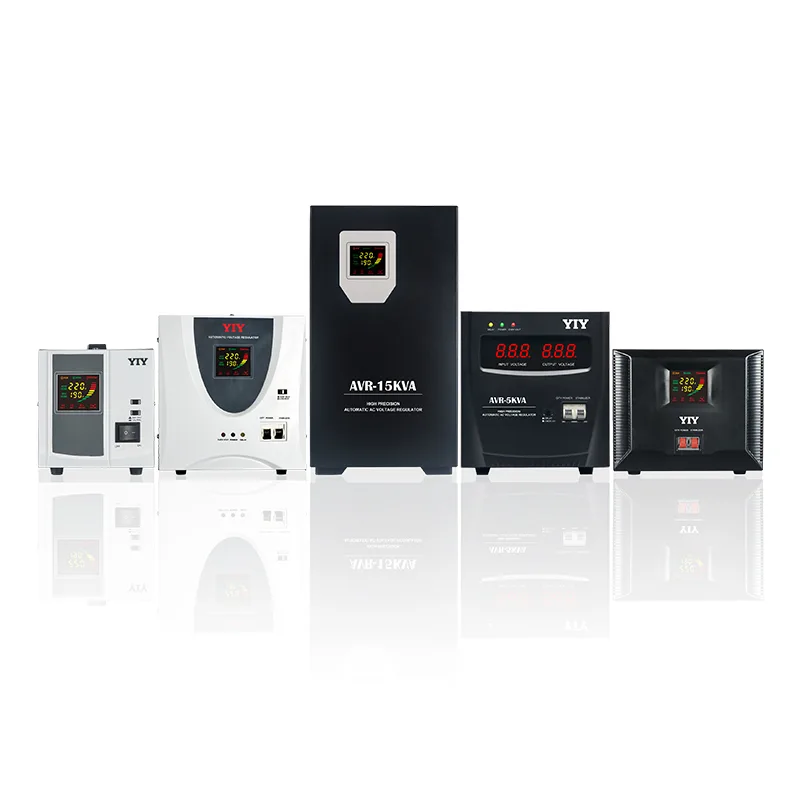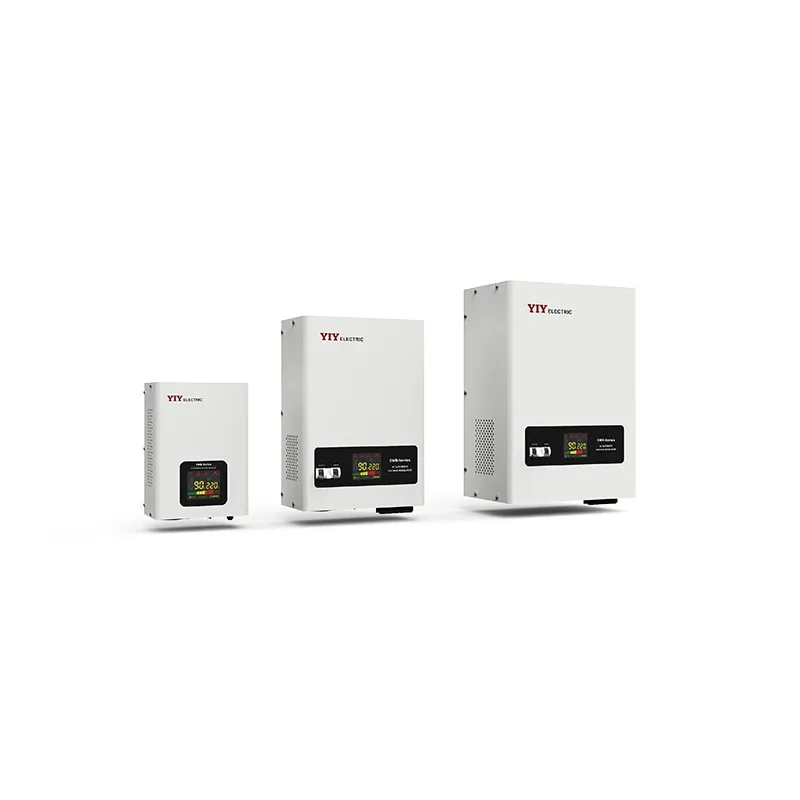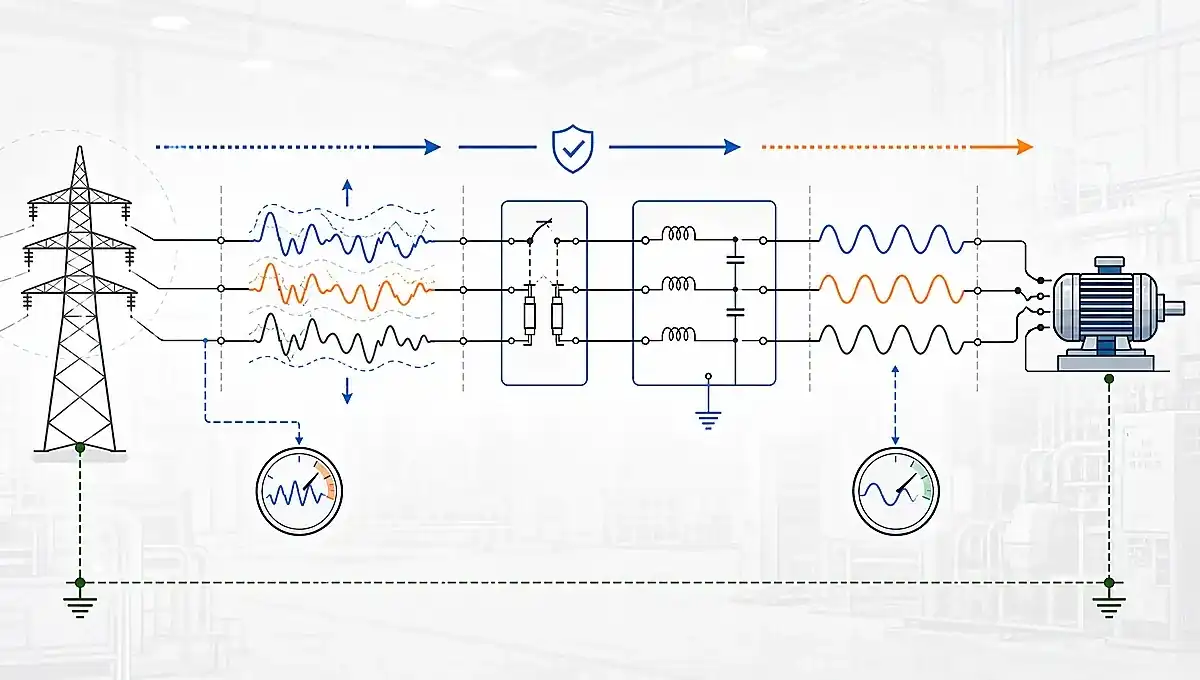
A mainline voltage stabilizer for home 5kva is suitable when your measured whole-home load stays within the 5 kVA range, your utility input is unstable, and appliances such as AC units, cooling compressors, pumps, lighting, and electronics need steadier voltage at the distribution point.
It is not a purchase you should make from the kVA label alone; your load profile, voltage range, topology, protection package, and installation conditions decide whether this capacity tier will work reliably.
Before you compare models or request pricing, you will walk through the seven checks that matter most: fit, load sizing, voltage range, relay/servo/IGBT topology, protection, supplier proof, and price drivers.
When Does a Mainline Voltage Stabilizer for Home 5kVA Actually Fit?
A 5 kVA mainline stabilizer fits when your unstable voltage affects multiple home circuits or major appliances, and your simultaneous load remains inside the stabilizer’s practical capacity after startup current and safety margin. For you, the key question is not “Can it protect one appliance?” but “Can this unit stabilize the circuit group connected at the incoming supply or distribution point?”
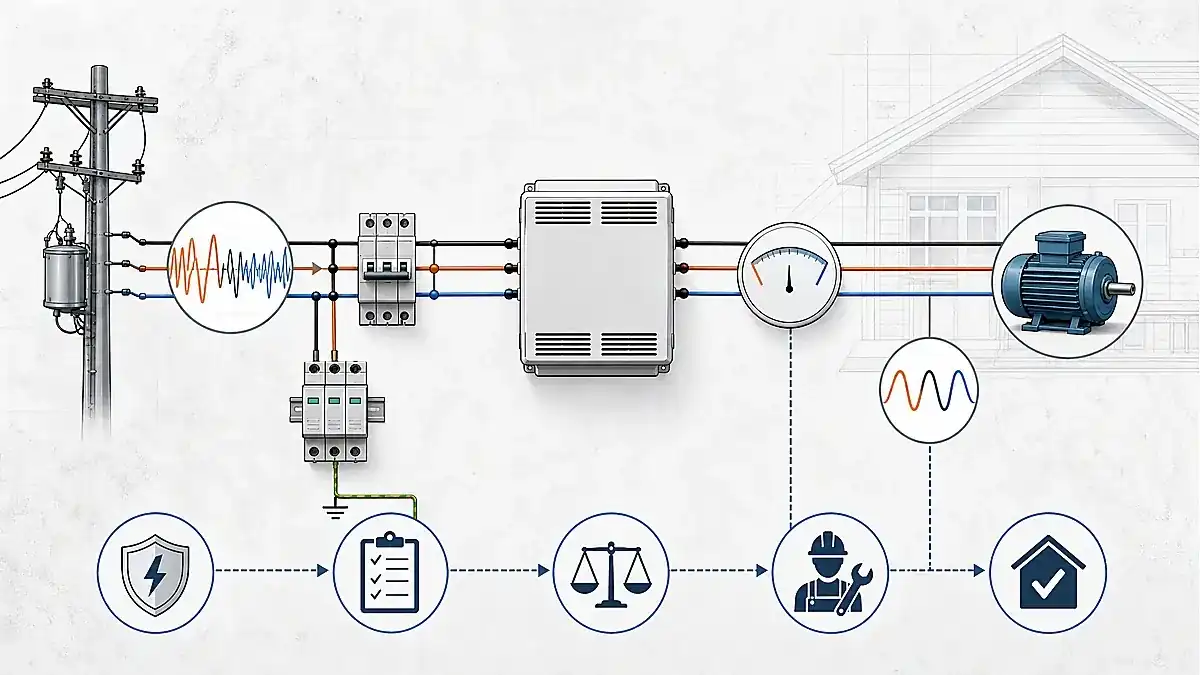
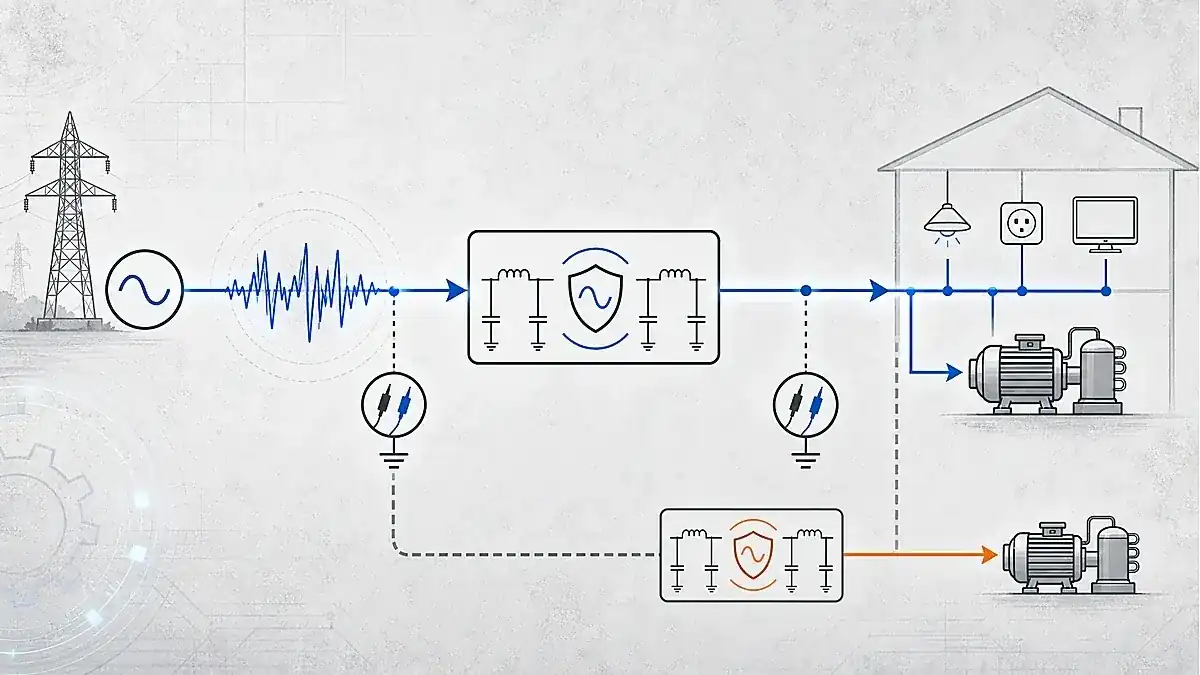
A mainline unit is different from an appliance-only stabilizer. It is installed closer to the home supply path, so your sizing decision has to consider shared loads, breaker coordination, cable size, ventilation, and service access. A voltage stabilizer, also called an automatic voltage regulator or AVR, senses incoming voltage and adjusts the output so your connected load stays closer to the target band.
If your project is cost-sensitive and residential, a relay voltage stabilizer can be an entry-level fit for basic mainline protection. If the house has mixed loads or more sensitive electronics, you may need servo or IGBT/static regulation instead.
Watch for these site symptoms before you specify a home stabilizer 5kVA unit:
- Lights dim or flicker when AC units, pumps, or cooling compressors start.
- Compressor loads or air conditioners struggle to restart after low-voltage events.
- Electronics reset, trip, or show random faults during evening peak demand.
- Your measured supply repeatedly drops below or rises above the expected local voltage.
- Several rooms or circuit groups show the same voltage problem.
IEC 60038 standard voltages provides the international reference for standard AC system voltages, including low-voltage supply contexts. In practical terms, this helps you avoid treating every “220 V,” “230 V,” or “240 V” market as identical. You should confirm the nominal voltage, actual measured input range, and acceptable output band before you approve a model.
Which Technology Fits Your Precision and Budget Requirements?
Relay suits budget protection, servo usually suits mixed residential loads, and IGBT/static regulation fits faster voltage changes or more sensitive electronics. Your best choice depends on how unstable your supply is, how sensitive your appliances are, and how much after-sales risk you can tolerate.
| Stabilizer type | Typical regulation behavior | Best fit for your 5 kVA home project | What it means for you |
|---|---|---|---|
| Relay AVR | Tap switching, commonly wider output tolerance such as around ±5-8% depending on design | Basic lighting, fans, non-critical appliances, and budget mainline packages | You get economical protection, but voltage correction is less precise than servo or static designs. |
| Servo AVR | Continuous correction, often around ±0.5%-±3% output accuracy, with response commonly around ≤1-2s | Mixed home loads such as AC, cooling compressors, pumps, lighting, and electronics | You get a balanced option for general residential use where accuracy and serviceability both matter. |
| IGBT/static AVR | Electronic correction, fast response, and high precision where specified | Sensitive electronics, rapid voltage swings, premium homes, or light commercial circuits | You pay more, but you reduce risk where resets, trips, or voltage-sensitive equipment matter. |
A servo response around ≤1-2s means the unit can correct ordinary voltage drift quickly enough for many residential loads. It does not mean the same thing as instant electronic correction. If your customer reports sudden dips, electronic resets, or fast cycling faults, IGBT/static regulation may be the better technical fit.
For broader mainline projects, especially where you compare single-phase and three-phase supply requirements, YIY’s main line stabilizer sizing guidance can help you separate phase type, connected load, and installation scope. Even if your current project is a single-phase home installation, the sizing logic is useful because mainline protection always depends on the supply architecture, not only the appliance list.
How Should You Size the 5 kVA Load Before Ordering?
You should size the unit from simultaneous apparent power, startup current, and safety margin, not from the total number of appliances in the home. A 5 kVA label equals 5,000 VA, but your real load can exceed that during compressor or motor startup even when the running wattage looks acceptable.
Use the basic sizing relationship:
VA = W / power factor
If your connected appliances draw 3,500 W at 0.8 power factor, the apparent load is:
3,500 / 0.8 = 4,375 VA
That leaves limited room inside a 5 kVA rating before startup current, low-voltage derating, or future load additions. In practical terms, you should not treat 5 kVA as 5,000 W unless the supplier has clearly confirmed the power factor, rated current, and operating conditions.
For single-phase current, use:
Amps = VA / Voltage
At 230 V, a 5 kVA stabilizer is approximately:
5,000 VA / 230 V = 21.7 A
That number matters because your breaker, cable, terminal block, bypass arrangement, and stabilizer nameplate must support the actual current. You should verify the printed current rating and installation requirements instead of relying only on the kVA label.
For a deeper calculation workflow, YIY’s voltage stabilizer selection guide covers load, power factor, startup current, input range, and safety margin. Use that process when your 5 kVA home project includes AC units, pumps, or other loads that do not behave like simple lighting circuits.
Which Specification Checks Protect You from Ordering Mistakes?
You should confirm seven checks before you issue a purchase order: load, startup current, voltage range, topology, installation environment, protection functions, and supplier proof. These checks turn a “voltage stabilizer for home 5kVA” quote into a usable technical specification.
| Check | Why it matters | If you skip it |
|---|---|---|
| Total connected load | Your stabilizer must handle the appliances that run at the same time. | The unit may overload even when the home’s average demand looks modest. |
| Motor and compressor startup | AC units, cooling compressors, and pumps can draw several times running current when starting. | You may see nuisance trips, dimming, or customer complaints after installation. |
| Input-voltage range | Weak grids may require wide input correction, but capacity can change under low input. | A model may match the brochure but fail during the worst voltage event. |
| Output accuracy | Sensitive electronics need tighter regulation than basic lighting or fans. | You may overpay for precision you do not need, or under-spec a sensitive load. |
| Phase type and wiring | Most 5 kVA home units are single-phase, but site supply must be verified. | Installation delays, rewiring, and breaker mismatch can appear on site. |
| Environment and mounting | Heat, dust, humidity, ventilation, wall/floor mounting, and service access affect reliability. | Thermal stress, corrosion, poor access, and premature failure become more likely. |
| Protection and visibility | Overload, over/under-voltage, delay, surge protection, alarms, and displays support safe operation. | Your maintenance team may spend more time diagnosing unclear trips. |
A wide input range such as 90-300 V can look attractive in a marketplace listing, but you should ask for the actual datasheet, rated current, derating notes, and warranty terms. In practical terms, the useful question is not only “How wide is the range?” but “Can this 5 kVA unit carry my load at the lowest expected input voltage?”
Delay protection is especially important for homes with compressors. After a power cut or severe voltage dip, an AC or other compressor load should not restart instantly into unstable supply. A short restart delay helps protect the appliance and reduces repeated tripping.
What Affects 5kVA Voltage Stabilizer for Home Price?
Price changes mainly with topology, copper content, input range, enclosure quality, protection functions, display, certification evidence, warranty, and customization. You should compare quotes line by line, because two units in this power class can have the same 5 kVA label but very different operating value.
| Price driver | Lower-cost version | Higher-spec version | What you should verify |
|---|---|---|---|
| Topology | Relay switching | Servo or IGBT/static correction | Match the technology to your voltage behavior and load sensitivity. |
| Winding and transformer design | Lower material cost, possible heating or voltage drop tradeoffs | Better copper content and thermal design | Ask for winding material, temperature rise, and rated current. |
| Input range | Narrower correction window | Wider correction window with clearer derating data | Confirm the real low-voltage load capacity. |
| Protection package | Basic cut-off functions | Overload, delay, surge, alarms, display, and fault indication | Check the protection list on the datasheet. |
| Enclosure | Basic indoor housing | Better ventilation, dust resistance, corrosion control, or custom mounting | Match the enclosure to heat, humidity, and service access. |
| Supplier proof | Limited documentation | Datasheets, nameplate proof, test records, quality-system evidence | Request documents before you approve the quote. |
ISO 9001:2015 quality management systems is useful as a supplier-screening reference because it indicates documented quality-management processes. For you, that does not replace product testing, but it makes production control, corrective action, and inspection records easier to audit.
If you are comparing this capacity against larger procurement examples, the same quote discipline applies when you compare before buying a voltage stabilizer. Capacity changes, but your evaluation still needs load data, voltage range, protection requirements, supplier evidence, and after-sales expectations.
How Should You Review Supplier Proof Before Confirming the Model?
You should ask for evidence that matches your installation, not only a product photo or headline price. For a home mainline stabilizer, practical proof means datasheet values, nameplate ratings, wiring guidance, protection functions, certification evidence, and supplier confirmation that the unit is approved for your installation scope.
Use this procurement screen before you decide:
| Check | Why it matters | If you skip it |
|---|---|---|
| Datasheet with input/output range | Confirms whether the unit matches your measured voltage conditions. | You may buy a stabilizer that works only in milder conditions. |
| Nameplate current rating | Shows whether the unit supports the real single-phase current. | Cable, breaker, or terminal mismatch can appear during installation. |
| Protection list | Confirms overload, over-voltage, under-voltage, delay, surge, and alarm functions. | The unit may stabilize voltage but still leave avoidable service risk. |
| Installation guidance | Clarifies cable size, ventilation, mounting, bypass, and breaker coordination. | Your electrician may improvise critical installation details. |
| Quality and certification documents | Supports procurement review and supplier accountability. | You may have no clear evidence during warranty or audit discussions. |
| Warranty and service terms | Defines what happens if the unit trips, fails, or arrives out of specification. | A low quote can become expensive after the first service issue. |
YIY reports long-term voltage stabilization experience, broad capacity coverage, OEM/ODM customization, and export support across many markets. For your buying decision, the useful next step is to match those capabilities to your actual load list and measured voltage behavior rather than assuming every 5 kVA home stabilizer is interchangeable.
How Does a Servo Home Stabilizer Correct Voltage?
A servo unit is a closed-loop regulator. It senses the voltage, compares it with the setpoint, and drives a small motor that moves a carbon brush along a variac winding until the output is back in tolerance:
- Detect: the sensing circuit reads input and output voltage.
- Compare: the controller checks the deviation from the target.
- Correct: the servo motor moves the brush to buck or boost the output smoothly.
- Hold: movement stops once the voltage is back within tolerance.
Because the brush and motor are wearing parts, plan for service access, ventilation, and dust control at the mounting spot. Before ordering a mainline unit, watch for signs that justify one: lights dimming when the AC or pump starts, compressor restart failures after short outages, and repeated nuisance trips. A UPS is a different tool: it supplies backup runtime during outages, while the stabilizer corrects high or low voltage while mains power is present.
Frequently Asked Questions
What Should You Know About an Automatic Voltage Stabilizer for Home?
An automatic voltage stabilizer for home regulates output voltage when the incoming supply rises or drops. For a 5 kVA residential project, you should confirm whether the unit protects one appliance, one circuit group, or the mainline supply, because the installation point changes the sizing logic.
Verify the input range, output accuracy, delay protection, overload protection, and rated current on the datasheet. For more home-specific context, see YIY’s guide to automatic voltage stabilizer for home use.
How Do You Choose the Right 5 kVA Voltage Stabilizer for a Home?
Choose by simultaneous load, voltage fluctuation pattern, and appliance sensitivity. Relay models suit budget protection, servo models usually fit mixed home loads, and IGBT/static units fit faster voltage changes or sensitive electronics.
Your concrete verification action is to list every air conditioner, compressor, pump, lighting circuit, and electronic load that may run at the same time. Then ask the supplier to confirm startup-current headroom in writing.
Is a 5 kVA Stabilizer Enough for a Home?
A 5 kVA unit is enough only if your simultaneous running load plus compressor or motor starting current stays within the stabilizer rating. House size alone is not a reliable sizing method because two homes of the same size can have very different load behavior.
Check the calculated VA, power factor, startup current, and nameplate current. If your load is close to the limit, move to a larger rating or reduce the protected circuit group.
How Many Amps Is a 5 kVA Stabilizer?
A single-phase 5 kVA stabilizer is about 21.7 A at 230 V before margin, using amps = VA / voltage. At 220 V, it is about 22.7 A, and at 240 V, it is about 20.8 A.
For you, this means the breaker, cable, terminal rating, and stabilizer current rating must all be checked against the local nominal voltage and actual installation method.
Is an Automatic Voltage Stabilizer for Home Different from a Mainline Stabilizer?
Yes. “Automatic” describes regulation behavior, while “mainline” means the unit sits where power enters the house and feeds every circuit. One unit can be automatic without being suitable for whole-home mainline installation.
Your verification action is to confirm breaker coordination, cable size, ventilation clearance, enclosure suitability, alarms, bypass requirements, and written supplier approval for mainline use.
What Should You Do Before Requesting a Quote?
You should complete a first-pass fit review before asking for a detailed quote. That keeps the conversation simple while giving your supplier enough information to recommend relay, servo, or IGBT/static regulation correctly.
Prepare these details:
- Your nominal voltage and measured low/high input voltage.
- The appliances or circuit groups you want to protect.
- Which loads may run at the same time.
- AC, pump, compressor, or motor startup requirements.
- Indoor temperature, dust, humidity, mounting, and ventilation conditions.
- Preferred protection functions such as delay, overload, surge protection, alarm, and display.
- Any required documentation, warranty, or certification evidence.
A 5 kVA mainline home stabilizer should be selected by measured voltage behavior, connected load, installation environment, and required regulation accuracy. Once your first-pass checklist is ready, share your operating environment, protected loads, and observed voltage behavior with YIY for a quick fit review, and YIY can recommend the right deployment path for your project.
If you are moving from evaluation toward supplier shortlisting or buying review, use compare before buying a voltage stabilizer as your next step.
For this application, the TSS Wall-Mounted Voltage Stabilizer is a matched product option worth evaluating. If you need servo-grade regulation for the whole house, see the YIY TWS wall-mounted single-phase servo stabilizer; its product page lists a 5KVA model, so confirm the rating against your measured load.
Dealers, installers, and wholesale buyers can request distributor terms through the YIY contact page.