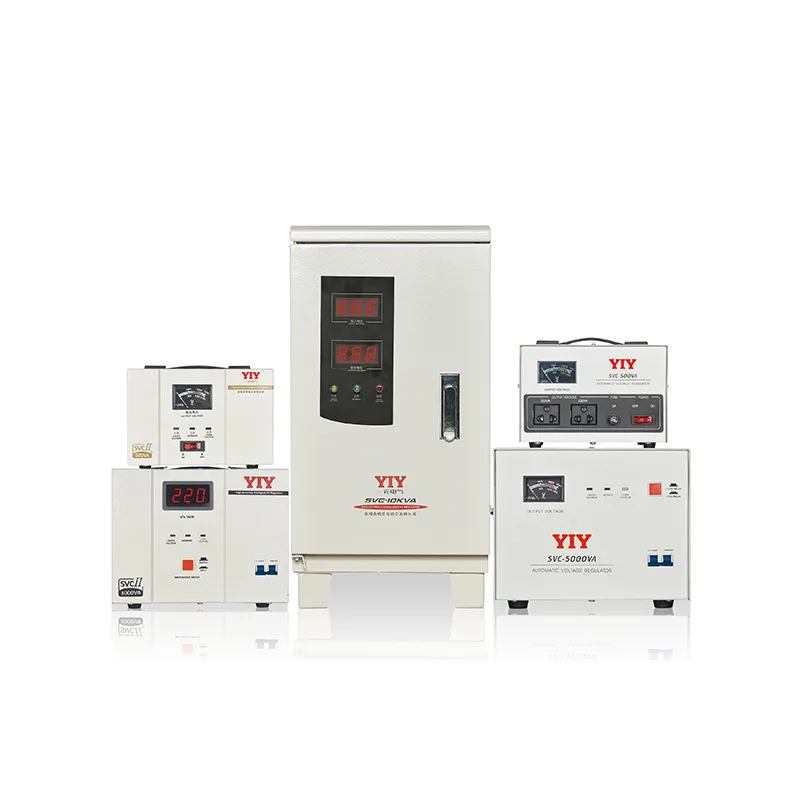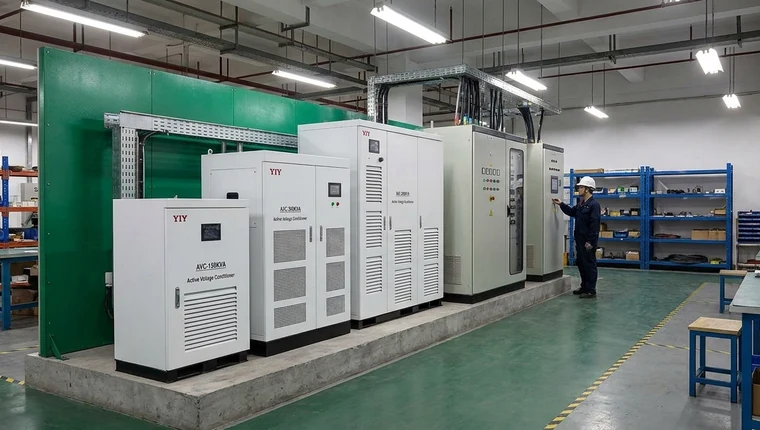
Choose a single phase motor stabilizer when unstable single-phase supply creates a measurable risk to your motor: low starting torque, overheating, nuisance trips, contactor chatter, brownout failures, or premature winding stress.
Your best choice is not based on HP alone. You size and select the stabilizer from your motor nameplate, measured voltage range, full-load current, power factor, starting current, duty cycle, and site environment. This guide walks you through when protection is necessary, how relay/servo/IGBT stabilizers compare, how to size the unit, which standards and supplier checks matter, and what you should verify before procurement.
When Does a Single Phase Motor Stabilizer Actually Make Sense?
You should choose a motor stabilizer when voltage instability is repeated, measurable, and linked to motor starting or running problems.
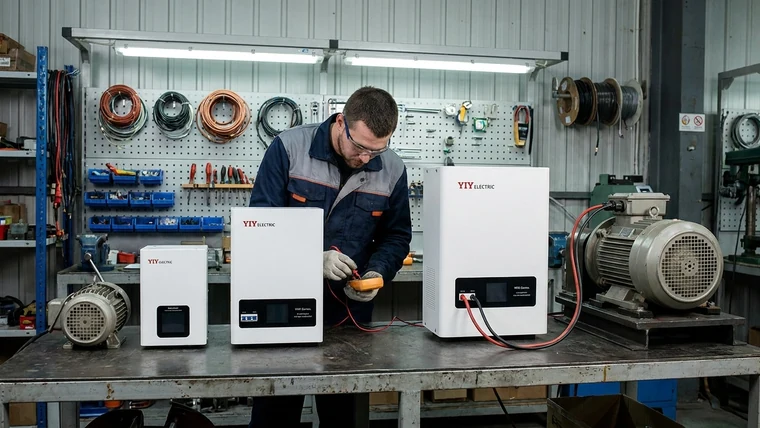
A single-phase motor can tolerate some normal utility variation, but repeated dips, surges, or brownouts change the operating risk. During startup, pumps and compressors can draw much higher current than their running current. If your supply is already weak, that inrush can pull voltage lower, reduce starting torque, and make the motor stall, trip, or run hotter than intended.
A stabilizer for single phase motor applications is most useful when you see patterns such as:
- Your pump, fan, compressor, or workshop machine starts slowly or fails to start during peak grid hours.
- Your motor trips overload protection even when the mechanical load appears normal.
- Your site voltage falls below the motor’s acceptable range during brownouts or generator transitions.
- Your contactor chatters, lights dim heavily, or breakers nuisance-trip when the motor starts.
- Your motor runs hotter than expected despite correct ventilation and mechanical condition.
Standards help you turn “bad power” into something you can verify. IEC 60038 standard voltage systems defines standard AC voltage systems and is commonly used as a nominal-voltage reference in equipment selection. For you, this means site voltage readings should be compared against the motor nameplate and the stabilizer’s input/output range, not judged by guesswork.
If your project is currently built around a single-phase motor, keep the product reference aligned with YIY’s single-phase stabilizers. That gives you a cleaner specification path for pumps, compressors, fans, and workshop equipment using single-phase supply.
What Does a Stabilizer Protect—and What Can It Not Fix?
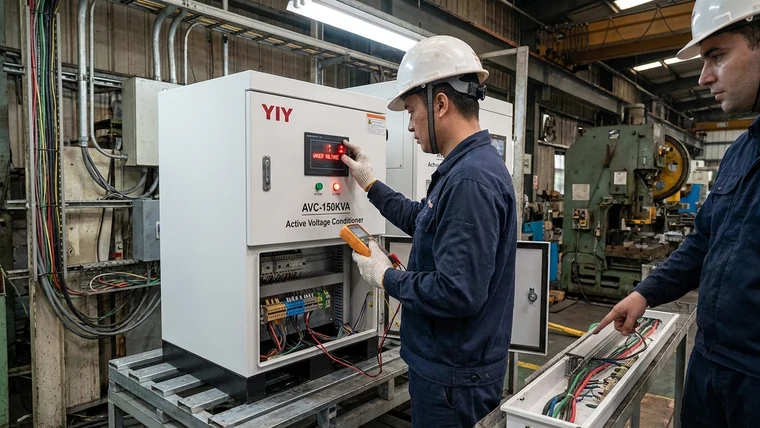
You get voltage regulation and motor voltage protection, but you do not get extra horsepower or a cure for incorrect motor sizing.
A voltage stabilizer, AVR, or automatic voltage regulator senses incoming voltage and corrects output voltage toward a target range. For your motor, that can reduce voltage-related overheating, nuisance trips, contactor chatter, failed starts, and stress from recurring overvoltage or undervoltage events.
It does not fix every motor problem. If your pump is jammed, bearings are worn, cables are undersized, terminals are loose, the overload relay is incorrectly set, or the motor is too small for the mechanical load, a stabilizer may reduce symptoms while the root cause remains.
| Your site condition | What the stabilizer can help with | What you should verify first |
|---|---|---|
| Low grid voltage during peak hours | Raises regulated output toward the target range | Motor nameplate voltage, input range, cable voltage drop |
| High voltage or recurring surges | Reduces overvoltage exposure within design limits | Earthing, surge protection, breaker coordination |
| Pump or compressor starts hard | Supports steadier voltage during starting stress | Starting current, starter type, mechanical load condition |
| Repeated overload trips | Reduces voltage-related trip causes | Overload setting, motor current, bearing and pump condition |
| Dusty, hot, or humid site | Supports reliability if enclosure and cooling are suitable | Ambient temperature, ventilation, IP/enclosure requirements |
Voltage dip behavior is also testable. IEC 61000-4-11 voltage dip and interruption immunity testing defines test methods for voltage dips, short interruptions, and voltage variations. In practical terms, your maintenance team can log voltage events and compare them with motor trips instead of replacing components blindly.
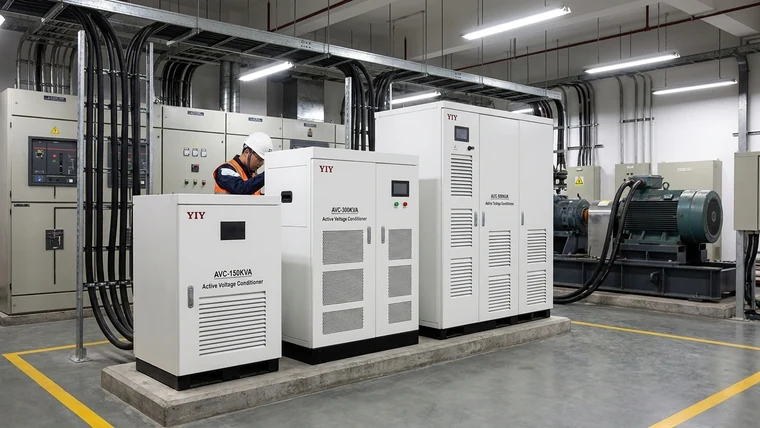
Which Technology Fits Your Motor: Relay, Servo, or IGBT?
You should choose relay for simpler low-cost correction, servo for tighter continuous regulation, and IGBT/static technology when faster, high-precision electronic control is justified.
The right topology depends on how unstable your supply is, how sensitive your connected equipment is, how often voltage changes, and how much maintenance access you have.
| Type | How it regulates | Typical precision | Good fit for you | Watch-outs |
|---|---|---|---|---|
| Relay stabilizer | Switches transformer taps through electromagnetic relays | ±5% to ±8% | Simple pumps, fans, household/light commercial loads, budget-sensitive sites | Step correction, relay clicking, contact wear under frequent switching |
| Servo stabilizer | Uses a servo motor and autotransformer/variac mechanism for smoother correction | ±0.5% to ±3% | Pumps, compressors, small machinery, light industrial motor loads with gradual voltage drift | Slower than static designs; needs ventilation and periodic inspection |
| IGBT/static AVR | Uses power electronics, often PWM or double-conversion style control | Around ±0.5% | Sensitive loads, automation-linked motors, unstable grids, faster correction needs | Higher cost and more electronic complexity |
Those precision figures matter because they describe how close the output stays to your target voltage. A ±5% to ±8% relay unit may be acceptable for a robust motor load, while ±0.5% to ±3% servo regulation gives you tighter voltage control when a motor frequently runs under weak-grid conditions. Around ±0.5% IGBT regulation is often more relevant when the motor shares power with PLCs, sensors, drives, or other sensitive controls.
A relay voltage stabilizer can be practical when your application is simple and cost-sensitive. A single phase servo voltage stabilizer is usually the stronger fit when you need smoother regulation for a pump, compressor, or workshop motor. IGBT/static AVR options become more attractive when fast correction, electronic control, and load sensitivity outweigh purchase-price concerns.
How Should You Size a Stabilizer for Single Phase Motor Loads?
You should size the stabilizer from measured current, voltage, power factor, starting current, duty cycle, and margin—not from HP alone.
For single-phase loads, the basic apparent-power formula is:
kVA ≈ V × A ÷ 1000
This formula converts your measured voltage and current into the apparent power the stabilizer must carry. For you, it is only the starting point. Motors are not purely resistive loads, so power factor, inrush current, cable voltage drop, and duty cycle can make the required stabilizer capacity higher than a simple running-load calculation suggests.
A practical sizing workflow:
- Record your motor nameplate voltage, HP/kW, full-load current, frequency, and phase.
- Measure input voltage during normal operation and during weak-grid periods.
- Measure or estimate starting current based on motor type, starter method, and mechanical load.
- Calculate running kVA from measured voltage and current.
- Add margin for starting current, duty cycle, ambient temperature, and future load changes.
- Confirm the stabilizer input voltage window covers your lowest and highest site readings.
- Verify protection functions, bypass, enclosure, cooling, and installation requirements.
For a deeper industrial sizing framework, use YIY’s guide to industrial voltage stabilizer selection after you collect your measured data.
| Sizing check | Why it matters | If you skip it |
|---|---|---|
| Motor HP/kW and full-load current | Establishes the running load | The unit may be undersized from the start |
| Power factor | Motors draw apparent power above real kW | kW-only sizing can understate kVA |
| Starting/inrush current | Pumps and compressors demand more at startup | Failed starts or trips may continue |
| Input voltage range | Defines the correction window | The AVR may drop out during brownouts |
| Duty cycle | Heat rise depends on runtime pattern | A unit that survives short runs may overheat continuously |
| Cable length and source stability | Long runs and weak grids add voltage drop | The motor may still see low voltage |
| Environment | Heat, dust, and humidity affect cooling and insulation | Reliability drops despite correct kVA |
| Alarms and event logs | Makes voltage problems visible | You may misdiagnose grid faults as motor faults |
Motors in the 3 HP class vary by design, starter method, and site voltage, so don’t treat any kVA label as universal. For that size, see the dedicated guide to a stabilizer for 3HP single phase motor.
A 5 kVA servo stabilizer single phase unit may fit some smaller motor or mixed-load cases, but it should not be assumed suitable for every pump or compressor. What matters is whether the stabilizer can handle your actual startup and continuous operating conditions.
Which 7 Checks Should You Complete Before Choosing?
You should complete these seven checks before you compare brands or prices.
| Check | Why it matters | If you skip it |
|---|---|---|
| 1. Confirm phase and voltage | Your stabilizer must match single-phase supply and motor nameplate voltage | You may buy a unit that cannot be wired safely |
| 2. Measure real site voltage | Your input window must match actual low/high voltage events | The stabilizer may shut down when you need it most |
| 3. Verify full-load and starting current | Motor startup often drives stabilizer capacity | The same failed-start problem may remain |
| 4. Check power factor and kVA | Motor loads require apparent-power sizing | A kW-only estimate may undersize the unit |
| 5. Match regulation technology | Relay, servo, and IGBT respond differently | You may overpay or under-protect the load |
| 6. Confirm environment and enclosure | Heat, dust, humidity, and ventilation affect service life | The stabilizer may fail despite correct electrical sizing |
| 7. Review protection and documentation | Datasheets, wiring diagrams, bypass, alarms, and certificates reduce procurement risk | Installation and acceptance become uncertain |
This decision structure keeps your purchase grounded in operating conditions. For example, a low-cost relay unit may be enough for a light-duty fan in a mildly unstable grid. A servo stabilizer may be better for a pump that runs daily under weak utility voltage. An IGBT/static AVR may be justified when voltage events affect sensitive controls or automation equipment attached to the same supply.
What Compliance and Supplier Proof Should You Request?
You should request proof that the stabilizer matches your voltage system, protection requirements, quality expectations, and installation environment.
For sourcing, avoid comparing only kVA and price. A lower quote can become expensive if it omits input voltage range, overload capability, bypass design, protection logic, enclosure rating, wiring documentation, or quality-system evidence.
| Procurement screen | Why it matters | If you skip it |
|---|---|---|
| Voltage compatibility | Confirms input/output range fits your site and motor | The unit may not regulate during real dips or surges |
| Protection functions | Over/under-voltage, overload, short-circuit, delay, and bypass protect operation | A basic unit may not match motor-risk conditions |
| Quality system | ISO 9001:2015 quality management supports consistent production processes | You may rely only on supplier claims |
| Certification documents | CE, IEC alignment, test reports, and datasheets support procurement review | Acceptance and compliance checks become harder |
| Installation package | Wiring diagram, manual, earthing guidance, ventilation clearance, and maintenance notes reduce field errors | Commissioning risk increases |
| Supplier engineering review | Confirms fit for your actual load profile | You may buy a catalog unit that misses starting-current reality |
YIY’s advantage for this type of application is technology breadth: relay, servo, and IGBT stabilizer options can be evaluated against your motor load instead of forcing one topology into every use case. YIY also supports OEM/ODM requirements, global voltage adaptation, and application-specific review when your project needs documentation, enclosure changes, or export-market coordination.
Before you approve a purchase order, it can also help to compare before buying a voltage stabilizer using a formal sourcing checklist. Even if your current load is smaller than 50 kVA, the procurement logic is similar: confirm load data, standards alignment, supplier proof, and installation readiness before price becomes the deciding factor.
What Should You Verify During Installation and Acceptance?
You should verify wiring, earthing, ventilation, protection settings, bypass operation, and output voltage under real load before you accept the installation.
A stabilizer that looks correct on paper can still underperform if installed in a hot cabinet, wired with undersized cable, operated without proper earthing, or commissioned without load testing. Your acceptance review should include both no-load and loaded checks.
| Acceptance check | Why it matters | If you skip it |
|---|---|---|
| Nameplate vs purchase spec | Confirms delivered capacity, voltage, and phase | Wrong model errors may go unnoticed |
| Input/output wiring | Prevents unsafe or unstable operation | Miswiring can damage equipment |
| Earthing and protection coordination | Supports safety and surge protection | Fault risk and nuisance trips increase |
| Ventilation clearance | Stabilizers generate heat under load | Overheating can shorten service life |
| Output voltage under load | Confirms real correction, not only idle readings | Motor may still see low voltage |
| Startup behavior | Tests the most stressful motor condition | Failed starts may continue after installation |
| Bypass and alarm functions | Supports maintenance and fault response | Operators may bypass protection unsafely |
| Output delay | Stops the motor restarting the moment unstable supply returns | The motor may restart into poor voltage |
| Enclosure / IP fit | Matches dust, humidity, water exposure, and cabinet location | Corrosion, blocked cooling, or early failure |
| Manual and maintenance schedule | Helps your site maintain the unit correctly | Service quality depends on memory rather than procedure |
IEC 60529 IP code ratings classify enclosure protection against solids and water, so use the IP code, not “indoor”, to judge whether a cabinet suits a dusty workshop or a humid pump room. Leave clearance for ventilation, cable bending, and service access too.
For a servo stabilizer single phase manual, check that it includes wiring diagrams, data plate values, protection settings, bypass instructions, ventilation clearance, earthing requirements, and maintenance intervals. If your site has dust, heat, humidity, or frequent voltage swings, confirm derating guidance and enclosure suitability before energizing the load.
Frequently Asked Questions
What Is a Single Phase Servo Controlled Voltage Stabilizer?
A single phase servo controlled voltage stabilizer is an AVR that uses a servo motor and transformer mechanism to correct unstable single-phase input voltage. It is typically used where pumps, compressors, fans, or light industrial motor loads need steadier voltage than a basic relay unit provides. Before buying, verify rated kVA, input range, output accuracy, overload capacity, bypass mode, and motor-starting suitability on the datasheet.
How Should You Compare Pricing for 5 KVA Servo Stabilizer Single Phase?
Compare 5 kVA single-phase servo quotes by specification, not by capacity label alone. Ask each supplier for the input voltage window, output accuracy, winding material, protection package, enclosure rating, bypass design, cooling method, warranty, certificate copies, wiring diagram, and inspection checklist. This gives you a like-for-like quote comparison instead of a price-only comparison.
Is It Better to Have 3 Phase or Single-Phase?
The better option is the phase system that matches your utility supply, motor nameplate, load size, starting current, and expansion plan. Single-phase is practical for smaller pumps, fans, compressors, and workshop machines. Three-phase is usually preferred for larger industrial motors and smoother power distribution. Verify your motor terminal plate, breaker rating, cable size, and future machinery plan before deciding.
What Affects 5 KVA Servo Stabilizer Single Phase Price?
For a 5 kVA single-phase servo unit, the quote depends on correction range, output precision, transformer material, enclosure design, protection functions, bypass arrangement, cooling, monitoring, certifications, and order quantity. For procurement, request a formal datasheet, wiring diagram, warranty terms, packing list, certificate copies, and factory inspection items.
Can a Stabilizer Fix a Motor That Is Too Small for the Load?
No. A stabilizer can correct voltage within its design range, but it cannot make an undersized motor suitable for an oversized mechanical load. Check running current, startup current, overload trips, bearing condition, pump/fan loading, cable size, and voltage at the motor terminals before assuming the stabilizer is the missing piece.
Final Thoughts: How Should You Make the Decision?
You should choose a single-phase motor voltage stabilizer only after you confirm that voltage instability is part of the motor problem.
Start with a low-friction review: motor HP/kW, rated voltage, full-load current, power factor if available, starting behavior, measured site voltage range, duty cycle, and operating environment. From there, YIY can help you check whether relay, servo, or IGBT regulation is the right fit and whether the proposed kVA rating has enough margin for startup and site conditions.
If you want a first-pass fit conversation, share your motor nameplate photo, measured voltage range, load type, and target output requirement. YIY can review the application and recommend a practical model direction before you prepare a full RFQ.