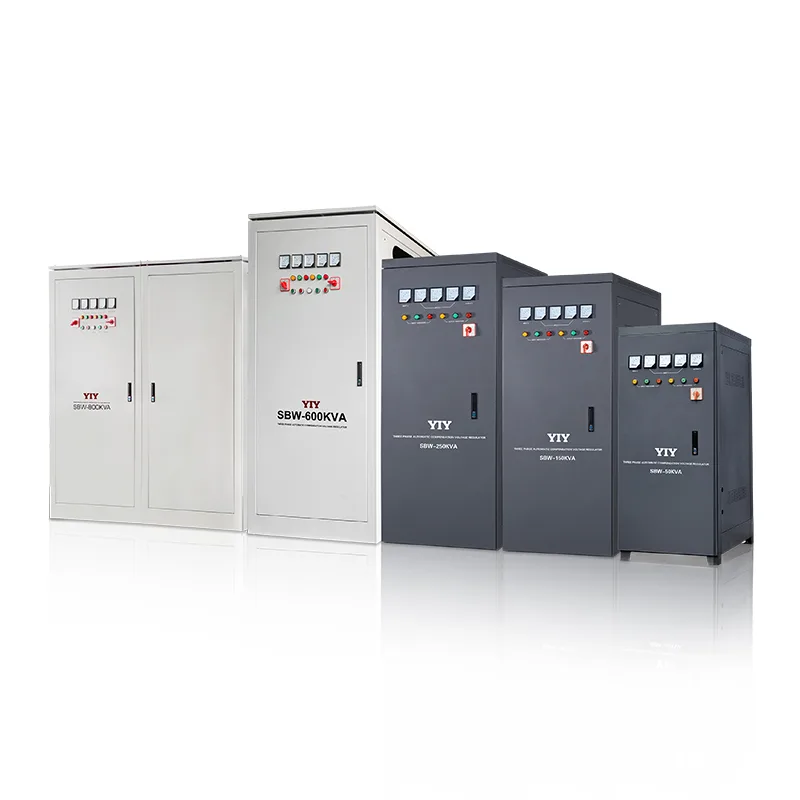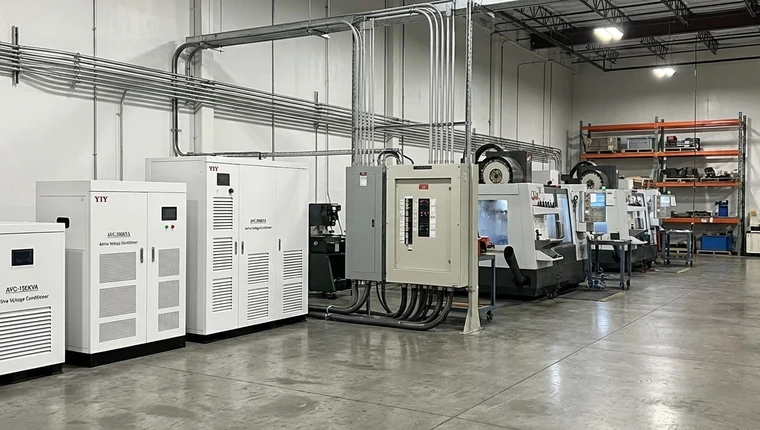
If your grid delivers unstable voltage — sags during peak load, surges after outages, or chronic brownouts — a voltage stabilizer automatic is the right call before that instability reaches sensitive equipment. CNC machines, medical devices, and telecom systems all have tight voltage tolerances; a single uncontrolled spike can mean downtime, damaged components, or failed compliance audits.
This guide covers how to match technology type (relay, servo, or IGBT) to your application, how to size capacity correctly, and which certifications should appear on any spec sheet worth signing.
What an Automatic Voltage Stabilizer Actually Does
An automatic voltage stabilizer is an electrical device that continuously monitors incoming supply voltage and corrects deviations before they reach connected equipment. The core function: maintain constant output voltage regardless of what the grid delivers. Input can sag to brownout levels, spike after a fault clearance, or drift chronically — the stabilizer absorbs all of it and delivers a stable output.
The Automatic Correction Loop
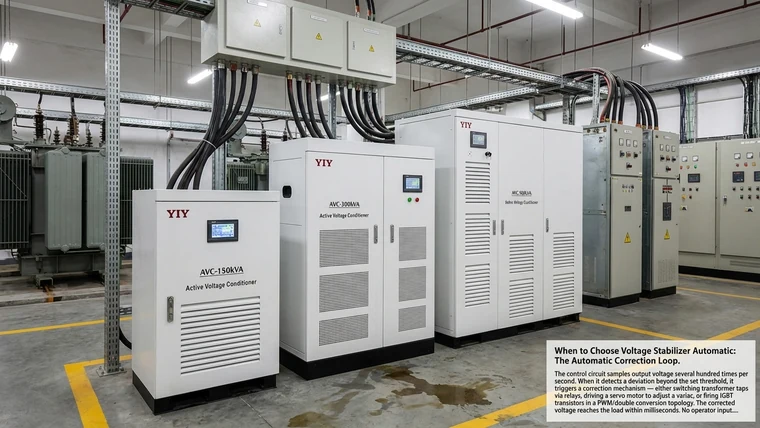
The control circuit samples output voltage several hundred times per second. When it detects a deviation beyond the set threshold, it triggers a correction mechanism — either switching transformer taps via relays, driving a servo motor to adjust a variac, or firing IGBT transistors in a PWM/double-conversion topology. The corrected voltage reaches the load within milliseconds. No operator input required. This closed-loop behavior is what separates an automatic stabilizer from a manual tap-changer or a passive line conditioner. For a detailed explanation of How Voltage Stabilizer Workshow a voltage stabilizer works across all three topologies, see the linked guide.
Three Core Technologies
| Technology | Output Precision | Correction Speed | Best Fit |
|---|---|---|---|
| Relay | ±5–8% | ~20–40ms | Residential, light commercial |
| Servo | ±2–3% | ~50–100ms | General industrial |
| IGBT (PWM/double-conversion) | ±0.5% | ~10ms | Mission-critical, sensitive loads |
Relay types switch transformer taps in discrete steps — fast and cost-effective, but precision is limited. Servo types use a motor-driven variac for continuous adjustment, offering a better balance of precision and cost for industrial environments. IGBT types convert AC to DC and back (AC-DC-AC), giving the tightest output tolerance and the fastest response — for a deeper technical breakdown, see the Stabilizer Voltage Regulator Comparisonservo vs. IGBT technology comparison.
IEC 60038 Context
IEC 60038 defines standard AC supply voltages from 100V to 1000V and specifies that equipment must tolerate ±10% input variation. In practice, many industrial grids — particularly in developing markets — exceed this tolerance regularly. A voltage stabilizer automatic is the compliance bridge: it absorbs grid deviation and presents IEC-compliant voltage to downstream equipment, protecting both the load and the facility’s regulatory standing.
Who Needs One — and What Equipment Is at Stake
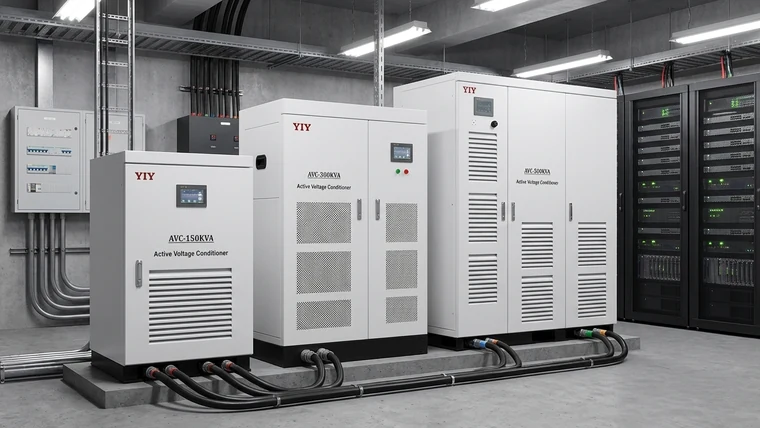
The buyers reading this article fall into three roles: industrial engineers specifying protection for new production lines, facility managers responding to unexplained equipment failures, and procurement teams comparing vendors before issuing a purchase order. What they share is a common problem — sensitive loads that cannot absorb what an unstable grid delivers.
Equipment Where Voltage Deviation Is Not Tolerable
CNC machines are the clearest case. Spindle drives and servo controllers operate within tight voltage windows; a sag during a cutting cycle can cause positioning errors, tool crashes, or mid-job shutdowns. A Servo Stabilizer For Cnc Machinesservo stabilizer for CNC machines with ±2–3% output precision is the standard protection layer in machining environments.
Medical devices — imaging systems, surgical equipment, laboratory analyzers — carry both equipment risk and compliance risk. Voltage deviation that trips a device mid-procedure is not just a maintenance event; it is a regulatory incident. IGBT-based stabilizers with ±0.5% output precision and 10ms correction speed are the appropriate specification here.
Telecom systems (base stations, switching equipment, UPS-backed server rooms) require continuous uptime. The voltage tolerance window is narrow, and the cost of a single outage is measured in SLA penalties, not just repair bills. Lab instruments — spectrometers, chromatographs, precision balances — belong in the same category: any deviation corrupts the measurement.
Indoor Industrial vs. Outdoor/Telecom: Where Competitors Diverge
TSI Power has built its product line around outdoor and extreme-environment applications — weatherproof enclosures, wide operating temperature ranges, and telecom-grade specifications. That focus makes sense for cell tower infrastructure or outdoor substations, but it leaves a gap for the broader indoor industrial market.
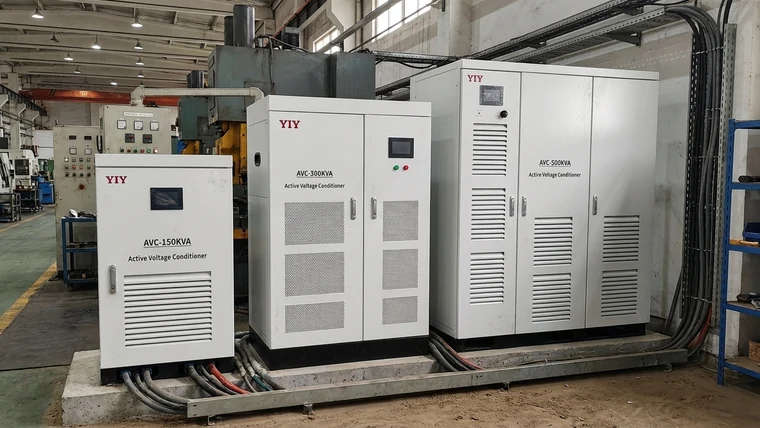
YIY’s range covers relay, servo, and IGBT technologies from 0.5KVA to 3000KVA, all designed for indoor industrial deployment: factory floors, hospital equipment rooms, data centers, and laboratory facilities. The full technology stack matters here. A facility running both general-purpose motors (servo is sufficient) and precision measurement instruments (IGBT required) needs a supplier that can spec both from a single certified product line. For a broader evaluation framework covering application types beyond the scope of this article, refer to the Voltage Stabilizer Selectioncomplete voltage stabilizer selection guide.
How to Choose the Right Technology: Relay, Servo, or IGBT
The selection rule is straightforward: match your precision requirement to the technology tier. Each technology occupies a distinct performance band, and choosing the wrong tier means either overpaying for precision you don’t need or under-specifying protection for equipment that can’t tolerate deviation.
Relay: Speed and Cost for Light Loads
Relay stabilizers switch transformer taps via electromagnetic relays, delivering output precision of ±5–8%. Correction happens in 20–40ms — fast enough for residential appliances, HVAC systems, and light commercial loads where tight voltage tolerance isn’t a design requirement. The tradeoff is step-wise correction: output moves in discrete increments rather than continuously, which is acceptable for motors and lighting but not for precision instruments. If your load is cost-sensitive and doesn’t require better than ±5% output, relay is the right call.
Servo: The Industrial Default
Servo stabilizers use a motor-driven variac for continuous, stepless voltage adjustment, achieving ±2–3% output precision. Correction speed is 50–100ms — slightly slower than relay, but the output waveform is cleaner and the precision band is tighter. This makes servo the standard choice for general industrial environments: CNC machine rooms, packaging lines, injection molding equipment, and mixed-load factory floors. The balance of precision, reliability, and unit cost is hard to beat for loads that need better than relay performance without the complexity of double-conversion.
IGBT: Mission-Critical Precision
IGBT stabilizers use DSP-controlled PWM regulation in an AC-DC-AC (double-conversion) topology. The result is ±0.5% output precision with 10ms correction speed — the tightest specification available in this product category. YIY’s CVCF IGBT series covers 5–10KVA with THD <3%, power factor >0.99, and input frequency acceptance of 35–70Hz, making it generator-compatible. These specs matter for medical imaging systems, telecom switching equipment, laboratory analyzers, and precision manufacturing cells where any deviation corrupts the process or triggers a compliance event.
The AC-DC-AC topology also isolates the output completely from input disturbances — not just voltage deviation, but frequency variation and harmonic content. That isolation is what separates IGBT from servo in mission-critical contexts. For a deeper technical breakdown, see the servo vs. IGBT technology comparison.
The Decision Rule
| Precision Requirement | Technology | Typical Application |
|---|---|---|
| ±5–8% acceptable | Relay | Residential, light commercial |
| ±2–3% required | Servo | General industrial, CNC |
| ±0.5% required | IGBT | Medical, telecom, precision manufacturing |
If your load can tolerate ±5%, don’t pay for servo. If it requires ±0.5%, servo won’t protect it — only IGBT will. The technology choice is not a budget optimization; it’s a risk management decision anchored to your equipment’s actual voltage tolerance window.
Sizing Your Automatic Voltage Stabilizer Correctly
Undersizing is the most common procurement mistake — and the most expensive. A stabilizer running at or above rated capacity generates excess heat, degrades faster, and voids the manufacturer warranty. The fix is a straightforward calculation applied before you issue a purchase order.
The Sizing Formula
Total connected load (KW) × safety margin (1.2–1.3) = minimum required KVA
The 1.2–1.3 multiplier accounts for motor inrush current, future load additions, and thermal headroom. Use 1.2 for stable, well-defined loads; use 1.3 for mixed loads with motors or frequent start-stop cycles.
Worked Example
A machining facility has the following loads:
- CNC machine: 15KW
- Lighting: 2KW
- Auxiliary equipment: 3KW
- Total: 20KW
Apply the safety margin: 20KW × 1.25 = 25KVA minimum. The next standard unit size up is 30KVA — that’s the correct specification. Ordering a 25KVA unit leaves no headroom and puts the stabilizer at continuous rated load, which accelerates wear.
Single-Phase vs. Three-Phase Considerations
For three-phase installations, load balance across phases matters as much as total capacity. An unbalanced three-phase load — where one phase carries significantly more than the others — causes uneven transformer heating and reduces effective stabilizer life. Before specifying a three-phase unit, measure per-phase load distribution. If imbalance exceeds 15–20%, address the load distribution first or specify a stabilizer with per-phase regulation capability.
Single-phase loads are simpler: total connected load plus the safety margin gives you the number directly. For mixed single- and three-phase environments, calculate each circuit separately, then aggregate.
Consequences of Undersizing
An undersized stabilizer doesn’t just run hot — it fails in predictable ways. Thermal stress degrades winding insulation, servo motor bearings wear faster under continuous overload, and relay contacts pit from repeated overcurrent switching. Most manufacturers void the warranty if the unit is operated above rated capacity. The cost of replacing a failed stabilizer — plus the downtime it causes — is always higher than the cost of specifying one size up at the outset.
For buyers evaluating mid-range capacity units, the 10 Kva Automatic Stabilizer Comparison Guide10 KVA automatic stabilizer comparison covers the same selection criteria applied to a specific capacity tier.
Standards and Certifications That Should Drive Your Spec
Certifications on a spec sheet are only useful if you know which ones are mandatory and which are optional. For voltage stabilizer procurement, the distinction is straightforward.
Mandatory Baseline: IEC 60038
IEC 60038 defines standard AC supply voltages from 100V to 1000V and establishes ±10% as the acceptable input tolerance band for compliant equipment. Any stabilizer you specify must handle this range as a minimum — it’s the baseline, not a differentiator. In practice, grids in developing markets regularly exceed ±10%, which is exactly why a stabilizer sits between the grid and your load.
power quality: IEC 61000
IEC 61000 covers power quality and electromagnetic compatibility (EMC) in industrial environments. For facilities running CNC machines, medical devices, or precision instruments, harmonic distortion and EMC compliance aren’t optional — they affect both equipment performance and regulatory standing. Specify stabilizers that align with IEC 61000 if your environment includes sensitive electronics or if your facility is subject to industrial EMC audits.
Quality and Environmental Management: ISO 9001:2015 and ISO 14001
ISO 9001:2015 certification means the manufacturer’s design and production processes meet documented quality management standards. ISO 14001 covers environmental management. When evaluating suppliers, ask for the certificate scope: it should explicitly cover voltage stabilizer design and manufacturing, not just a parent company’s administrative operations.
CE Marking: Required for EU Deployment
CE marking is a legal requirement for equipment sold or deployed within the European Union. Verify it covers the specific product model, not just the product family.
Procurement Rule: Request Test Reports, Not Certificate Numbers
A certificate number is easy to print on a datasheet. An actual test report — showing measured input/output performance, harmonic distortion figures, and correction speed under load — is harder to fabricate. When issuing an RFQ, require third-party test reports alongside certificate copies.
Frequently Asked Questions
What does an automatic voltage stabilizer do?
It continuously monitors incoming supply voltage and corrects deviations before they reach connected equipment. The closed-loop control circuit samples output hundreds of times per second and triggers correction — via relay tap-switching, servo motor adjustment, or IGBT PWM regulation — within milliseconds. The result is stable output voltage regardless of grid fluctuation, with no operator input required.
What is the difference between an automatic voltage regulator and a stabilizer?
In practice, the terms refer to the same device. “Automatic voltage regulator” (AVR) is the term common in generator and power systems contexts; “automatic voltage stabilizer” is used in industrial and commercial equipment protection. Both describe a closed-loop correction mechanism that continuously monitors output voltage and compensates for input fluctuation. For procurement purposes, the distinction that matters is technology type — relay, servo, or IGBT — not the label on the datasheet. See the Wikipedia entry on automatic voltage regulator for a neutral reference definition.
When is a voltage stabilizer automatic necessary?
Any time your grid delivers voltage outside the ±10% tolerance defined by IEC 60038, and your equipment cannot absorb that deviation. The clearest triggers: CNC machines experiencing positioning errors or mid-job shutdowns, medical devices tripping during procedures, telecom systems accumulating SLA penalties from instability, and lab instruments producing corrupted measurements. Chronic brownouts in developing-market grids are the most common driver.
What are the downsides of automatic stabilizers?
The most important limitation: an automatic stabilizer does not protect against power outages. It corrects voltage deviation while the grid is live — sags, surges, brownouts, chronic under-voltage. The moment supply is interrupted, output drops to zero. If your application requires ride-through during outages, you need a UPS, not a stabilizer. For most industrial loads, the right answer is both: a stabilizer upstream to clean the voltage, and a UPS downstream for outage protection on the most critical circuits.
Two additional limitations for relay-type units: correction happens in discrete steps (not continuous), and relay switching can inject brief harmonic disturbances into the output waveform. For precision instruments, this is a reason to specify servo or IGBT instead.
How should a voltage stabilizer automatic be sized?
Apply the standard formula: total connected load (KW) × safety margin (1.2–1.3) = minimum required KVA. Use 1.3 for loads that include motors, which draw 5–8× rated current at startup. Always step up to the next standard KVA tier — running a unit at continuous rated capacity accelerates wear and typically voids the manufacturer warranty. For three-phase installations, verify per-phase load balance before specifying; imbalance above 15–20% requires per-phase regulation capability.
Stabilizer vs. UPS: When to Use Which
| Scenario | Right Tool |
|---|---|
| Chronic voltage sags or surges | Stabilizer |
| Frequent outages, even brief ones | UPS |
| Both voltage instability and outages | Stabilizer + UPS |
| Generator-fed load with frequency variation | IGBT stabilizer (35–70Hz input tolerance) |
Final Thoughts
The decision path is straightforward: if your grid delivers voltage outside IEC 60038’s ±10% tolerance and your equipment can’t absorb that deviation, a voltage stabilizer automatic is not optional — it’s the compliance and protection layer between an unstable supply and sensitive loads. Two variables determine outcome: technology type (relay for light commercial, servo for general industrial, IGBT for mission-critical) and correct KVA sizing with a 1.2–1.3× safety margin.
If you’re ready to specify, share your load profile, site conditions (single- or three-phase, input voltage range, environment), and target output requirements with the YIY engineering team — and we’ll recommend the right model from our 0.5KVA to 3000KVA range.
About YIY
Zhejiang Yiyen Holding Group Co., Ltd. (YIY) is a professional voltage stabilizer manufacturer with 16+ years of experience. With a 30,000sqm modern facility and an annual production capacity of 1,000,000+ units, our products are exported to 130+ countries. We provide OEM/ODM customization services and are ISO 9001:2015 certified, committed to delivering stable and reliable voltage protection solutions to global customers.
Contact Us
Email: yiyen at yiyen.com | Phone/WhatsApp: +86 13587452904 | Website: https://www.yiyavr.com/