
Servo Motor vs Relay Voltage Stabilizer: A Technical Comparison Guide

Servo Motor vs Relay Voltage Stabilizer: Which Is Right for You?
A servo stabilizer is a motorized AVR delivering ±0.5–3% stepless output correction via carbon brush adjustment, while a relay stabilizer is an electromechanical AVR switching transformer taps in discrete steps at ±5–8% accuracy — compared here on speed, accuracy, and cost.
How Do These Voltage Stabilizers Compare?
Voltage stabilizers are essential for protecting sensitive equipment from fluctuating power supplies. Two prevalent technologies, Servo Motor and Relay type, achieve this through different operational mechanisms. Understanding these differences is critical for selecting the appropriate stabilizer for specific application requirements and budget considerations.
| Criterion | Servo Motor | Relay | Winner |
|---|---|---|---|
| Voltage Regulation Mechanism |
Continuous
Utilizes a servo motor to drive a variable autotransformer, continuously adjusting the output voltage to maintain stability. This mechanical movement allows for precise, stepless correction.
|
Stepped
Employs a series of relays to switch between different transformer taps. This results in discrete, stepped voltage corrections rather than continuous adjustment.
|
A |
| Regulation Speed |
Medium (20-50V/s)
Correction speed is dependent on the motor’s response time and the magnitude of the voltage fluctuation. Generally slower than electronic methods but adequate for most industrial and commercial applications.
|
Fast (10-100ms per step)
Relay switching is rapid, but the overall correction involves steps. While individual switching is fast, the cumulative effect for large fluctuations might take multiple steps.
|
Tie |
| Output Voltage Accuracy |
High (±1% to ±3%)
The continuous adjustment mechanism allows for very tight output voltage tolerance, making it suitable for highly sensitive electronic equipment.
|
Moderate (±5% to ±10%)
Due to stepped corrections, the output voltage will always be within a range determined by the tap settings, leading to a wider tolerance band.
|
A |
| Waveform Distortion |
None
The regulation process does not introduce harmonic distortion to the output waveform, maintaining a pure sinusoidal output.
|
None
Similar to servo types, relay-based stabilizers do not inherently distort the output waveform as they only switch transformer taps.
|
Tie |
| Efficiency |
High (95-98%)
Operates with high efficiency, minimizing power loss during regulation, especially under varying load conditions.
|
High (95-98%)
Generally efficient as the main power path involves direct transformer taps with minimal active components.
|
Tie |
| Noise Level |
Low (Mechanical hum)
Produces a low-level mechanical hum or whirring sound due to the servo motor movement, which is typically negligible in industrial settings.
|
Audible (Clicking sound)
Generates distinct clicking sounds as relays switch, which can be noticeable in quiet environments.
|
A |
| Maintenance & Lifespan |
Moderate (Brush wear)
Requires periodic inspection of carbon brushes and commutator, which are wear-and-tear components. Lifespan is generally long with proper maintenance.
|
Low (Relay contact wear)
Relays have a finite number of switching operations before contacts degrade. Generally considered lower maintenance but relays may need replacement over time.
|
Tie |
| Cost |
Higher
The precision mechanical components and control circuitry contribute to a higher initial purchase cost.
|
Lower
Simpler design with fewer complex mechanical parts typically results in a lower initial investment.
|
B |
| Load Capacity Range |
Wide (500VA – 3000KVA)
Available across a broad spectrum of power ratings, from small office use to heavy industrial applications, including three-phase systems.
|
Narrower (500VA – 50KVA)
Primarily suitable for lower to medium power applications, typically single-phase or smaller three-phase systems.
|
A |
How Does the Product Lineup Compare Side-by-Side?
Servo Motor Series
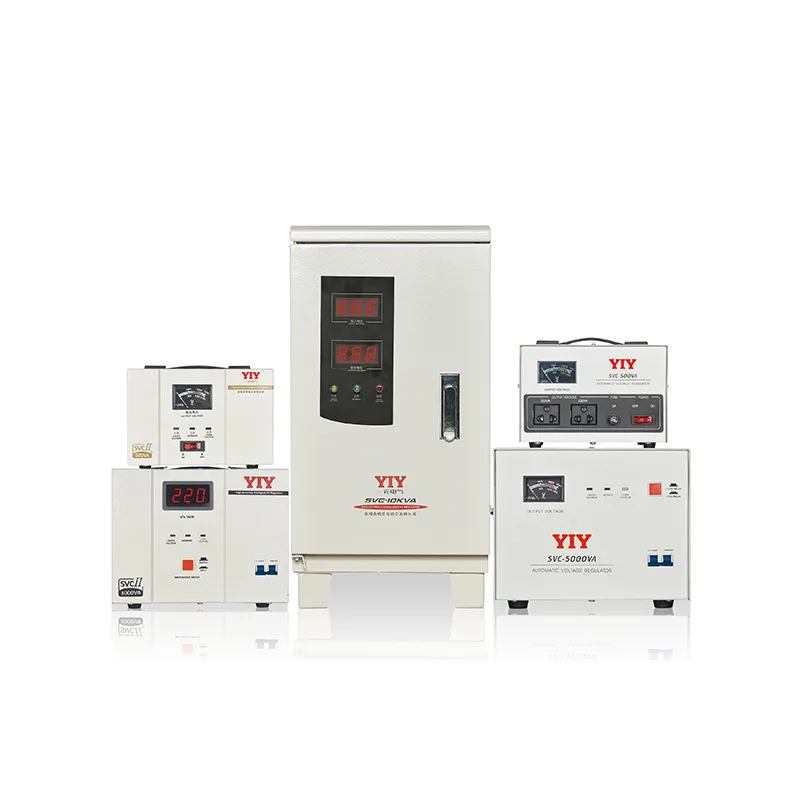
SVC Servo Voltage Stabilizer
High-precision servo motor stabilizer with ±2% accuracy and 1.5% regulation speed, built for sensitive electronics and medical equipment.

TWS Wall-Mounted Single Phase Servo Voltage Stabilizer
Compact wall-mounted servo stabilizer with ±2% output accuracy, ideal for homes and small offices with limited floor space.
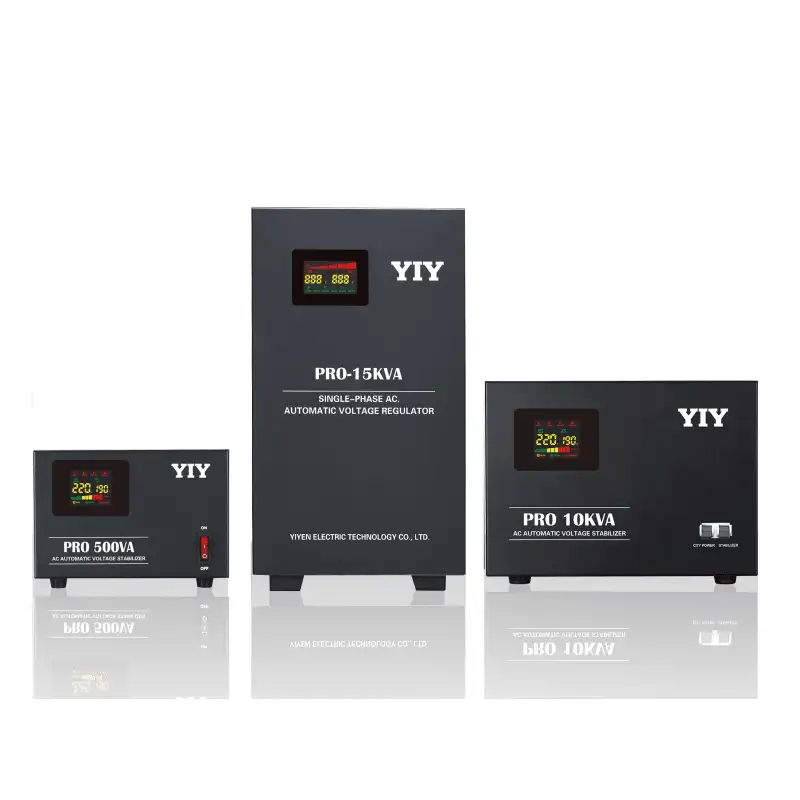
PRO Servo Voltage Stabilizer
Premium single-phase servo stabilizer with intelligent microprocessor control, wide correction range, and silent operation for…

PRO-3 Three-Phase Servo Voltage Stabilizer
Three-phase precision servo stabilizer with independent phase regulation, engineered for factories, CNC machines, and industrial…
Relay Series
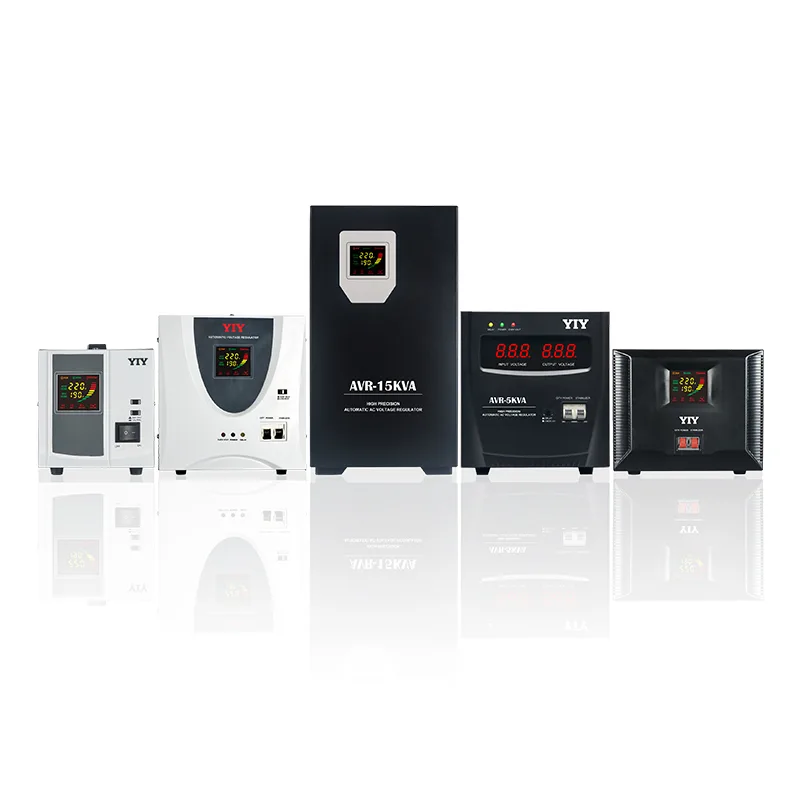
AVR Single-Phase Relay Voltage Stabilizer
Versatile freestanding relay stabilizer offering wide input range correction, suitable for retail shops, clinics, and small businesses.
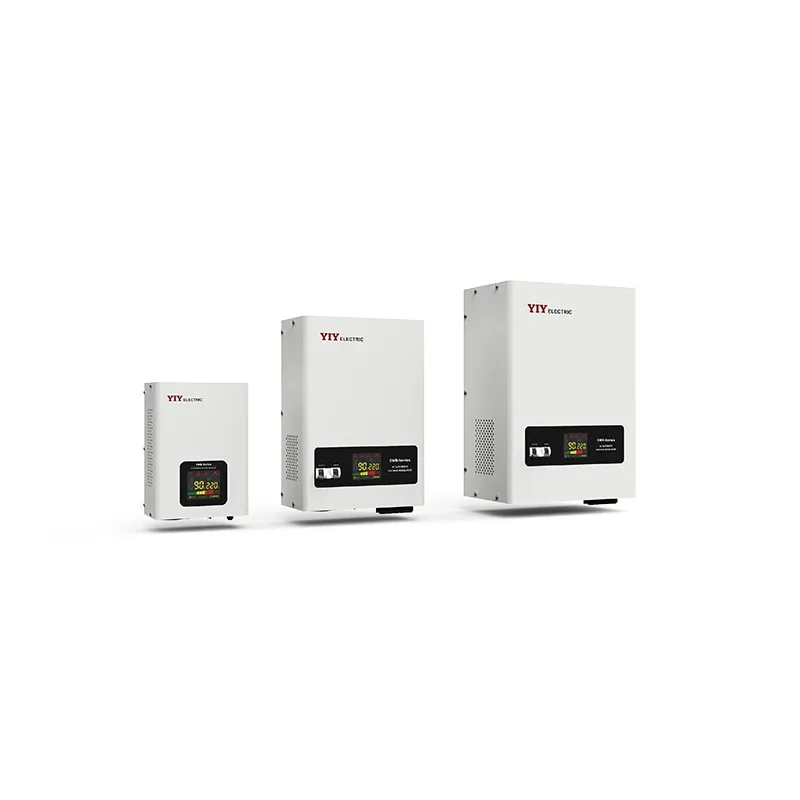
SWR Wall-Mounted Single Phase Relay Voltage Stabilizer
Budget-friendly wall-mounted relay stabilizer with fast 4ms switching, designed for household appliances like TVs, refrigerators, and ACs.

TRS Wall-Mounted Single-Phase Relay Voltage Stabilizer
Slim-profile wall-mounted relay stabilizer with digital display and auto-restart, perfect for apartments and small office installations.

PR Portable Single-Phase Relay Voltage Stabilizer
Lightweight portable stabilizer with plug-and-play convenience, designed for temporary setups, events, and mobile equipment protection.
Which Should You Choose: Servo Motor or Relay Voltage Stabilizer?
Choose Servo Motor When…
- Your equipment requires high output voltage accuracy (e.g., ±1-3%) and stable power, such as medical devices, laboratory instruments, or precision CNC machinery.
- You need continuous, stepless voltage correction to prevent even momentary voltage fluctuations from affecting sensitive processes.
- The application involves a wide range of input voltage fluctuations that require significant, smooth adjustments.
- You operate in environments where mechanical noise is acceptable, and the benefits of high precision outweigh the slight hum.
- You require a voltage stabilizer for medium to high power applications, including robust industrial or commercial installations.
Choose Relay When…
- Your equipment can tolerate a moderate output voltage accuracy (e.g., ±5-10%) and is not highly sensitive to small voltage variations.
- Budget is a primary concern, and you are looking for a cost-effective solution for basic voltage stabilization.
- The power fluctuations are typically within a manageable range, and stepped correction is sufficient to protect your load.
- You need a compact and lightweight solution for home appliances, small offices, or individual electronic devices.
- The noise of relay clicking in a quiet environment is not a significant issue.
Factory-Direct Pricing
Need Expert Guidance for Your Voltage Stabilization Needs?
Contact YIY for tailored solutions and direct factory support.
Request QuoteStabilizer Technology Comparison: Servo vs Relay vs IGBT
| Technology | Output Accuracy | Response Time | Best Application |
|---|---|---|---|
| Servo (motorized) | ±0.5–3% | 3–5 seconds | Precision machinery, medical, laboratory |
| Relay (tap-switching) | ±5–8% | 20–40 ms/step | Offices, retail, general-purpose loads |
| IGBT (solid-state) | ±1% | <10 ms | Critical electronics, data centers, CNC |
Frequently Asked Questions
What is the primary difference in operation between Servo Motor and Relay stabilizers?
Which type offers better voltage accuracy?
Are Servo Motor stabilizers suitable for high-power applications?
Do Relay stabilizers introduce waveform distortion?
Which type is more cost-effective?
What kind of maintenance do these stabilizers require?
Can YIY provide both Servo Motor and Relay stabilizers?
What is the typical delivery time for YIY voltage stabilizers?
Explore More Voltage Stabilizer Solutions
Browse other selection dimensions to find the right fit for your project.
By Industry
By Technology
By Country
Other Comparisons
Get Expert Recommendation
Tell us your application and load profile — our engineers will recommend the right technology for your project.
Error: Contact form not found.